Your digging level
Description
Traditional ska is the first wave of ska that emerged in Jamaica at the turn of the 1960s. It blends upbeat Caribbean rhythms with American rhythm & blues horn sections and jazz-inflected improvisation.
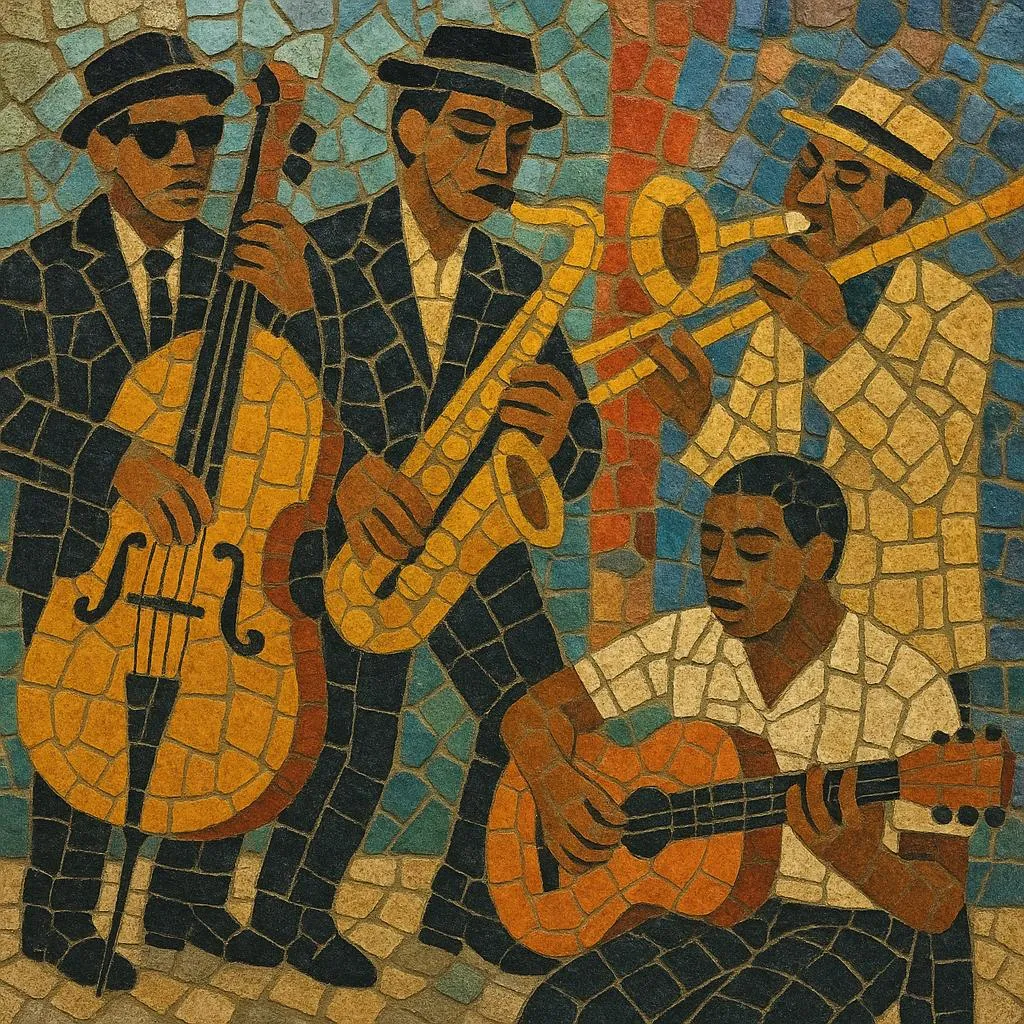
Hallmarks include a walking bass line, guitar and piano "skank" upstrokes on the off-beats, punchy horn riffs (trumpet, trombone, saxophone), and a strong backbeat on 2 and 4. Tempos typically range from medium to brisk, creating an energetic yet buoyant feel that invites dancing (e.g., the ska/“Skankin’” step).
Lyrically, traditional ska ranges from party-spirited and romantic themes to socially conscious storytelling, often delivered in Jamaican patois. Production aesthetics of the era used live, analog recording with natural room ambience and occasional tape slapback, giving the music its warm, immediate sound.
History
Traditional ska grew from post‑war Jamaican sound system culture, where DJs championed imported U.S. rhythm & blues. Local musicians blended these R&B grooves with Caribbean mento and calypso rhythms and jazz horn arranging. By emphasizing guitar and piano upstrokes on the off‑beats (the “skank”) and a walking bass line, a distinct Jamaican dance music crystallized: ska.
In Kingston, studio houses like Studio One, Treasure Isle, and Federal became hubs for the new sound. The Skatalites—an all‑star band featuring Don Drummond, Tommy McCook, Roland Alphonso, and Jackie Mittoo—set the gold standard, providing fiery horn lines, jazzy solos, and tight rhythm section work behind countless vocalists. Charismatic singer‑producers such as Prince Buster, Derrick Morgan, Laurel Aitken, and the young Wailers helped popularize the style across the island and into the diaspora.
By the mid‑1960s, ska was Jamaica’s national soundtrack, exporting hits to the U.K. and beyond via immigrant communities and label networks. As tempos slowed and grooves smoothed in the late 1960s, ska evolved into rocksteady, and soon after reggae, but the foundational off‑beat guitar/piano and horn‑driven arrangements remained a throughline.
Traditional ska’s DNA carried into multiple waves of revival. The U.K.’s 2 Tone movement (late 1970s) reinterpreted original ska with punk energy and multiracial lineups, while 1990s–2000s scenes worldwide revived vintage arrangements and recording aesthetics. Today, traditional ska survives both as a historical cornerstone of Jamaican music and as a living style practiced by bands dedicated to the warm, danceable sound of the first wave.