Your digging level
Description
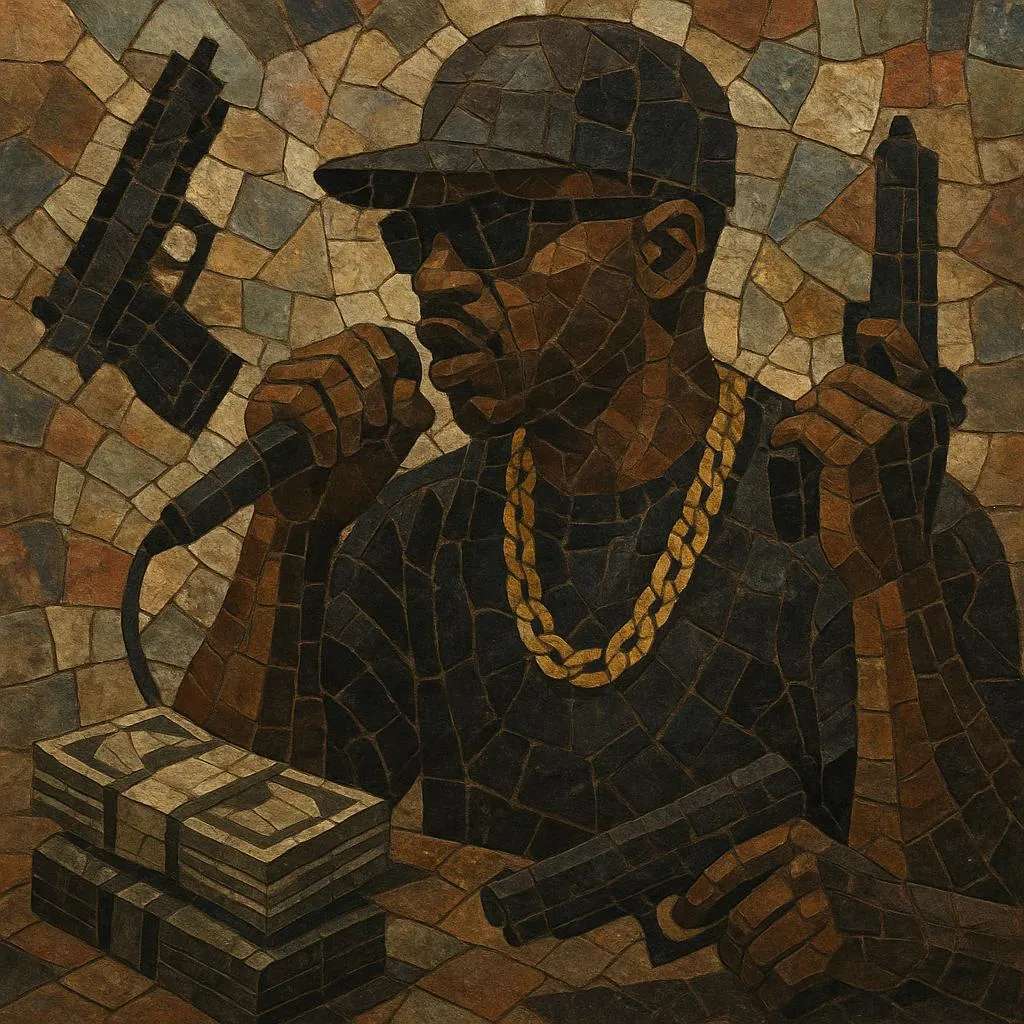
Thug rap is a street-centered strand of hip hop that foregrounds the realities of hustling, gang conflicts, incarceration, and survival ethics. It is closely related to gangsta rap but emphasizes an explicitly "thug" identity and code—loyalty, retaliation, and resilience—framed as a lived response to systemic poverty and violence.
Musically, thug rap favors forceful, mid‑tempo beats with booming 808s, ominous minor‑key loops, menacing synths or soul samples, and hook‑driven choruses that are easy to chant. Vocals tend to be gravelly, vehement, and highly rhythmic, with ad‑libs and doubles reinforcing aggression and emphasis.
Lyrically, it combines reportage (street diaries), boast (status, money, weapons), and moral calculus (respect, betrayal, consequences) in stark, cinematic language. Its aesthetics helped set the template for 2000s–2010s trap and later drill, both in sonic weight and in its unflinching, first‑person perspective.


History
Thug rap crystallized in the United States in the early 1990s as a particularly hardnosed articulation of gangsta rap. West Coast G‑funk’s sub‑bass and minor‑key glide (e.g., Dr. Dre’s school) and East Coast boom‑bap’s grim realism (e.g., Mobb Deep’s bleak soundscapes) both fed its sonic DNA. Tupac Shakur popularized the "Thug Life" ethos as a banner—part social critique, part survival strategy—helping codify the subgenre’s identity and language.
By the late 1990s, thug rap had diffused across regions: New York acts hardened boom‑bap with stark street narratives, while the South folded in trunk‑rattling 808s and drawled delivery. The 2000s ushered in a commercial zenith: artists like 50 Cent and The Game turned uncompromising street posture into radio‑scale hooks. Simultaneously, Southern artists (Jeezy, Gucci Mane, Trick Daddy, Boosie) pushed the sound toward the darker, sparser blueprints that would soon be labeled trap.
Trap’s rise drew heavily on thug rap’s thematic core (grind, paranoia, retaliation) and on its bass‑forward production. In the 2010s, drill (from Chicago to the UK and beyond) intensified the nihilistic edge and cadence, inheriting thug rap’s first‑person fatalism and gang‑oriented storytelling while accelerating tempos and rhythmic patterns. International scenes now hybridize these elements with local slang and rhythms, but the aesthetic of raw confession plus heavy low‑end remains a through‑line.
Thug rap has been both praised as social testimony and criticized for glamorizing violence. Many artists frame it as reportage from marginalized communities, using the thug identity as a lens to discuss power, policing, and poverty. Its sonic and rhetorical influence on mainstream hip hop is profound, shaping how toughness, vulnerability, and ambition are voiced on record.
Aim for a hard, street‑cinematic mood: booming low end, minor‑key tonality, and a hook that feels like a block chant. Keep arrangements uncluttered so the vocal can dominate.