Your digging level

For this genre
0/8
🏆
Sign in, then listen to this genre to level up

Description

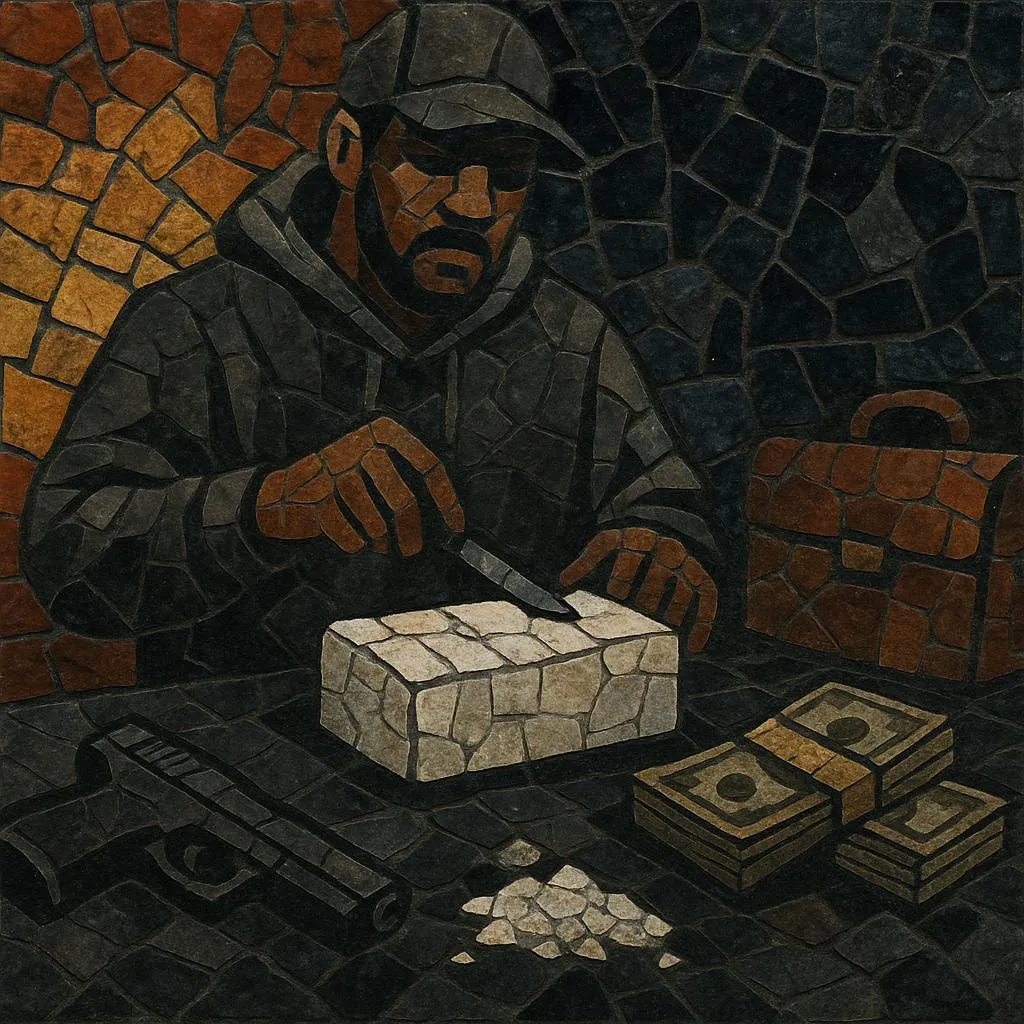
Coke rap is a hip hop substyle whose lyrics center on street-level cocaine trafficking and the economy, risks, and status dynamics surrounding it.

It is not defined by a single exclusive sound palette, but it is commonly delivered with a cold, minimal, and tense atmosphere that supports detailed “hustle narratives,” vivid imagery, and morally complex storytelling.

Coke rap often overlaps with gangsta rap and mafioso rap in subject matter and tone, but it is more narrowly focused on cocaine dealing (bricks, re-up cycles, supply chains, surveillance pressure, and profit calculus) as the organizing theme of the writing.


Sources: Spotify, Wikipedia, Discogs, Rate Your Music, MusicBrainz, and other online sources

History

Early foundations (1980s)

Coke-centric narratives emerged as hip hop storytelling and street reportage expanded in the 1980s, especially in U.S. cities affected by the crack/cocaine economy. Artists in emerging gangsta rap and street-oriented rap frequently referenced cocaine dealing as part of broader crime and survival narratives.

Codification and stylistic clarity (1990s)

In the 1990s, coke rap became more legible as a recognizable lyrical lane: detailed accounts of supply, distribution, paranoia, aspiration, and the psychological toll of the hustle. East Coast street rap and mafioso rap aesthetics contributed a sharper focus on enterprise and strategy, while Southern and West Coast scenes also contributed regional flavors.

Mainstream visibility and the “hustler” archetype (2000s)

During the 2000s, the theme reached major mainstream visibility through artists who built entire personas around drug-economy realism, luxury symbolism, and entrepreneurial framing. Production often leaned into crisp drums, ominous keys, and minimalist loops that left room for intricate writing.

Modern evolution (2010s–present)

In the streaming era, coke rap continued both as a traditional, lyric-forward form (often aligned with underground boom-bap or minimalist trap) and as a prestige lane within broader rap. Contemporary artists frequently emphasize stark realism, coded language, and cinematic detail, while production ranges from soulful loops to sparse, high-definition trap drums.


How to make a track in this genre

Core lyrical approach
•   Write in concrete “business-detail” scenes: re-up trips, phone calls, packaging, stash spots, surveillance paranoia, shifting prices, and the social hierarchy of supply. •   Use compressed slang and coded references (weights, kitchen/cooking metaphors, purity tests) but keep internal logic consistent so listeners can follow the narrative. •   Balance bravado with consequence: risk management, betrayal, incarceration, addiction in the community, and moral ambiguity are common thematic anchors.
Beat and instrumentation
•   Choose a stark, high-contrast palette that leaves space for dense verses. •   Common ingredients include: hard kick/snare patterns, tight hi-hats, minor-key synths or piano stabs, eerie pads, and/or chopped soul loops. •   Bass is usually heavy but controlled; avoid overly busy low-end that competes with rapid consonants in the vocal delivery.
Rhythm and flow
•   Favor pocket-focused rapping with clear enunciation; coke rap typically rewards intricate internal rhyme and measured cadence. •   Use cadence changes to mark narrative turns (e.g., a calm tone for “planning,” more aggressive delivery for “pressure” or conflict).
Harmony and tone
•   Minor keys, repeating two- to four-bar loops, and tense drones work well. •   Keep harmonic movement minimal so the lyrical detail remains the focal point.
Vocal performance and mix
•   Record relatively dry and upfront vocals; avoid overly washed reverb. •   Double key phrases sparingly for emphasis; ad-libs should be minimal and purposeful.
Structure tips
•   Intro: a short, cinematic setup (street ambience, a phone-ring sample, or a single-line thesis). •   Verses: dense storytelling with escalating stakes. •   Hook: short, memorable “code line” or mission statement; repetition should feel like a mantra rather than a pop chorus.

Top tracks

Locked
Share your favorite track to unlock other users’ top tracks
Influenced by
Challenges
Digger Battle
Let's see who can find the best track in this genre
© 2026 Melodigging
Melodding was created as a tribute to Every Noise at Once, which inspired us to help curious minds keep digging into music's ever-evolving genres.
Buy me a coffee for Melodigging