Your digging level
Description
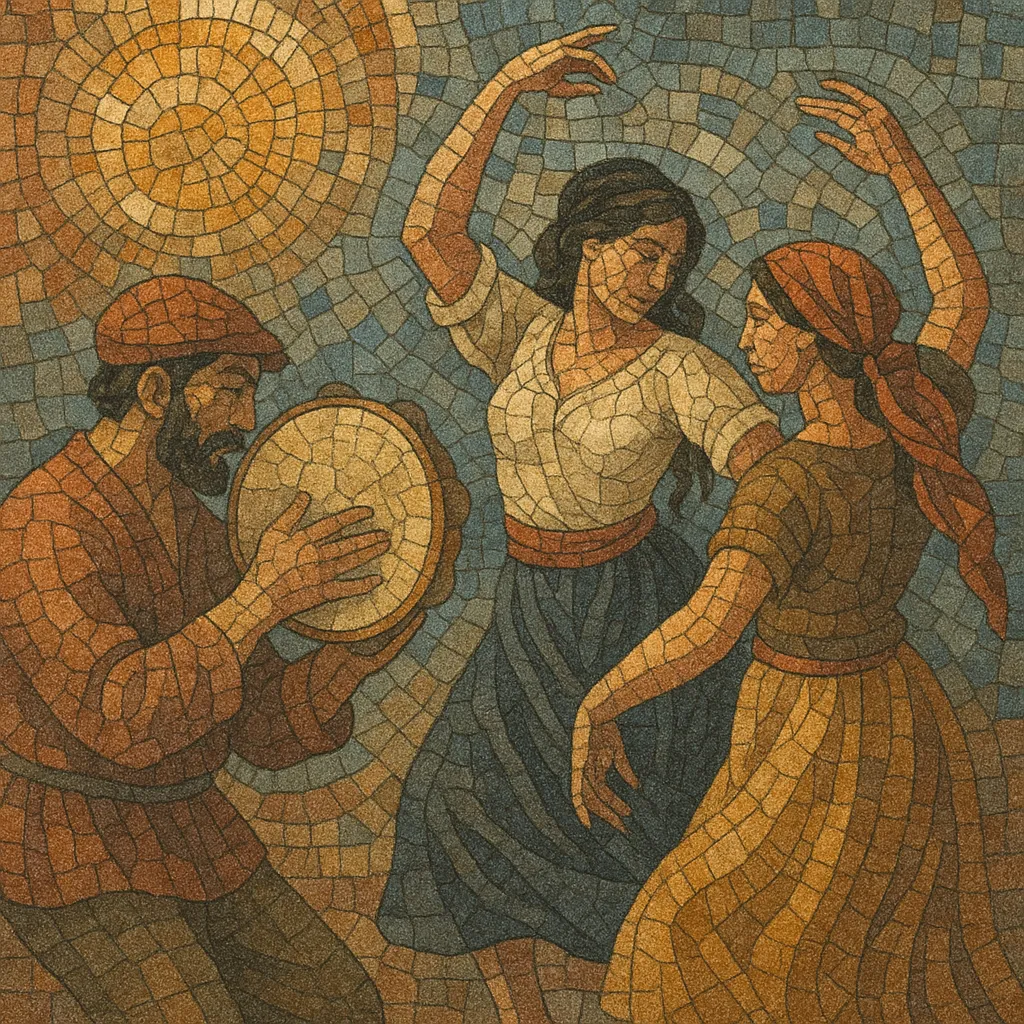
Tammurriata is a traditional folk music-and-dance style from Campania in southern Italy, regarded as a regional branch of the wider Tarantella family. It is typically performed in a lively compound meter (most often 6/8 or 12/8) and driven by the tammorra, a large frame drum with jingles (tambourine-like) that gives the genre its name. Call-and-response singing in Neapolitan dialect, cyclical rhythmic ostinati, and modal melodies are common features.
The practice is closely tied to seasonal and Marian devotional festivals (e.g., Madonna dell’Arco, Montevergine, Madonna delle Galline), where dancers circle and pair off around the drummers and singers. Local variants—such as the Vesuviana, Nolana, Giuglianese, Agro Nocerino‑Sarnese, and Monti Lattari styles—differ in their drum patterns, vocal delivery, and dance steps, but all share the hallmark groove of the tammorra, the festive, participatory dance, and a strong communal spirit.
History
Tammurriata emerged in Campania as a ritualized music-dance tied to agricultural cycles and local devotionals, particularly Marian festivals. Its name derives from the tammorra, the large frame drum that anchors both the music and dance. While the practice likely has earlier roots, documentation and iconography suggest a crystallization in the early modern period, aligning broadly with the 1700s.
Within the broader southern Italian Tarantella complex (which includes pizzica in Salento and sonu a ballu in Calabria), tammurriata represents the Campanian branch. It retains the family traits of fast, compound meters and percussion-led grooves, yet distinguishes itself through the deep cultural embedding in specific Campanian feasts, distinctive local drum strokes, and improvised vocal forms (e.g., fronne) over steady ostinati.
Distinct schools developed around Vesuvius (Vesuviana), Nola (Nolana), Giugliano (Giuglianese), the Agro Nocerino‑Sarnese plain, and the Monti Lattari area. Each variant uses particular drum patterns, vocal inflections, and dance figures (“menate”), while maintaining the communal circle/couple format and the call‑and‑response between lead voice and chorus.
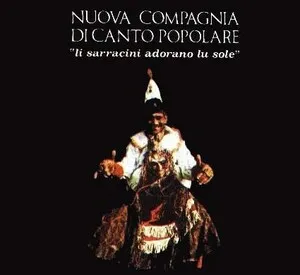
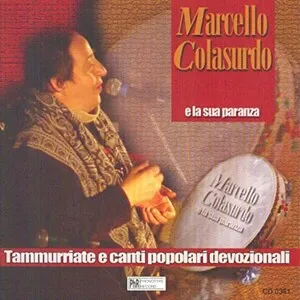
After periods of decline due to urbanization and changing tastes, the 1960s–70s folk revival—led by groups such as Nuova Compagnia di Canto Popolare and researcher-performers like Eugenio Bennato—brought tammurriata back to concert stages. Post‑1990s, world‑music currents, community “paranze” (drumming‑dance troupes), and festivals (e.g., Festa della Tammorra in Nola) expanded its audience. The rhythm also seeped into Neapolitan song and contemporary fusions (folk‑rock, dub, and world fusion), as heard in artists like Enzo Avitabile & I Bottari and Almamegretta.
Today, tammurriata remains both a living ritual practice at local feasts and a performance genre on national and international stages. It functions as a marker of Campanian identity, a vehicle for communal participation, and a dynamic tradition that continues to inspire new compositions and cross‑genre collaborations.