Your digging level for this genre

0/8
🏆
Sign in, then listen to this genre to level up

Description

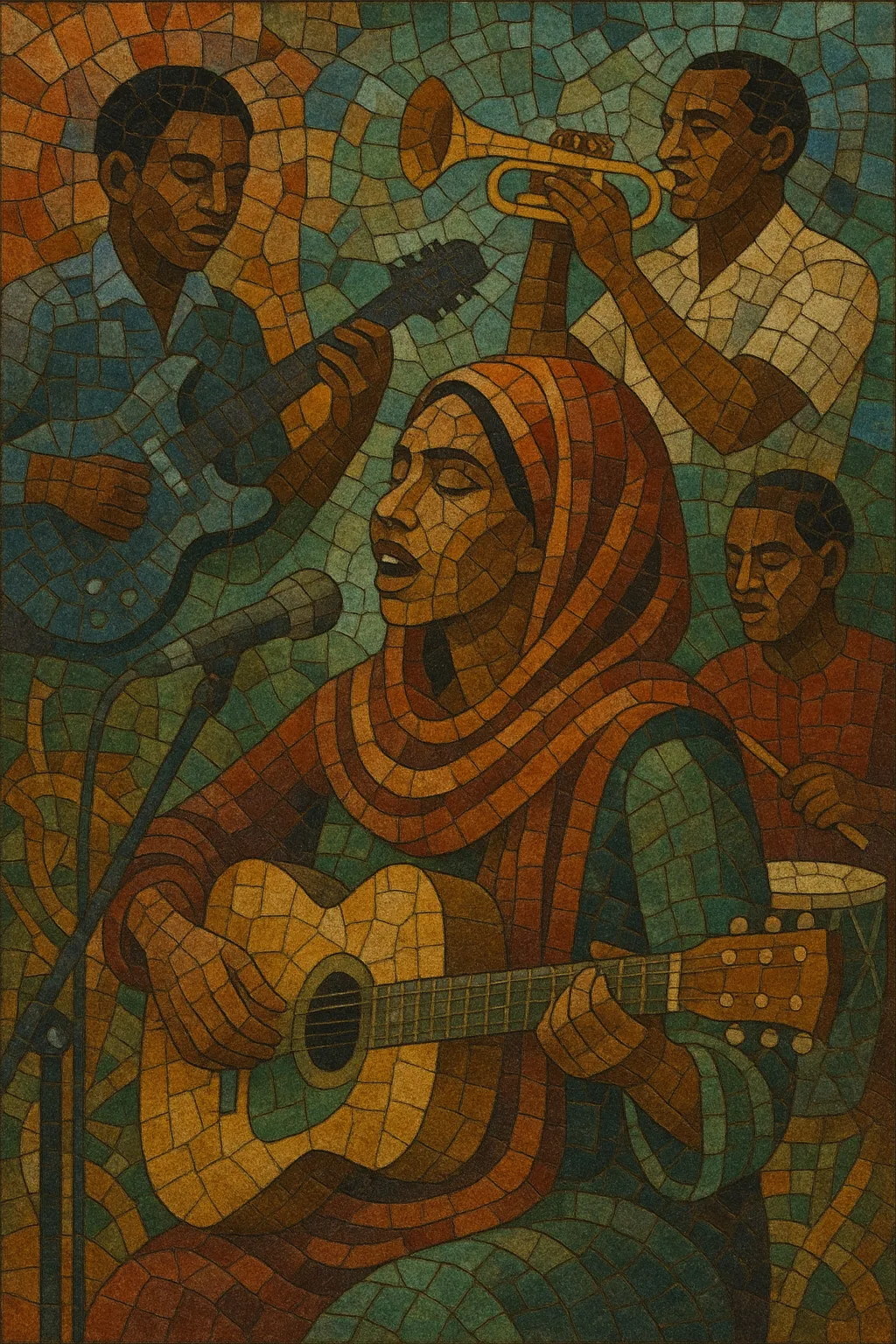
Sudanese pop is a modern popular music style from Sudan that fuses Arabic melodic sensibilities with East African rhythmic drive and pentatonic (often Nubian) melodic patterns.

It typically features expressive, melismatic vocals over steady danceable grooves in 2/4 or 6/8, supported by electric guitar, keyboards, brass, and kit drums alongside local percussion such as the daluka and, at times, the kissar (five‑string lyre).

Harmonically, it balances modal (maqam‑leaning) writing with simple pop progressions, yielding songs that can feel both folkloric and contemporary. Lyrically, themes of love, longing, place, and social commentary are common, delivered in Sudanese Arabic and regional languages.

The sound has roots in the Omdurman radio era and wedding‑band circuits, absorbed jazz and funk from the 1960s–70s, navigated cassette culture and censorship in the 1980s–90s, and continues to evolve through diaspora scenes and digital production.

History

Early foundations (1940s–1950s)

Sudanese popular song coalesced around Omdurman Radio, where urban ensembles blended older forms (like Haqiba and folk chant) with oud‑led arrangements and poetic lyricism. This period standardized vocal delivery and broadened the audience for modern Sudanese song.

Electrification and the birth of Sudanese pop (1960s)

By the 1960s, bands introduced electric guitar, bass, kit drums, and brass, while retaining local rhythms and pentatonic melodic shapes. Exposure to Egyptian popular music and global jazz/funk informed grooves and arrangements. This decade is widely regarded as the genesis of Sudanese pop.

Golden era and stylistic expansion (1970s)

Artists refined a distinctly Sudanese dance‑pop feel—tight rhythm sections, bright guitar arpeggios, horn riffs, and melismatic lead vocals. Wedding bands and radio hits propelled the style nationwide, and Sudanese pop became a soundtrack to urban life.

Cassettes, weddings, and resilience (1980s–1990s)

Cassette circulation and live wedding circuits sustained the scene amid political constraints and periods of censorship. Stars cultivated massive grassroots followings; romantic ballads and uptempo dance tunes coexisted, often with leaner, keyboard‑forward arrangements.

Diaspora era and digital hybridity (2000s–present)

Migration amplified the music’s reach. Diaspora artists reintroduced Nubian motifs, East African grooves, reggae/funk touches, and contemporary pop production. Social media and streaming have created new audiences, while classic repertoire continues to be rediscovered through reissues and online archives.

How to make a track in this genre

Core rhythm and groove
•   Choose a steady, dance‑friendly meter: 2/4 (for driving wedding grooves) or 6/8 (for lilting, swaying feels). •   Build a layered percussion bed: daluka (clay drum), handclaps, and tambourine/shakers; keep the kick and bass locked to the hand percussion patterns. •   Let the drum kit emphasize off‑beats and light ghost‑notes; avoid overly heavy rock backbeats.
Melody and harmony
•   Write vocal lines using pentatonic shapes common in Sudan and Nubia, and/or Arabic‑leaning modal colors (e.g., Hijaz, Nahawand) for ballads. •   Keep harmonies simple: pedal drones, I–bVII–IV or i–VII–VI motions, and two‑chord vamps work well; prioritize melodic ornamentation over dense chord changes. •   Use call‑and‑response: a lead phrase answered by backing vocals or a horn/keyboard riff.
Instrumentation and arrangement
•   Combine local and modern timbres: electric guitar (clean, bright arpeggios), bass (round, supportive), keyboards/organ or synth strings, optional horn section, plus daluka/hand percussion. •   Add regional color sparingly with oud or kissar (five‑string lyre) doubling the melody. •   Arrange in verses and refrains with short instrumental hooks; keep intros concise and codas danceable.
Vocal style and lyrics
•   Sing with expressive melisma and clear diction; place the vocal forward in the mix. •   Write about love, longing, city life, memory, and community; incorporate Sudanese Arabic idioms and poetic imagery.
Production tips
•   Favor warm, mid‑forward mixes with dry‑to‑moderate reverb on vocals; let handclaps and percussion cut through. •   Layer subtle horn or synth countermelodies around the lead vocal; automate energy lifts into choruses. •   For contemporary crossover, blend Afro‑pop drum programming with traditional percussion while keeping the Sudanese vocal phrasing central.

Top tracks

Locked
Share your favorite track to unlock other users’ top tracks
Influenced by
Has influenced
Challenges
Digger Battle
Let's see who can find the best track in this genre
© 2025 Melodigging
Melodding was created as a tribute to Every Noise at Once, which inspired us to help curious minds keep digging into music's ever-evolving genres.
Buy me a coffee for Melodigging