Your digging level
Description
Classic Sudanese pop refers to the golden-era urban sound that blossomed in Khartoum from the 1960s through the 1980s.
It blends Sudan’s pentatonic, haqeeba-rooted vocal traditions with Arabic maqam-inflected melodies, Egyptian-style string arrangements, and the danceable swing of jazz, rumba, and early rock instrumentation.
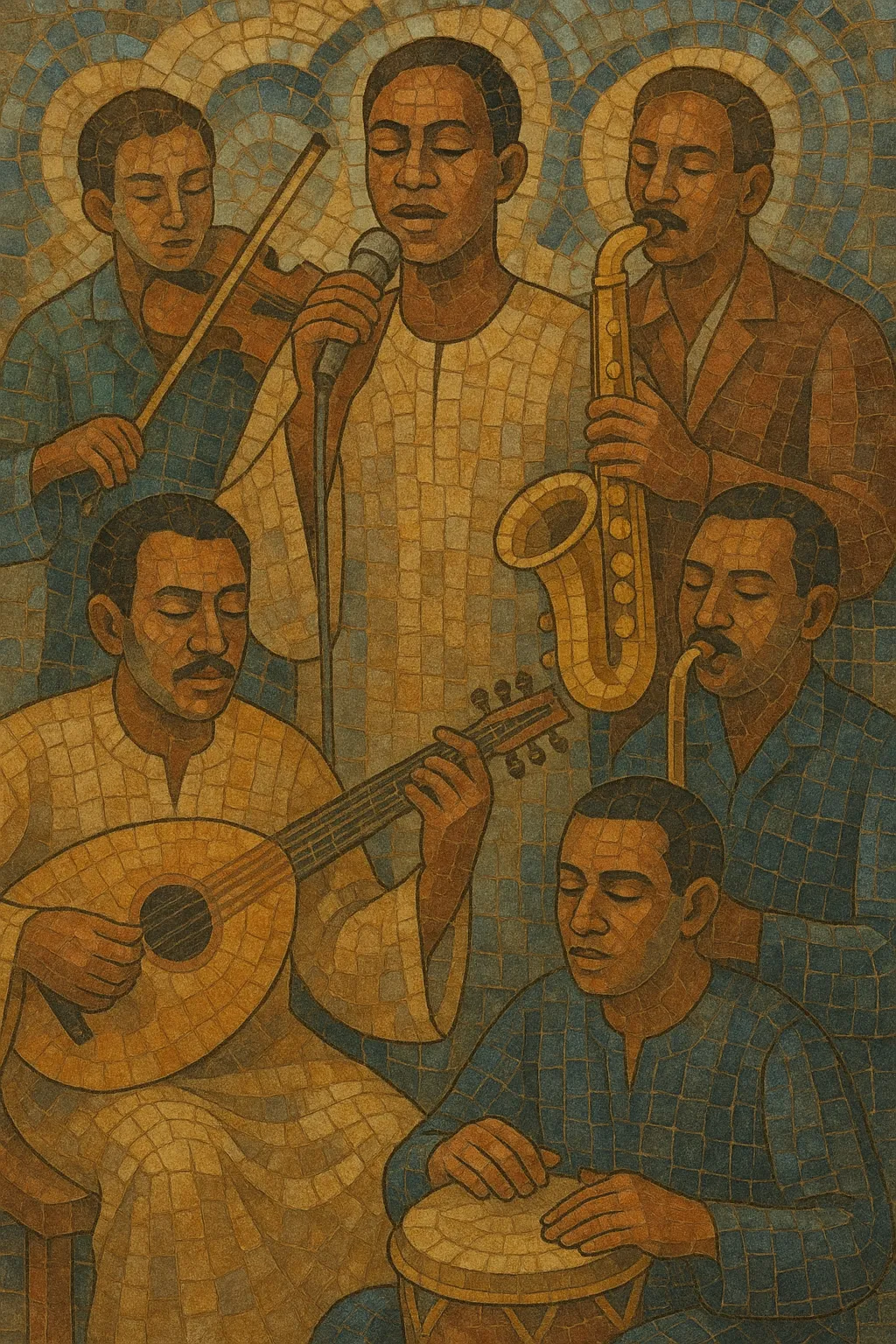
Typical ensembles feature expressive lead vocals with poetic Arabic lyrics, call-and-response choruses, oud or electric guitar, violins, accordion or keyboards, sax/trumpet, bass, and a mix of hand percussion (tumbak/tabla, riq) with light drum kit.
The mood ranges from romantic and nostalgic to gently upbeat and danceable, favoring mid-tempo grooves in 2/4, 4/4, and lilting 6/8, with melodic lines that alternate between melismatic phrasing and catchy refrains.
History
Radio Omdurman and urban concert halls helped transform earlier haqeeba song and Sufi-poetic traditions into a modern, amplified style. Pioneers such as Ibrahim Al Kashif and Ahmed Almustafa introduced orchestral strings and polished arrangements, while exposure to Egyptian cinema, jazz big-band timbres, and Congolese rumba guitar lilt shaped the emerging pop sensibility.
By the 1970s, the style reached a sophisticated peak: singers like Mohamed Wardi, Mohamed Al Amin, Abdel Karim Al‑Kabli, and Sayed Khalifa led large ensembles that paired emotive, literary Arabic lyrics with elegant string sections, accordion/keys, and sax or trumpet. Guitarists incorporated rumba and early rock voicings, and rhythm sections balanced hand percussion with light drum kit, creating a graceful, mid‑tempo swing. Groups like Al‑Balabil and bandleaders such as Sharhabeel Ahmed expanded the palette with jazz harmonies and modern stagecraft.
Political and social constraints curtailed many public music activities, pushing artists to cassettes, private gatherings, and the diaspora. Nevertheless, the repertoire endured via radio archives, bootlegs, and live performance traditions maintained by singers at home and abroad.
A wave of reissue projects and archival compilations introduced classic Sudanese pop to new global audiences, highlighting its unique blend of pentatonic melodies, Arabic poetics, and Afro‑diasporic grooves. Contemporary Sudanese pop and singer‑songwriters continue to draw on this canon’s lyricism, modal color, and danceable elegance.
Use expressive lead vocals with a small chorus for call-and-response. Combine oud or clean electric guitar with a violin section, accordion or electric piano/organ, sax/trumpet, electric bass, and a subtle drum kit reinforced by tumbak/tabla and riq. Aim for a warm, live ensemble feel.
Favor moderate tempos. Common meters are 2/4 or 4/4 with a gentle swing, and 6/8 for lilting ballads. Let hand percussion articulate the offbeats while the bass outlines simple, cyclical patterns influenced by rumba/highlife phrasing. Keep drum kit patterns light—brushes or soft sticks—and let the groove breathe.
Base melodies on Sudan’s pentatonic contours enriched by Arabic maqam color (e.g., Rast, Bayati). Harmony is often sparse—two or three chords—or modal drones supporting a strong melodic line. Employ melismas, ornamental pickups, and short instrumental answers from violin or sax between vocal phrases.
Write verse–refrain songs with an instrumental intro and mid-song solo (violin, sax, or oud). Layer strings in unison/octaves to thicken the melody, and use accordion/keys for sustained pads. Build dynamic arcs gradually; avoid dense, modern compression to preserve nuance.
Set poetic Arabic (Standard or Sudanese dialect) about love, longing, homeland, and everyday philosophy. Use vivid imagery and gentle metaphors; deliver with warmth and clarity. Choruses should be memorable and invite audience participation.
Record live where possible, prioritizing room mics for strings and percussion. Use plate or spring‑style reverbs for vocals and lead instruments. Keep the mix mid‑forward, leaving space for voice and violins.