Your digging level
Description
Stomp and flutter is a streaming-era micro-genre of contemporary indie folk marked by percussive, foot-stomping rhythms and airy, "fluttering" falsetto or head-voice melodies. It blends rustic, acoustic instrumentation with intimate, chamber-like ornamentation and modern ambient touches.
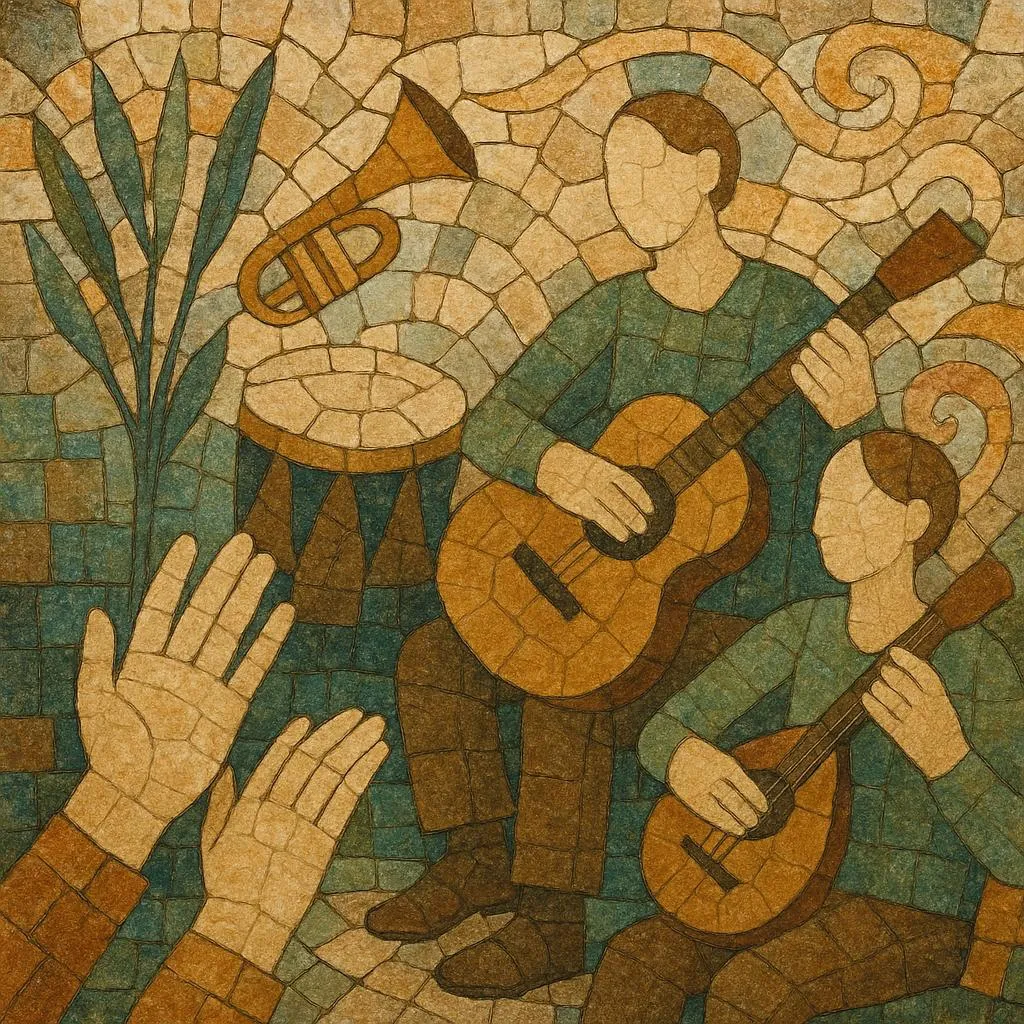
Arrangements commonly pair fingerpicked guitars, banjo or mandolin with handclaps, floor-tom pulses, brushed drums, and subtly layered strings or horns. Vocals often float above the texture in breathy harmonies, creating a gentle swell-and-release dynamic that pivots from hushed verses to stomping choruses. Production tends toward warm saturation, roomy reverb, and field-noise details, giving the music a windswept, wood-and-glass patina.
History
The foundations of stomp and flutter lie in the indie-folk resurgence that followed the late-2000s boom of hushed, woodland folk and harmony-rich ensembles. As singer-songwriters and small bands sought a way to make intimate music feel communal and kinetic, they began anchoring gentle, fingerpicked textures with foot-stomp pulses, handclaps, and tom-driven grooves. Simultaneously, a taste for falsetto or feather-light head-voice singing took hold, yielding the style’s signature contrast: earthbound rhythm beneath cloudlike melody.
In the 2010s, playlist culture and algorithmic taxonomy helped crystallize this sound into a recognizable micro-tag. Artists across North America, the UK, and Oceania converged on similar aesthetics—acoustic cores enhanced by chamber touches, ambient pads, and cinematic swells—while songwriting stayed confessional and observational. The result traveled easily between coffeehouse, folk club, and headphone listening, thriving on platforms that favored textural identity and mood.
Across the decade, the vocabulary stabilized: open-tuned guitars and mandolin arpeggios; floor-tom or suitcase-kick stomps on downbeats; brushed snares and handclaps on backbeats; falsetto-lead choruses reinforced by stacked harmonies; and production that embraces room tone, tape warmth, and reverb tails. These elements migrated into modern indie folk and dream-folk, influencing a wave of tender, rhythm-forward singer-songwriter records.
Today, stomp and flutter endures as a mood-forward branch of indie folk: highly portable to solo and small-ensemble settings, adaptable to cinematic scoring cues, and instantly legible through its rhythmic stomp/airborne-vocal contrast. It remains a favored palette for artists seeking intimacy without losing momentum.