Your digging level

For this genre
0/8
🏆
Sign in, then listen to this genre to level up

Description

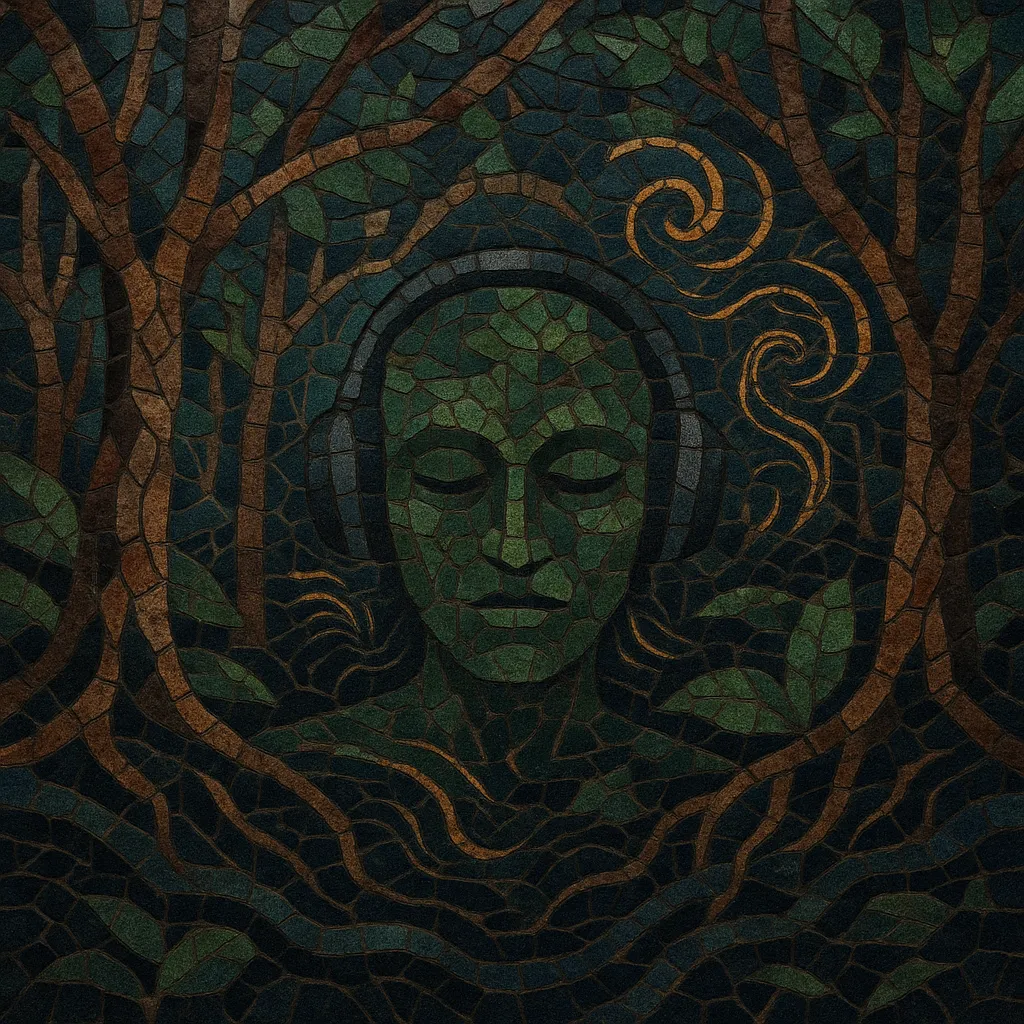
Forest psytrance is a nocturnal, highly textural branch of psytrance that evokes the feeling of being deep in a living forest. Producers mimic the ambience of a forest through swarming and teeming sonic effects, organic foley, and natural samples such as insects, birds, wind, creaking wood, and flowing water.

Tracks typically run around 145–152 BPM with a steady, driving bassline and percussion that feels earthy rather than glossy. While sound design is dense and psychedelic, the arrangement often follows relatively straightforward song structures so dancers can lock into a hypnotic, continuous groove. The overall mood is dark, mysterious, and immersive rather than aggressive for its own sake.


Sources: Spotify, Wikipedia, Discogs, Rate Your Music, MusicBrainz, and other online sources

History

Origins (early–mid 2000s)

Forest psytrance coalesced in the early 2000s within the Scandinavian psytrance underground, especially Sweden and Finland. Producers steeped in classic psytrance and Goa trance began leaning into darker nocturnal atmospheres, incorporating natural field recordings and foley to create a "living ecosystem" of sound. Compared with frantic darkpsy, this sound favored earthy grooves and enveloping textures.

Consolidation and labels

Independent labels and crews in Scandinavia and Central/Eastern Europe helped codify the aesthetic: woody, organic timbres; buzzing, "swarming" synth motifs; and hypnotic, mid‑high‑tempo basslines. Events in forested outdoor locations reinforced the style’s identity and guided its sound design toward environmental immersion.

Global spread (late 2000s–2010s)

By the late 2000s, the style had spread across Europe, Russia, and beyond, with artists from Greece, the Balkans, and the Southern Hemisphere adopting the approach. Festivals and night-time stages embraced forest sets for their ability to sustain a deep psychedelic journey that remained dancefloor‑functional.

Today

Forest psytrance remains a staple of night-time psy floors worldwide. Modern productions balance meticulous, nature‑inspired sound design with clear, dancer‑friendly arrangements, keeping the genre both experimental and accessible.

How to make a track in this genre

Tempo, groove, and structure
•   Set tempo around 145–152 BPM. Use a steady, driving 1/16 bassline with subtle variations and occasional off‑beat accents to keep motion without losing hypnosis. •   Keep arrangements relatively straightforward (intro → rolling sections → modulated peaks → outro) so the dancefloor can stay grounded amid dense sound design.
Sound palette and design
•   Layer plentiful organic foley and field recordings: insects, leaves, creaks, water, distant animals, wind. Shape them with HP/LP filters, granular resynthesis, convolution, and Doppler/panning to create swarming motion. •   Favor woody, bark‑like timbres: FM/PM synthesis with resonant band‑pass filters, formant filtering, and short percussive envelopes. •   Build "ecosystems" of small motifs: many interlocking micro‑events that flutter and scuttle around the stereo field.
Rhythm section
•   Kick: tight, punchy low‑mid focus (not overly boomy) to leave space for the busy midrange. •   Bass: clean, mono‑centered, slightly saturated saw/sine hybrids; keep notes short and consistent to preserve the hypnotic roll. •   Percussion: use shakers, woodblocks, and clicky tops; add ghost notes, triplet fills, and occasional polyrhythms for organic push/pull.
Harmony and atmosphere
•   Use modal/minor centers (e.g., Phrygian, Dorian) and sparse, droning pads; harmony is secondary to texture and movement. •   Create tension with dissonant intervals, filtered noise swells, and evolving drones rather than big chord changes.
Arrangement and mixing
•   Automate movement constantly (filters, panning, rev/delay sends) to mimic a living environment. •   Carve midrange carefully so layers don’t mask each other; sidechain against kick/bass to maintain clarity. •   Reserve breakdowns for brief breathers; emphasize continuous flow and gradual transformations.
Performance tips
•   Program long, morphing transitions between tracks; mix in key or in texture. •   Use stems or loopers to extend swarms/foley beds when playing under the trees at night.

Main artists

Top tracks

Locked
Share your favorite track to unlock other users’ top tracks
Influenced by
Has influenced
Challenges
Digger Battle
Let's see who can find the best track in this genre
© 2026 Melodigging
Melodding was created as a tribute to Every Noise at Once, which inspired us to help curious minds keep digging into music's ever-evolving genres.
Buy me a coffee for Melodigging