Your digging level
Description
Southern Americana is a regional strain of Americana rooted in the musical vernacular of the U.S. South. It blends songwriting-first aesthetics with the organic textures of country, folk, and blues, and the swagger of Southern rock.
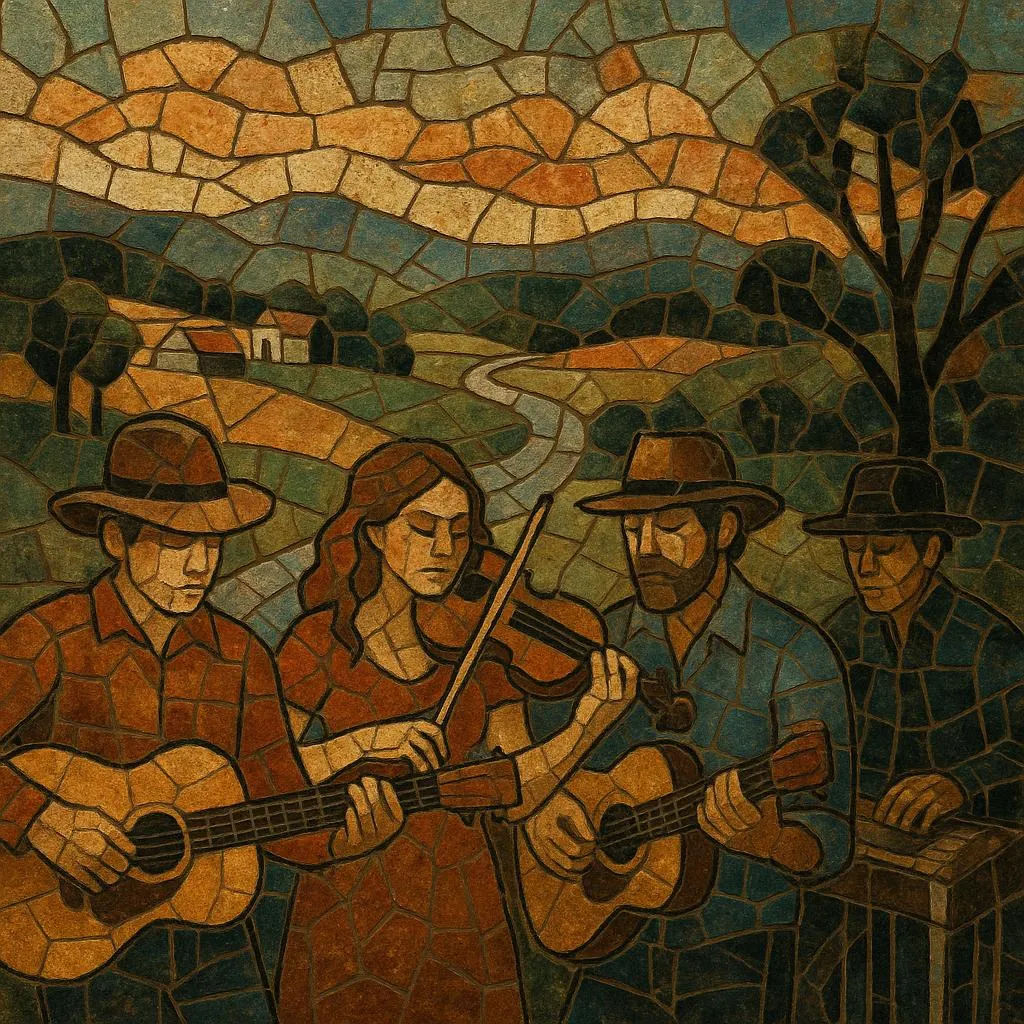
Typical recordings feature warm, lived‑in tones: Telecasters and acoustic guitars alongside pedal steel, Hammond organ, fiddle, mandolin, and harmony vocals. Lyrically it is grounded in place—small towns, highways, kudzu, pine line horizons—and in the South’s complicated histories of faith, work, love, and loss. The groove ranges from back‑porch shuffles and waltzes to swampy, slow‑burn rhythms, keeping the focus on stories and melody rather than studio gloss.

History
Southern Americana inherits its DNA from earlier southern styles: the narrative songwriting of country and folk, the harmony language and feel of gospel, the grit of Delta and hill‑country blues, and the electric swagger of Southern rock and country rock. The Muscle Shoals sound (Alabama) and other southern studios established a template: earthy bands cutting live, prioritizing feel over polish. By the 1990s, alternative country and broader Americana coalesced as umbrella terms for roots‑leaning artists operating outside Nashville’s commercial mainstream, laying the groundwork for region‑specific identities.
As Americana exploded in the 2010s—with festivals, radio formats, and charts—critics, venues, and regional scenes began tagging artists whose sound and storytelling were distinctly southern as “Southern Americana.” College‑town circuits (Athens, Chapel Hill, Oxford, Knoxville), the Muscle Shoals revival, and Nashville’s east‑side indie infrastructure fostered bands that mixed songwriter craft with road‑tested rock rhythm sections and traditional instruments like pedal steel and fiddle.
Independent labels, public radio, and streaming editorial helped codify the tag. Thematically, artists leaned into sense‑of‑place writing—coastal storms, mill towns, Baptist hymnals, BBQ joints—while grappling with contemporary southern realities. Sonically, records foregrounded warm analog tones, open‑air drums, and unvarnished vocals. The style influenced parallel “Americana” micro‑scenes elsewhere (e.g., New England or Scotland) that adopted its ensemble feel and song-centered approach, even while reflecting their own geographies.
Southern Americana remains a songwriter‑driven, band‑forward idiom: intimate enough for listening rooms, muscular enough for clubs. Its continuity with southern tradition, and its openness to modern indie production, keep it vital across festival stages and late‑night bars alike.