Your digging level
Description
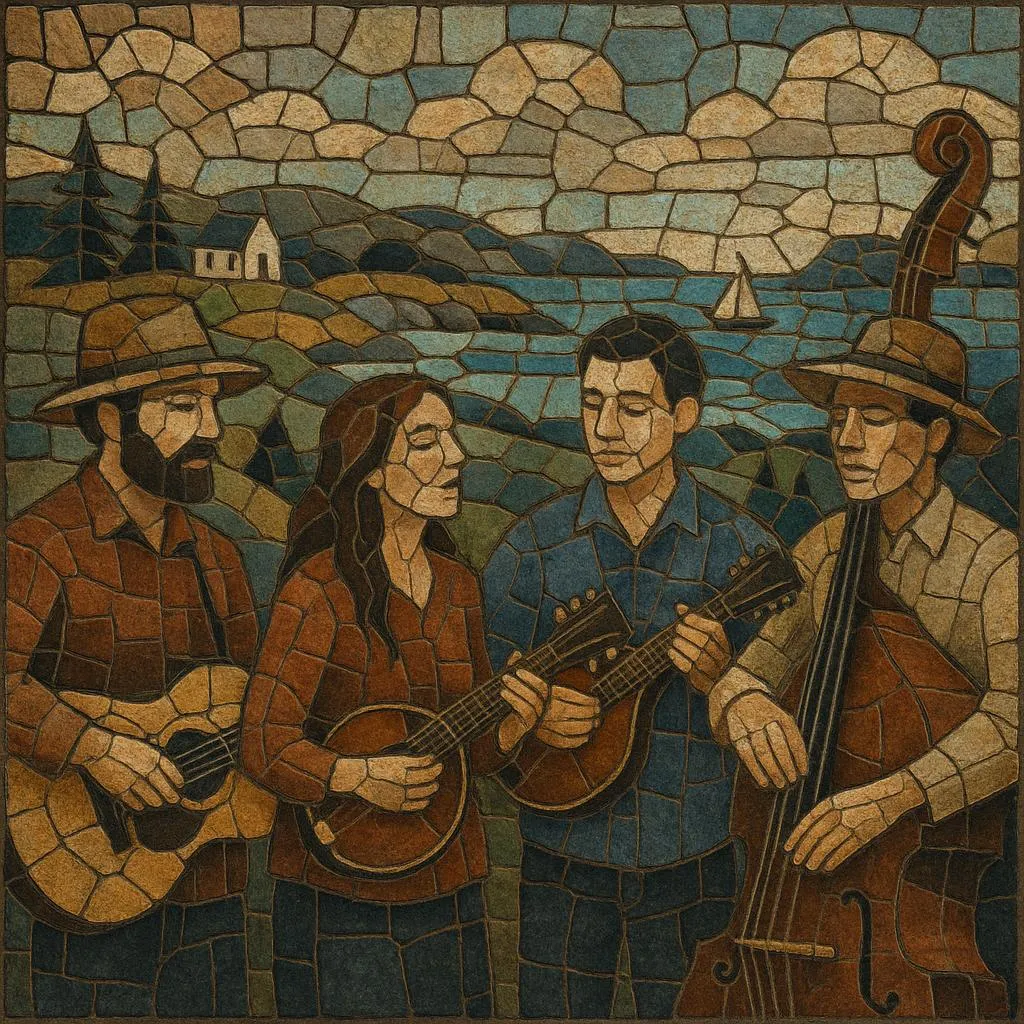
New England Americana is a regional branch of the broader Americana/roots movement that foregrounds the Northeast’s folk-revival legacy, seafaring work songs, and Celtic-inflected fiddle traditions alongside modern singer‑songwriter craft. It blends acoustic guitars, banjo, mandolin, fiddle, upright bass, and close vocal harmony with narrative lyrics steeped in mill towns, rocky coasts, long winters, and small‑town life.
Stylistically, it sits where American folk, country and old‑time meet indie folk and folk‑rock: warm, organic production; fingerstyle and flatpicked guitars; lilting 3/4 or 6/8 and loping 4/4 grooves; occasional shanty‑style call‑and‑response; and modal colors (Mixolydian, Dorian) borrowed from Anglo‑Celtic dance tunes. Its centers of gravity include Boston/Cambridge (Club Passim), Providence, Portland (Maine), Burlington/Brattleboro (Vermont), and the Newport Folk Festival’s long shadow in Rhode Island.
History
New England Americana grows out of the Boston/Cambridge folk revival (Club 47/Passim) and the Newport Folk Festival’s national prominence. The region absorbed Anglo‑Celtic fiddle repertoire and maritime work songs alongside blues and country, producing a durable coffeehouse circuit and a storytelling ethos. Singer‑songwriters and progressive string bands in Massachusetts, New Hampshire, Vermont, Maine, and Rhode Island laid the aesthetic groundwork well before the "Americana" label took hold nationally in the 1990s.
As "Americana" became a recognized umbrella, New England artists reframed local folk, old‑time, and country sounds with contemporary indie‑folk sensibilities. Independent labels, college‑town venues, and DIY studios nurtured a sound marked by close harmonies, acoustic textures, and literate, place‑rooted songwriting. The Low Anthem’s Oh My God, Charlie Darwin (2008) and Ray LaMontagne’s Trouble (2004) helped broadcast a distinctly Northeastern melancholy and maritime imagery.
A new wave of ensembles (Darlingside, The Ballroom Thieves, Crooked Still) fused chamber‑folk arrangements, bluegrass chops, and pop‑leaning hooks. Vermont’s and Maine’s scenes elevated writers like Anaïs Mitchell (whose Hadestown bridged folk opera and Americana). Festivals, house‑concert networks, and institutions like Club Passim sustained intergenerational exchange, while sea‑song revivals and regional fiddle traditions remained audible touchstones. Today, New England Americana is both a living local community practice and an exportable sound within the wider indie‑folk/Americana ecosystem.