

Your digging level
For this genre
0/8
🏆
Sign in, then listen to this genre to level up
Description
Slowed and reverb is an internet-born remix practice in which an existing track is pitched slightly down, time‑stretched, and soaked in reverberation to create a woozy, cinematic feel. The processing emphasizes space, sustain, and tail‑decay so that vocals smear and harmonies bloom while transients soften.
The approach lends a nostalgic, nocturnal tint to everything from chart pop and R&B to indie and hip hop. It is less about genre boundaries than a shared, affect‑driven aesthetic: intimate, melancholic, and immersive—optimized for headphones, late‑night listening, and short‑form video contexts.
History
Early antecedents (1990s–2000s)
• The aesthetic roots trace back to Houston’s chopped and screwed movement (1990s), which slowed records dramatically to heighten mood and weight. Although chopped and screwed introduced cutting and scratching techniques, its core idea—slowing music to intensify emotion—prefigured slowed-and-reverb’s sensibility.
• In the 2010s, vaporwave popularized pitch/time manipulation and reverb-drenched, memory‑soaked atmospheres, while lo‑fi hip hop normalized relaxed, tape‑worn textures on YouTube and streaming radio channels.
Emergence as a distinct internet practice (late 2010s)
• Around the late 2010s, creators on YouTube and SoundCloud began uploading standalone “slowed + reverb” versions of contemporary songs. Unlike chopped and screwed, these edits typically avoid heavy chopping: the hallmarks became a modest slowdown (often −5% to −15%), light pitch‑down, and prominent hall/plate reverbs.
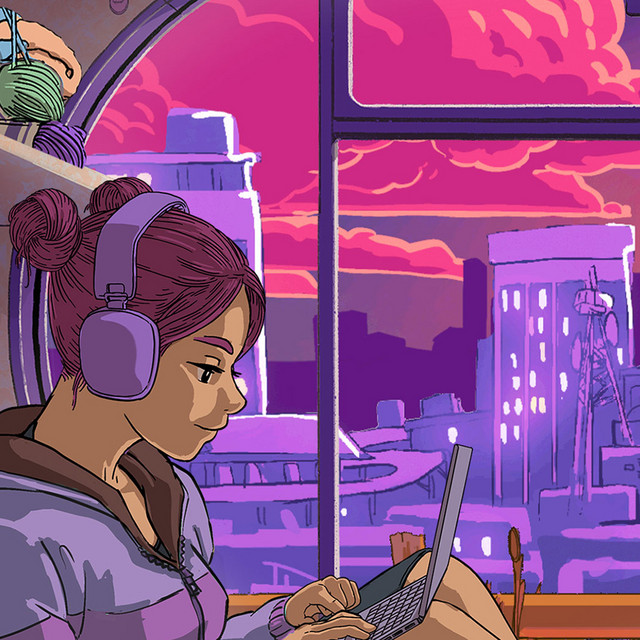
• Algorithmic recommendations, aesthetic thumbnails, and looped visuals (night cityscapes, anime stills) helped establish a recognizable look-and-feel, turning the approach into a meme‑like micro‑genre.
Mainstream spread and short‑form video (2020s)
• With the rise of TikTok/Reels/Shorts, slowed-and-reverb edits became viral audio beds for mood videos and micro‑storytelling. Rights‑cleared or unofficial uploads circulated widely, pushing labels to authorize or commission official slowed versions.
• Parallel internet scenes—drain/spacey cloud-rap offshoots, chill/drift phonk, and late‑night lo‑fi—absorbed the aesthetic, cementing slowed‑and‑reverb as a ubiquitous post‑production language rather than a single scene.
Today
• The style is platform‑native and decentralized: thousands of bedroom editors, DJs, and channels use similar chains, with some artists now releasing official “slowed + reverb” alternates alongside originals. Its lasting contribution is a codified, emotionally legible sound that translates across genres and social platforms.
Source selection
• Choose a track with strong vocal presence and sustained harmonies (R&B, pop ballads, indie dream pop, trap/R&B crossovers). Songs with lush pads or guitars take particularly well to reverb.
Core processing chain
• Time/pitch: Slow by roughly 5–15% (e.g., 0.85–0.95 playback speed). Optionally pitch down −1 to −2 semitones to preserve warmth after time‑stretching.
• Reverb: Use a plate or hall with long decay (2.5–5.5s), low pre‑delay (5–20 ms), and moderate wet/dry (10–25%). High‑pass the reverb return (~150–250 Hz) to avoid muddy lows.
• EQ/tilt: Gentle high‑shelf attenuation (−1 to −3 dB above 6–8 kHz) softens transients; a small low‑shelf lift (+1 to +2 dB around 120–180 Hz) restores body.
• Compression/glue: Light bus compression (1.5–2:1, slow attack, medium release) to smooth dynamics after stretching.
Optional sweeteners
• Chorus or micro‑pitch on the reverb return to thicken tails.
• Subtle tape saturation for roundness; very light wow/flutter for nostalgia.
• Visuals: Loop calm, night‑time, or vaporwave‑adjacent visuals to reinforce mood when publishing.
Arrangement and ethics
• Avoid excessive chopping—the edit’s character comes from sustained space and time dilation.
• Mind rights: seek permission or use stems/royalty‑cleared content; many platforms now support official slowed versions.
Mastering for platforms
• Keep integrated loudness around −13 to −11 LUFS for streaming; preserve headroom so long tails don’t clip. Mono‑compatibility check reverb returns and low end.

Top albums




Best playlists




Top tracks
Locked
Share your favorite track to unlock other users’ top tracks
Upcoming concerts
in this genre
