Your digging level
Description
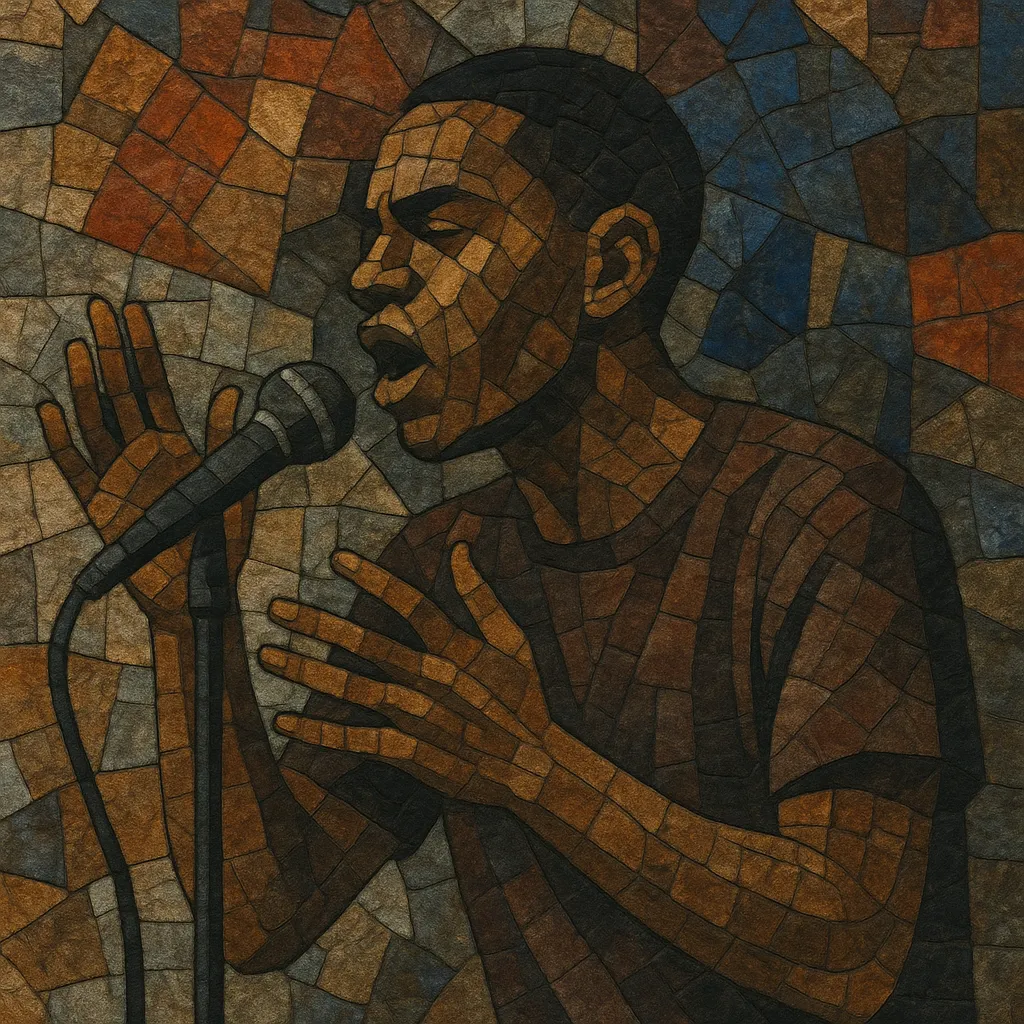
Slam poetry is a performance-centered form of spoken word in which poets deliver original work on stage, often in a competitive setting judged by the audience. Pieces are written to be heard rather than read, emphasizing voice, cadence, pacing, and the emotional arc of a live performance.
Originating in Chicago in the mid-1980s, slam poetry draws on open-mic culture, beat-era readings, jazz-inflected recitation, dub poetry’s political urgency, and hip hop’s rhythmic and rhetorical power. Typical slams limit poems to about three minutes, forbid props and costumes, and prize immediacy, clarity, and audience connection. Themes frequently include identity, social justice, intimacy, humor, and personal testimony.
History
Slam poetry emerged in Chicago in the mid-1980s as a populist alternative to academic poetry readings. At the Green Mill Cocktail Lounge, Marc Kelly Smith organized the Uptown Poetry Slam (launched in 1986), introducing the idea of audience judges, time limits, and direct crowd engagement. This format reframed poetry as a live, communal event, influenced by beat poetry readings, jazz-inflected delivery, dub poetry’s political edge, and the cadence and punch of hip hop.
Slam spread rapidly across the United States through venues such as the Nuyorican Poets Cafe in New York City, which became a national hub for competitive teams and individual poets. The National Poetry Slam and related circuits formalized rules and community norms, while regional and collegiate slams proliferated. This period established core conventions: original work, no props, short time limits, and audience scoring.
Television and stage productions helped bring slam into the mainstream. Def Poetry (on television and Broadway) showcased performance poets to wider audiences, elevating figures who bridged slam, hip hop, theater, and publishing. Simultaneously, youth-focused festivals like Brave New Voices and citywide competitions such as Louder Than a Bomb nurtured the next generation, embedding slam in schools and community arts programs.
International slam scenes flourished across Europe, Africa, Asia, and Latin America, with national and continental championships adopting and adapting the format. Online video platforms and dedicated channels amplified reach, making viral performances part of the genre’s ecology. While debates persist about competition’s influence on aesthetics, slam remains a vital platform for community storytelling, activism, pedagogy, and literary careers.