Your digging level

For this genre
0/8
🏆
Sign in, then listen to this genre to level up

Description

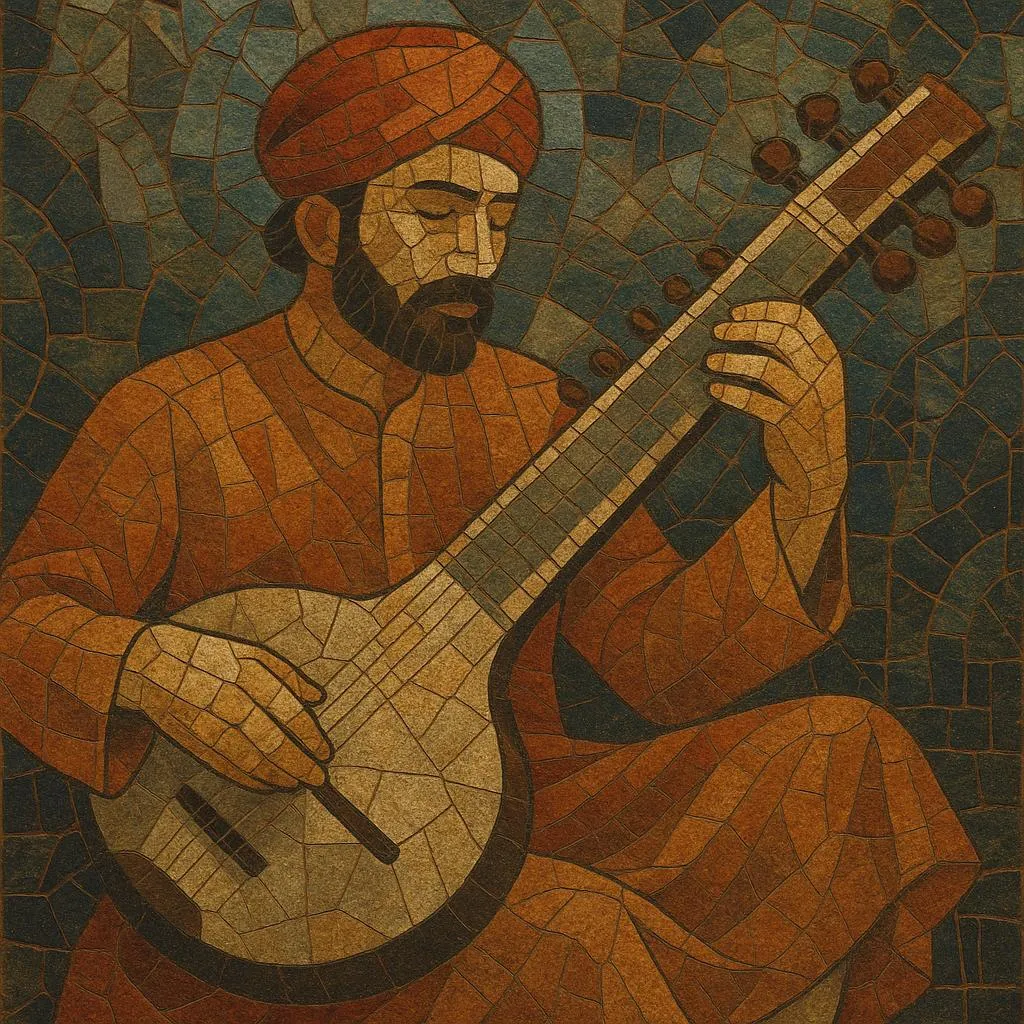
Sarod refers to both the North Indian (Hindustani) classical repertoire played on the sarod and the instrumental idiom developed around the instrument itself. The sarod is a fretless, short‑necked, skin‑topped lute with a polished metal fingerboard, multiple sympathetic strings (tarab), and a bright, cutting tone distinct from the sitar.

Typically fitted with 17–25 strings (4–6 main melody strings, 2–4 chikari/drone strings, and 9–15 sympathetic strings), it is plucked with a stiff plectrum (java) traditionally made from coconut shell or a modern synthetic. The absence of frets allows wide meend (glissando) and nuanced gamak (oscillation), making the sarod ideal for exploring raga microtonality and long, sculpted phrases.

Performance follows Hindustani classical conventions: a contemplative alap, the pulse‑finding jod, the driving jhala, and one or more composed gats with tabla in talas such as teentaal, ektal, jhaptal, or rupak. Distinct gharanas (lineages)—notably the Senia Bangash/Gwalior, Shahjahanpur/Lucknow, and Maihar schools—shape repertoire, right‑hand stroke vocabularies, and ornament priorities.


Sources: Spotify, Wikipedia, Discogs, RYM, MB, user feedback and other online sources

History

Origins (late 18th–19th century)

The sarod coalesced in North India from earlier Central/South Asian short‑necked lutes, especially the Afghan rubab. As courtly Hindustani music absorbed Persianate aesthetics under late Mughal influence, makers and musicians adapted the rubab—replacing gut frets and wooden fingerboard with a smooth metal plate, adding a goatskin soundboard and sympathetic strings—to increase sustain and raga suitability. By the 1800s, the instrument’s modern contours were established in centers such as Gwalior, Lucknow, and Shahjahanpur.

Lineages and idiom (19th–early 20th century)

Family lineages (gharanas) crystalized the sarod’s technique and repertoire. The Senia Bangash line (Pathan origins) emphasized powerful right‑hand strokes and clarity of bol (picking syllables). The Shahjahanpur/Lucknow tradition cultivated lyrical meend on the metal fingerboard and refined vilambit (slow) development. The Maihar school, associated with Allauddin Khan, synthesized dhrupad‑influenced alap‑jod‑jhala architecture with expansive raga exploration and rigorous tala interplay, forming the template for modern concert sarod.

Global reach (mid–late 20th century)

In the mid‑1900s, sarod entered the international stage as leading maestros toured globally and established teaching institutions. The instrument’s fretless expressivity and emphatic attack appealed to listeners beyond India, helping to catalyze Indo‑jazz and world‑fusion experiments while keeping the classical alap–gat grammar intact.

Contemporary practice (late 20th century–present)

Today, sarod thrives across gharanas but also in collaborative settings with jazz, new music, and film scoring. Luthiers continue to optimize scale length, stringing, and sympathetic layouts; performers refine right‑hand java techniques and left‑hand nail‑to‑metal contact to balance sustain and articulation. While innovations flourish, core raga grammar, tala cycles, and the alap–jod–jhala–gat arc remain the style’s backbone.

How to make a track in this genre

Setup and tuning
•   Instrumentation: Sarod (lead), tabla (rhythmic accompaniment), and tanpura (drone); occasionally additional tanpuras or swarmandal. •   Tuning: Choose a tonic (Sa) comfortable for the player; tune chikari (drone) strings to Sa/Pa and sympathetic strings to the scale degrees of the chosen raga to enhance resonance.
Formal structure
•   Alap: Unmetered, pulse‑free exposition of the raga. Outline vadi/samvadi (primary/secondary tones), characteristic phrases (pakad), and register contours. •   Jod: Introduce a steady pulse without percussion; build momentum with denser patterns and early jhala hints. •   Jhala: Fast, bright rhythmic drive using chikari accents and rapid alternation of strokes. •   Gat: Present one or more fixed compositions (gats) in talas such as teentaal (16), ektal (12), jhaptal (10), or rupak (7). Begin in vilambit madhyalaya for expansion, then conclude with drut (fast) for climax.
Technique and ornamentation
•   Right hand (java): Use firm down (da) and up (ra) strokes; vary stroke groupings and emphasis to articulate layakari (rhythmic play). For jhala, intersperse melody plucks with chikari strikes for sparkle. •   Left hand: Use nail contact on the metal fingerboard for wide, smooth meend (glissando) up to several semitones; deploy kan (grace notes), andolans (slow oscillations), and gamak (energetic shakes) in line with the raga’s grammar.
Rhythm and interaction
•   Establish theka with tabla only after the raga is clearly profiled. Explore layakari—syncopations, tisra/chatusra overlays, tihai cadences—without distorting raga identity. •   Cadences: Conclude sections with tihais resolving on sam (beat 1) and align climactic jhala passages with tabla relaunches.
Compositional tips
•   Select a raga with a clear pakad (e.g., one that rewards long meend) and pair it with a tala that suits the mood (vilambit teentaal for gravitas, rupak for lightness). •   Balance architecture: roughly 40–60% alap–jod–jhala (unmetered development) and 40–60% gats (metered elaboration), adjusting for concert length. •   Color and register: Exploit the sarod’s bright upper register for jhala brilliance and its singing middle register for vilambit alaap. •   End with a compact drut gat and spirited jhala to deliver a decisive, audience‑energizing finish.

Top tracks

Locked
Share your favorite track to unlock other users’ top tracks

Upcoming concerts

in this genre
Influenced by
Has influenced

Download our mobile app

Get the Melodigging app and start digging for new genres on the go
© 2026 Melodigging
Melodding was created as a tribute to Every Noise at Once, which inspired us to help curious minds keep digging into music's ever-evolving genres.
Buy me a coffee for Melodigging