Your digging level
Description
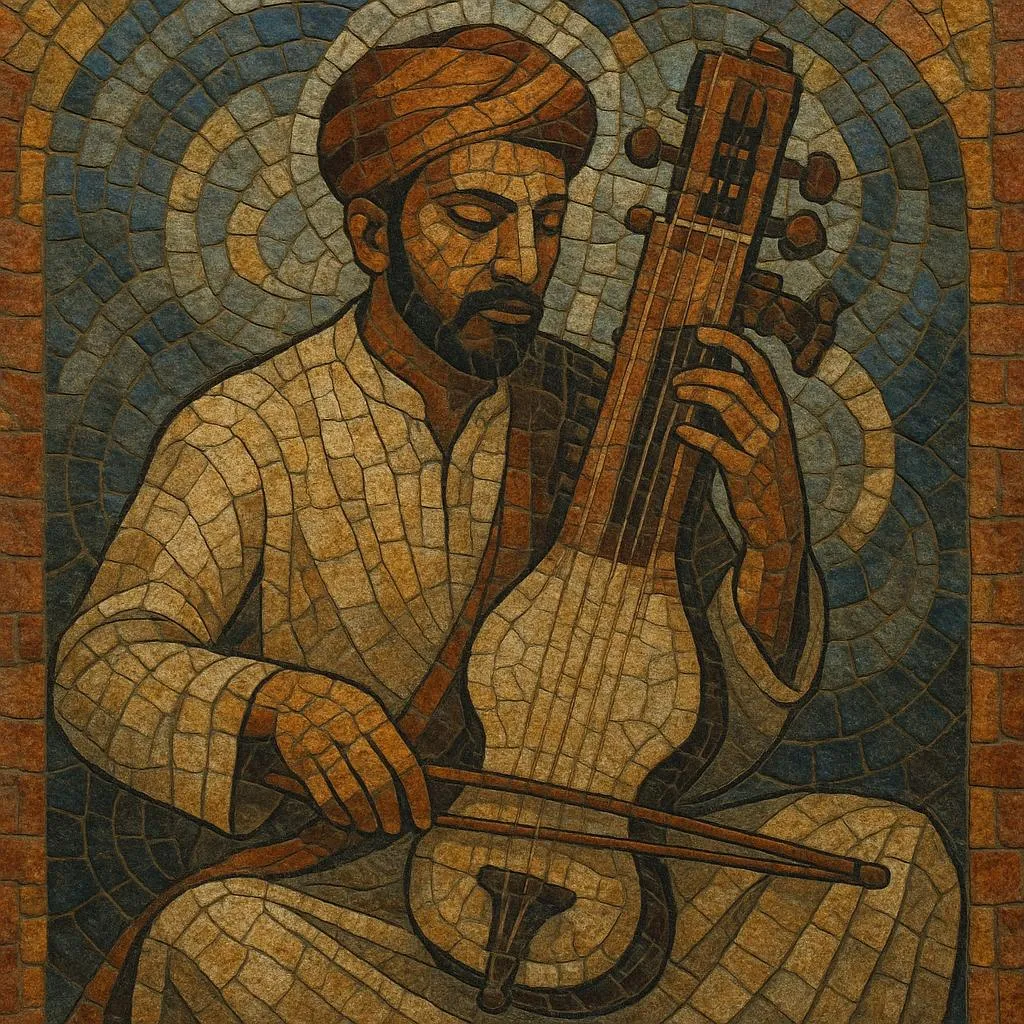
Sarangi refers to the North Indian (Hindustani) classical and folk repertoire centered on the bowed, skin‑topped lute called the sarangi, celebrated for its voice‑like timbre and microtonal nuance.
In performance, sarangi either accompanies vocal genres (such as khayal, thumri, dadra and ghazal) or serves as a solo raga instrument. Its three main gut strings are traditionally tuned to tonic–dominant–tonic, while a choir of sympathetic strings (often 30+), tuned to the raga scale, creates a rich halo of resonance. Meend (glides), andolans (slow oscillations), and fast gamaks (shakes) enable the instrument to closely imitate the human voice.
Stylistically, sarangi music follows Hindustani raga grammar and tala cycles, moving from unmetered alap to composed gats in vilambit, madhya and drut tempi with tabla, sustained by tanpura or swarmandal drones. The instrument is equally at home in courtly light‑classical forms and in vibrant regional folk idioms across Rajasthan, Punjab, and adjoining regions.
History
The sarangi’s lineage crystallized in the Mughal era (17th century), when bowed lutes with skin soundboards and gut strings coalesced into the modern form. Courtly patronage fostered its role as the premier accompanying instrument for vocal music, prized for its capacity to mirror lyric inflection and microtonal nuance.
By the 18th–19th centuries, sarangi was ubiquitous in Hindustani khayal and light‑classical genres (thumri, dadra). Its close timbral proximity to the singing voice made it indispensable in mehfils (salon concerts). Sarangi also appeared in Sufi and qawwali contexts, and in numerous regional folk styles across North and Northwestern India.
The 20th century saw a decisive elevation of sarangi as a solo raga instrument. Artists such as Bundu Khan and later Ram Narayan articulated a concert idiom paralleling vocal architecture—alap–vilambit–madhya–drut—demonstrating the instrument’s virtuosity and raga‑dharma beyond accompaniment.
After Independence, shifting patronage and the ascendancy of harmonium reduced sarangi’s routine use in some accompaniment settings. Yet a lineage of maestros (Sabri Khan, Sultan Khan, Dhruba Ghosh, Ramesh Mishra and others) sustained both solo and accompaniment traditions. Cross‑genre collaborations and recordings broadened its global profile, bringing sarangi timbres into film scores and Indo‑fusion. Today, classical gharanas and folk lineages (e.g., Rajasthani sarangi traditions) coexist, while younger artists experiment with new ensembles, digital amplification, and intercultural formats.