Your digging level

For this genre
0/8
🏆
Sign in, then listen to this genre to level up

Description

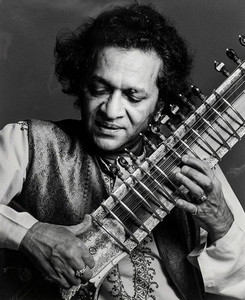
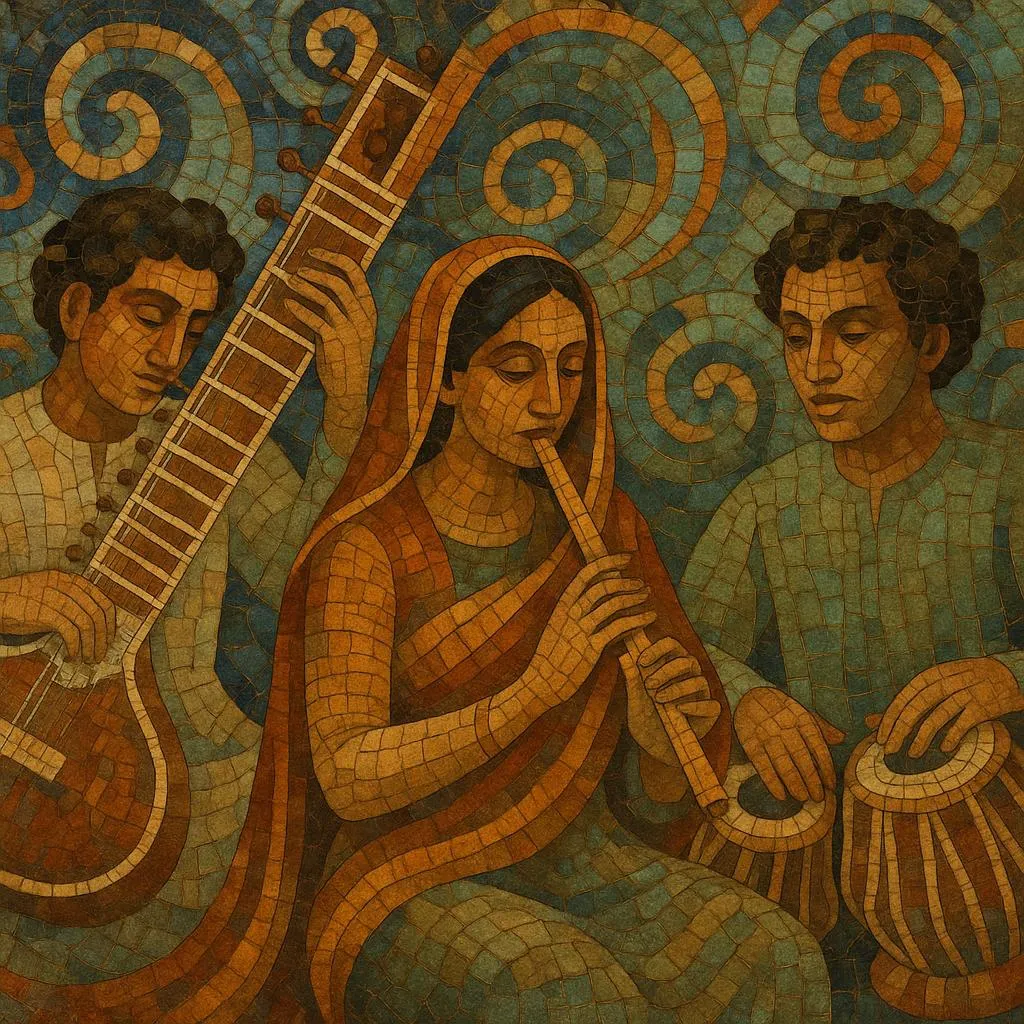
Hindustani instrumental music is the North Indian classical tradition performed on instruments such as sitar, sarod, bansuri (bamboo flute), sarangi, shehnai, santoor, rudra veena, violin and slide guitar, accompanied by a drone (tanpura) and—during the metered sections—tabla.

It is raga- and tala-based: a raga supplies the melodic grammar, mood and characteristic phrases, while a tala provides the cyclical rhythmic framework. A typical performance unfolds from unmetered improvisation (alap) to rhythmically animated development (jor), to a brisk, percussive climax (jhala), and then into composed themes (gat) in medium or fast tempo with tabla, elaborated through improvisation (taans, layakari) and cadential fireworks.

Two distinct aesthetics are often balanced: tantrakari ang (instrumental virtuosity exploiting an instrument’s idiom—plucked patterns, strokes, tremolo, jhala) and gayaki ang (a vocal-inspired approach that prioritizes lyrical phrasing, meend/glides, and nuanced microtonal inflection).


Sources: Spotify, Wikipedia, Discogs, RYM, MB, user feedback and other online sources

History

Origins and Courtly Consolidation (16th–18th centuries)

Hindustani instrumental practice coalesced in North Indian courts under Mughal patronage, where Persian aesthetics, Sufi culture, and indigenous temple/court traditions met. While ancient veena lineages predate the Mughals, the instrumental idioms and gharana structures matured in this era, alongside dhrupad as the dominant classical form.

Evolving Idioms: From Dhrupad to Khyal and Beyond (18th–19th centuries)

As khyal rose to prominence, instrumentalists adapted its freer, lyrical expressivity (gayaki ang) to their instruments, while retaining dhrupad’s gravitas in alap and jor. New instruments and refinements emerged—sitar gained its modern form, sarod developed its powerful, fretless voice, and shehnai and sarangi took on prominent classical roles. Court and hereditary lineages (gharanas) codified technique, repertoire (gats), and stylistic nuances.

Recording Era and Globalization (20th century)

With radio, records, and concert circuits, maestros such as Ravi Shankar, Ali Akbar Khan, Vilayat Khan, Bismillah Khan, and Shivkumar Sharma popularized instrumental Hindustani music in India and worldwide. The tabla duos of Alla Rakha and Zakir Hussain revolutionized rhythmic artistry. Pedagogy spread through institutions and international schools, establishing robust global audiences and student communities.

Contemporary Practice (late 20th–21st centuries)

Today, artists balance tradition with innovation: reviving rare ragas, exploring complex talas, refining microphone and stagecraft for acoustic nuance, and collaborating across genres (jazz, ambient, electronic). The alap–jor–jhala–gat arc remains central, while both gayaki and tantrakari approaches continue to evolve through new instruments (e.g., mohan veena/slide guitar) and expanded global pedagogy.

How to make a track in this genre

Core Materials: Raga and Tala
•   Choose a raga appropriate to the time of day/season and define its arohana–avarohana (ascending/descending), vadi–samvadi (primary tones), pakad (signature phrases), and rasa (affective mood). •   Select a tala that suits the desired pace and character (e.g., Teental 16, Jhaptaal 10, Rupak 7, Ektal 12). Internalize claps/waves and vibhag structure to anchor rhythmic design.
Form and Flow of Performance
•   Alap: Begin unmetered, unfolding the raga’s swaras with meend (glides), andolan (slow oscillations), and microtonal shrutis; progressively add density and register. •   Jor: Introduce a steady pulse (no tabla), articulating tans and rhythmic motifs; increase energy and interplay of melody with implied tala. •   Jhala: Accentuate the drone strings or fast-picked strokes to create brilliant rhythmic sparkle; use tihai (thrice-repeated cadences) to conclude. •   Gat with Tabla: Present a composed theme (gat) in madhya or drut laya, then improvise—swar vistar (melodic expansion), tans (fast runs), bol-bant and layakari (rhythmic play), punctuating with tihais and sam-landing precision.
Instrument-Specific Tips
•   Sitar/Sarod: Exploit meend across frets/fretless slides; balance gayaki ang with crisp tantrakari jhala; tune sympathetics (tarab) carefully for resonance. •   Bansuri: Prioritize breath-shaped phrasing and smooth meend; articulate sutta (grace notes) cleanly; manage long-breath alap arcs. •   Santoor: Use nuanced mallet strokes and dampening to simulate meend-ideas; voice chords subtly without violating raga grammar. •   Sarangi/Violin: Emphasize vocal-like portamento and gamak; intonation must honor raga shrutis. •   Tabla (accompaniment): Support the soloist’s phrasing; vary theka color, introduce rela, peshkar, kayda in solos; place tihais to frame sam without crowding.
Harmony, Timbre, and Drone
•   Keep harmony implicit: sustain the tanpura (usually Sa–Pa–Sa or Sa–Ma–Sa) to define tonal center; avoid chordal progressions that break raga grammar. •   Aim for a warm, overtone-rich timbre; adjust stroke pressure and mic placement to capture meend and dynamic micro-ornaments.
Practice and Composition Strategies
•   Internalize raga grammar by singing (akar/sa–re–ga) before playing; transcribe bandishes/gats across talas. •   Compose multiple gats (vilambit/madhya/drut) in the same raga to shape contrasting sections; craft tihais of varying math (arithmetics) to resolve strongly to sam. •   Develop layakari systematically: start with simple duplets/triplets, then cross-rhythms (3-, 5-, 7-phrasing) within the tala cycle.
Stagecraft and Aesthetic
•   Calibrate the arc of intensity from contemplative alap to exhilarating jhala; match encore choices to time-of-day raga conventions. •   Preserve raga purity while allowing inventive, tastefully placed novelty—serve the raga’s rasa above all.

Top tracks

Locked
Share your favorite track to unlock other users’ top tracks

Upcoming concerts

in this genre
Influenced by
Has influenced

Download our mobile app

Get the Melodigging app and start digging for new genres on the go
© 2026 Melodigging
Melodding was created as a tribute to Every Noise at Once, which inspired us to help curious minds keep digging into music's ever-evolving genres.
Buy me a coffee for Melodigging