Your digging level
Description
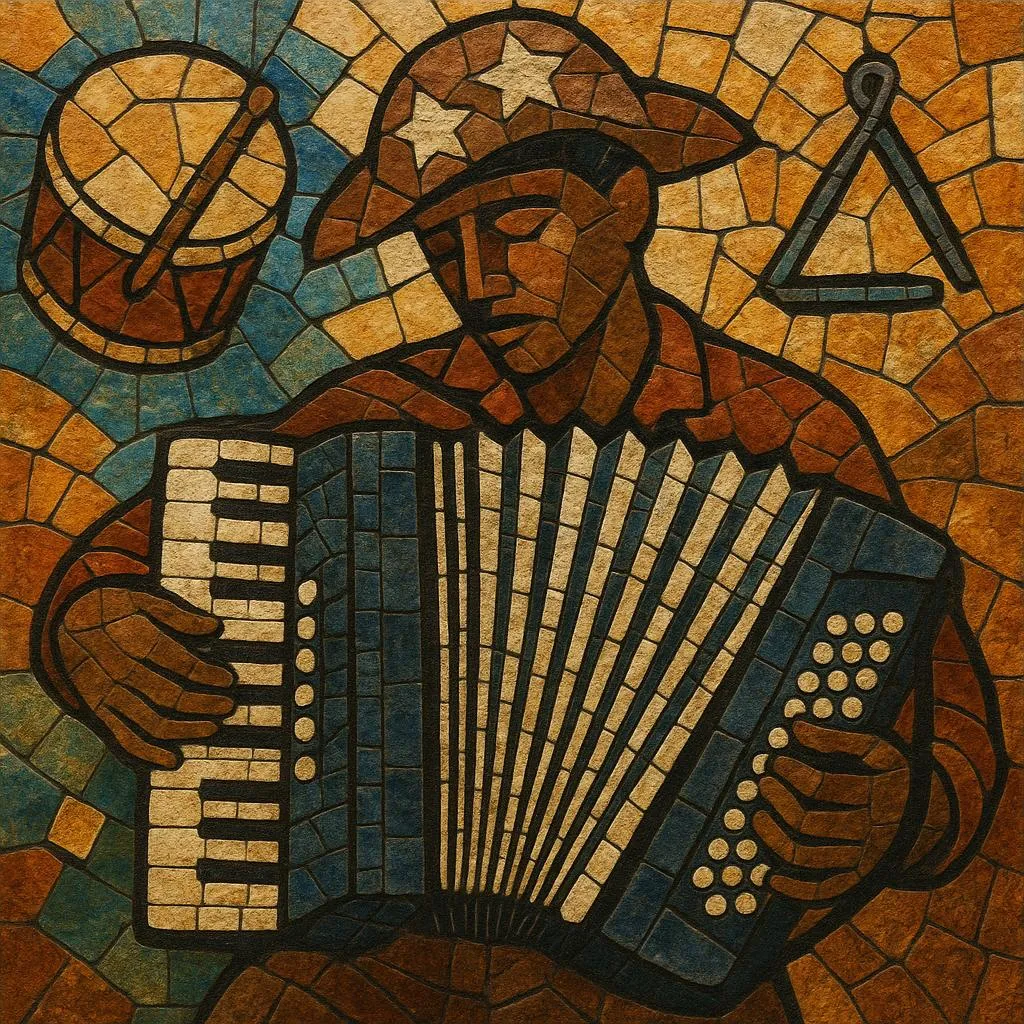
Sanfona is a Brazilian accordion-centered style rooted in the Northeast, where the instrument (called sanfona in Portuguese) leads dance grooves such as baião, xote, arrasta-pé, and forró pé-de-serra.
Characterized by agile right‑hand melodies, syncopated bass–chord patterns on the left hand, and a propulsive trio format (accordion, zabumba, and triangle), the style balances rustic dance energy with lyrical, folkloric themes about the sertão (hinterlands), romance, and festivity. While often vocal, there is a robust tradition of instrumental accordion choros, baiões, and xotes, showcasing virtuosic runs, mordents, and appoggiaturas.
The sound can be earthy and percussive in 8‑bass diatonic practice (“oito baixos”) or fuller and harmonically expansive on piano accordion, but in all cases the sanfona is the melodic and emotional center.
History
Accordion instruments arrived in Brazil in the 19th century, spreading through rural festivities in the Northeast. By the early 20th century, the sanfona was embedded in regional dances and religious/seasonal gatherings (especially the June festivities), providing both melody and rhythm for communal dancing.
The 1940s brought the baião craze via national radio and records, placing the sanfona at the center of Brazil’s popular imagination. The classic Northeast trio—sanfona (accordion), zabumba (bass drum), and triangle—crystallized as the canonical format of forró pé‑de‑serra. This era defined the idiom’s harmonic language (I–IV–V with mixolydian colors), rhythmic patterns, and repertoire of danceable forms (baião, xote, arrasta‑pé).
Masters from the Northeast developed a concert and studio approach that embraced instrumental virtuosity, composition, and cross‑pollination with choro and MPB. Piano accordion became common alongside the traditional 8‑bass diatonic instrument, broadening harmonic possibilities (extended chords, chromatic voice‑leading) while keeping the dance pulse intact.
University circuits and urban festivals helped renew interest in pé‑de‑serra ensembles, while modern productions (from forró universitário to piseiro and electronic forró) kept the sanfona’s timbral identity in mainstream dance contexts—sometimes via synth/romplers but often still featuring the acoustic instrument on stage. Today, sanfona remains both a dance engine and a concert instrument, symbolizing Northeastern Brazilian culture at home and abroad.