Your digging level
Description
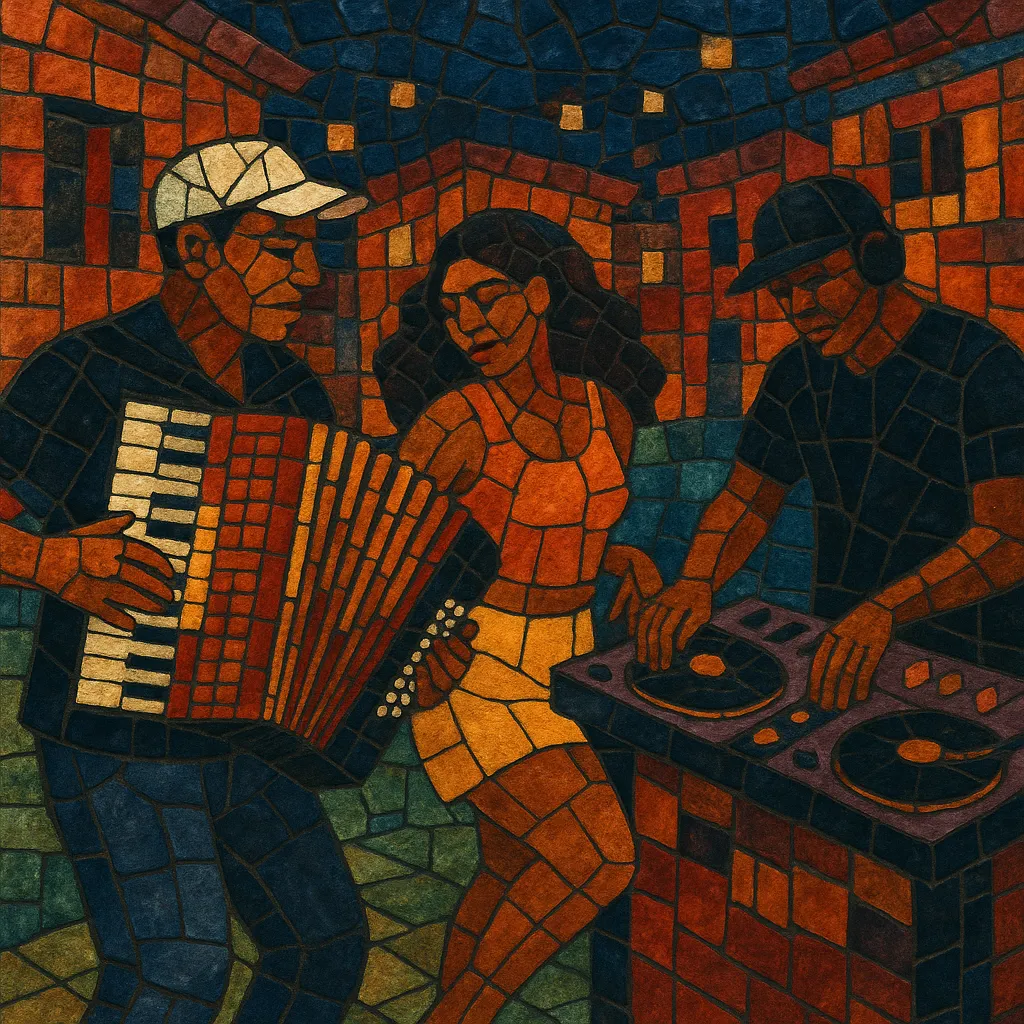
Forró de favela is a romantic, small-club strain of forró that emerged on the outskirts of Fortaleza, in Brazil’s Northeast. Compared with the high-energy arena style of forró eletrônico, it favors slower tempos, intimate vocals, and lyrics that lean toward everyday love stories and neighborhood life.
Harmonically, it borrows colors from MPB (Música Popular Brasileira)—maj7 chords, richer extensions, and gentle guitar voicings—blending them with the classic triangle–zabumba–accordion groove. The result is danceable yet tender music that feels as comfortable at a community party as it does on local radio playlists.
History
Forró de favela took shape in the 2000s in the peripheries of Fortaleza, Ceará. Neighborhood dance spaces, community radios, and small indie labels nurtured a sound that softened the drive of mainstream forró, prioritizing slower grooves and intimate storytelling.
Artists began to fold MPB’s poetic lyricism and richer harmonies into traditional forró rhythms. This shift produced songs centered on romance, daily struggles, and hopeful narratives, all delivered with understated vocals and a gentler pulse suited to close-quarter dancing.
Low-cost studios and home recordings helped the style spread across bairros and adjoining towns. Live performances in modest clubes, festas de rua, and social events reinforced a community-first identity distinct from large-scale forró shows.
While sharing instrumentation with classic forró, the subgenre’s calmer pace and MPB-tinted writing set it apart from forró eletrônico’s stadium energy. Its intimate blueprint later informed newer, stripped-down pop-forró currents and set the stage for minimal, romantic trends in the 2010s.