Your digging level
Description
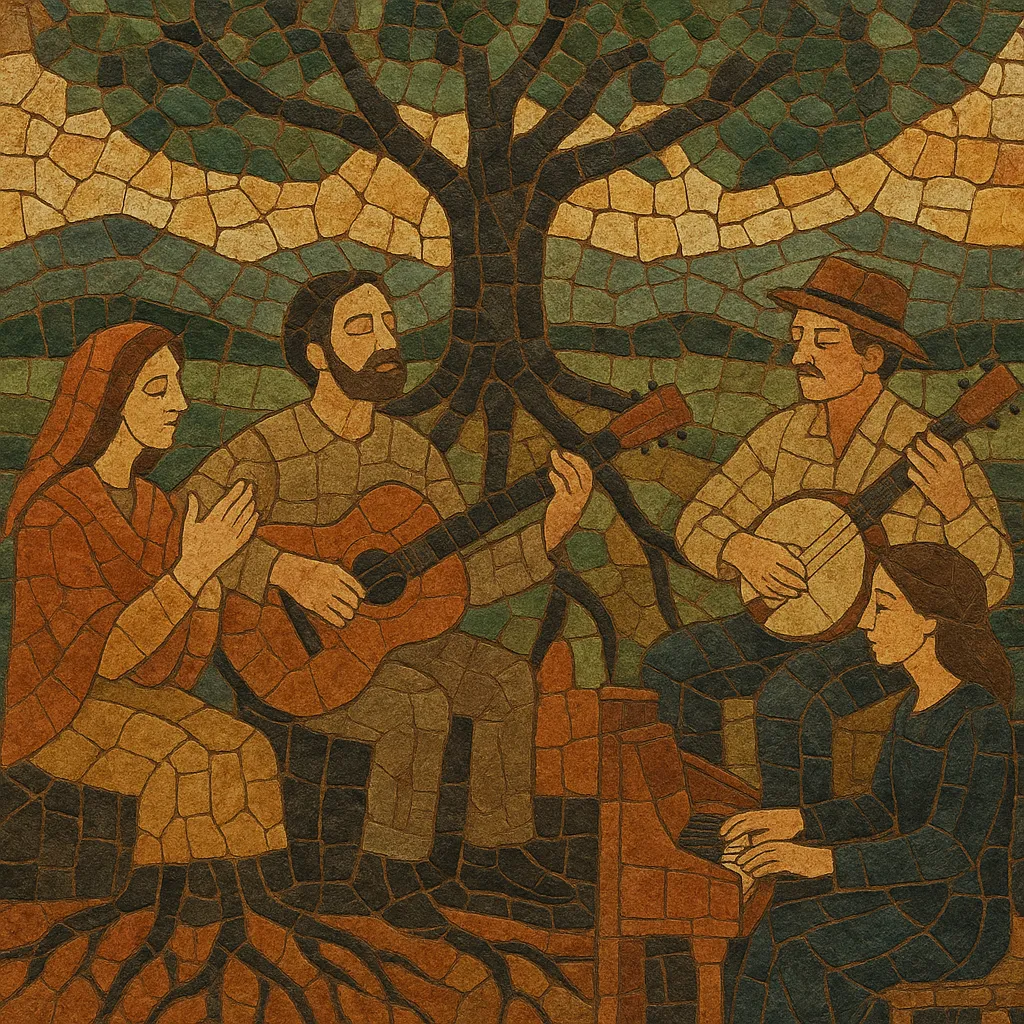
Roots worship is a stream of contemporary worship music that leans into the acoustic, organic sound world of Americana and folk traditions. Instead of arena-sized synths and polished pop gloss, it favors hand-played instruments, communal singing, and earthy textures.
Drawing from folk, bluegrass, country, and gospel, the style centers congregational songs with simple, memorable melodies and scripture-rich lyrics. You’ll hear acoustic guitar, banjo, mandolin, fiddle, upright bass, harmonium or pump organ, light percussion, and lots of claps and stomps. The result is worship that feels intimate, communal, and grounded—well-suited to living rooms, small chapels, and campfires as much as sanctuaries.
History
While folk-influenced worship has existed since the Jesus music era, roots worship cohered as a recognizable aesthetic in the 2010s. It emerged as a response to pop- and rock-driven contemporary worship, reclaiming acoustic, hand-played sound palettes from American folk traditions and foregrounding congregational singability.
Early catalysts included house-church and campus-ministry collectives that recorded live, community-oriented sessions, and Nashville’s singer‑songwriter circles that prized lyrical depth and biblical imagery.
Throughout the 2010s, artists and collectives began releasing albums that placed banjo, mandolin, fiddle, upright bass, and harmonium alongside worship choruses. Irish and Appalachian folk grooves, 3/4 and 6/8 waltzes, and gospel shuffles became common rhythmic vehicles for modern liturgy. The style also incorporated lament and justice-oriented texts, widening the thematic range beyond purely celebratory praise.
As gatherings and recordings embraced “in-the-room” ambience—creaking floors, crowd vocals, claps and stomps—the sound contrasted sharply with the click‑tight, synth‑heavy arena model. This resonated with congregations seeking warmth, participation, and a sense of place.
Roots worship now sits comfortably within the broader worship ecosystem: it informs small‑church sets, retreat and camp contexts, and liturgical projects focused on justice, vocation, and ordinary time. Its emphasis on communal singing, lyrical substance, and organic production continues to influence new worship collectives and singer‑songwriters.