

Your digging level

For this genre
0/8
🏆
Sign in, then listen to this genre to level up

Description

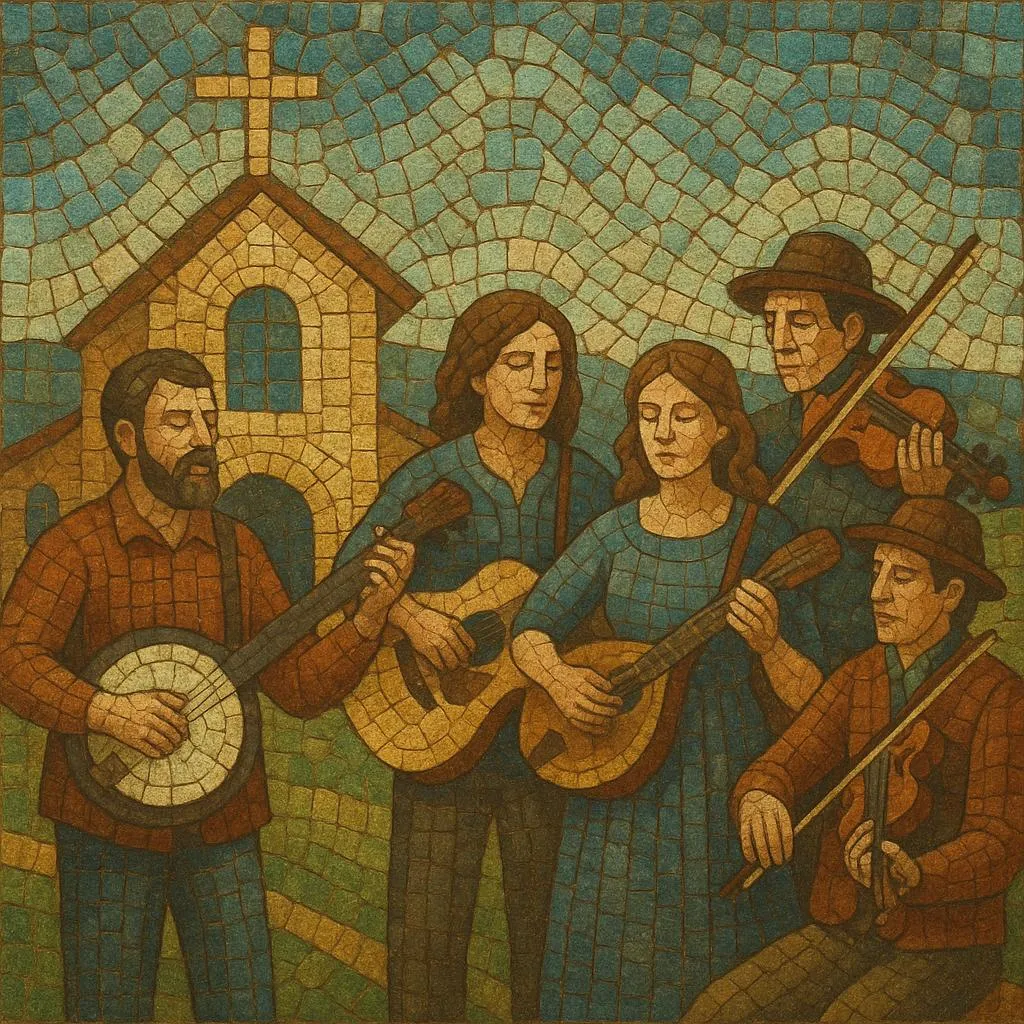
Christian bluegrass is a spiritually focused branch of bluegrass that sets biblical themes, testimonies, and hymnody to the fast-picking, high-lonesome sound of traditional string bands.

It keeps the core bluegrass instrumentation (banjo, mandolin, fiddle, guitar, upright bass, and dobro) while foregrounding four-part gospel harmony, call-and-response refrains, and lyrics centered on faith, redemption, and hope.

While many classic bluegrass acts recorded gospel sides, Christian bluegrass treats the devotional message as its primary purpose, blending the drive of Appalachian string music with the warmth and uplift of Southern and country gospel.


Sources: Spotify, Wikipedia, Discogs, Rate Your Music, MusicBrainz, and other reputable online sources

History

Origins (1940s–1950s)

Bluegrass pioneers such as Bill Monroe and the Stanley Brothers regularly recorded sacred sides, establishing a template for marrying tight quartet harmonies to driving string-band arrangements. In the early 1950s, dedicated family groups like The Lewis Family—often called the "First Family of Bluegrass Gospel"—focused almost exclusively on sacred repertoire, effectively defining Christian bluegrass as a distinct orientation within the bluegrass world.

Growth and Recognition (1960s–1990s)

Through the 1960s and 1970s, touring church concerts, radio programs, and regional festivals helped the style flourish. Acts such as The Easter Brothers and The Marshall Family carried the tradition across evangelical and Pentecostal communities, while mainstream bluegrass artists routinely issued all-gospel albums. In the 1980s and 1990s, Doyle Lawson & Quicksilver, The Cox Family, and Ricky Skaggs popularized polished, virtuosic arrangements and pristine vocal blends, bringing Christian bluegrass to larger bluegrass and country audiences.

Contemporary Era (2000s–present)

A new generation—including Dailey & Vincent, Rhonda Vincent & The Rage, and many regional ensembles—has maintained the balance of instrumental firepower and congregational singability. Modern productions often alternate between hard-driving, banjo-led numbers and a cappella quartet pieces, and they frequently recast traditional hymns in bluegrass meters. Christian bluegrass remains a staple at bluegrass festivals, church events, and faith-based gatherings, serving as both worship music and a living continuation of Appalachian gospel traditions.

How to make a track in this genre

Core Instrumentation and Ensemble
•   Use an all-acoustic string band: 5‑string banjo (Scruggs-style rolls), mandolin (off‑beat "chop"), fiddle (fills and breaks), steel‑string guitar (boom‑chuck rhythm and G‑run licks), upright bass (two‑beat walk), and optional dobro for lyrical counter-melodies. •   Feature tight, often four-part harmony (lead, tenor, baritone, bass). Include at least one a cappella or lightly accompanied quartet piece to echo Southern gospel tradition.
Rhythm, Harmony, and Form
•   Favor medium-to-brisk tempos with a clear two-beat feel and strong backbeat from the mandolin chop. •   Stick to diatonic harmony with I–IV–V progressions, common secondary dominants, and the occasional flat‑VII (Mixolydian color) typical of bluegrass. Use quick I–IV pedal passages to lift choruses. •   Write verse–chorus forms with a memorable, singable hook; add a short instrumental break after each chorus to trade solos between banjo, fiddle, and mandolin. Consider a whole‑step key change near the final chorus for an emotional lift.
Melodic and Vocal Approach
•   Aim for the high‑lonesome lead timbre supported by stacked, close harmonies. Employ call‑and‑response between lead and harmony parts to reinforce the message. •   Keep melodies within congregational range, with strong stepwise motion and clear cadences that invite audience participation.
Lyrics and Themes
•   Center lyrics on Christian faith: grace, salvation, testimony, pilgrimage, heaven/eternity, and comfort in trials. Draw from scripture and hymn imagery (Jordan, Zion, the cross, the narrow way). •   Adapt public-domain hymns into bluegrass meters, tightening phrasing to fit the groove and adding refrains or tags that encourage singing along.
Arrangement and Production Tips
•   Open with a signature instrumental kick (banjo roll or fiddle pickup), then present verse–chorus cycles punctuated by tasteful breaks. •   Use a single-mic or clustered mic technique live to balance voices and instruments and encourage dynamic blend and stagecraft typical of traditional bluegrass. •   Keep arrangements uncluttered; prioritize intelligibility of the message and the blend of harmony vocals over excessive ornamentation.

Top tracks

Locked
Share your favorite track to unlock other users’ top tracks
Influenced by
Has influenced
Challenges
Digger Battle
Let's see who can find the best track in this genre
© 2026 Melodigging
Melodding was created as a tribute to Every Noise at Once, which inspired us to help curious minds keep digging into music's ever-evolving genres.
Buy me a coffee for Melodigging
