Your digging level
Description
Raï Algérien (Algerian raï) is a popular music style that emerged in and around Oran, Algeria, blending rural Bedouin song with urban cafés-chantants, cabaret culture, and later Western pop instrumentation.
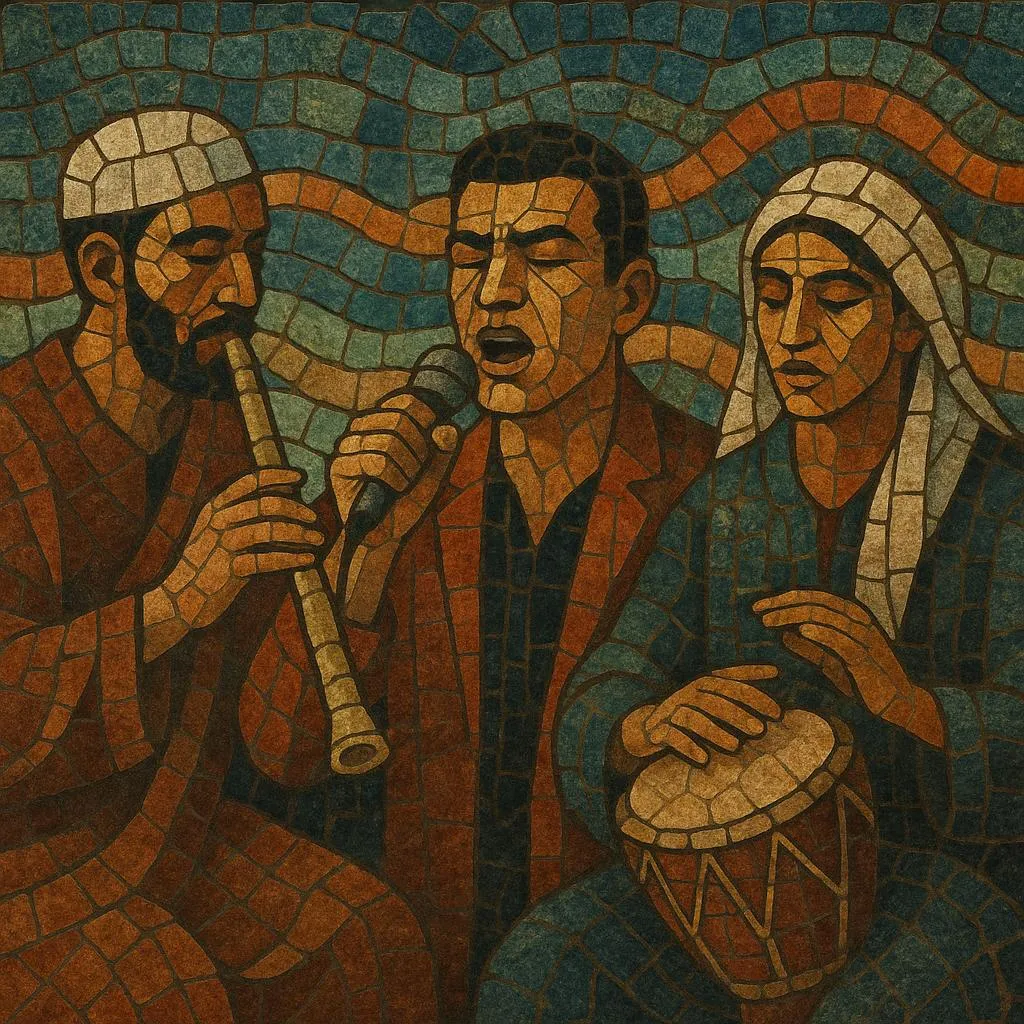
Characterized by impassioned, melismatic vocals, minor-mode melodies, and driving danceable rhythms, raï lyrics speak frankly about love, longing, freedom, social pressures, alcohol, and the everyday lives of youth. The sound evolved from acoustic gasba (reed flute) and guellal (clay drum) accompaniments to horn-driven, electric, and synth-based arrangements that embraced disco, funk, rock, and later electronic production.
Today, Raï Algérien ranges from raw, rootsy performances to glossy radio pop, but it remains instantly recognizable for its emotive singing, catchy refrains, and a groove that invites both celebration and reflection.
History
Raï was born in the port city of Oran (Wahran) in colonial-era Algeria when Bedouin (bedoui) vocal traditions met urban entertainment circuits—cafés-chantants and cabarets. Early raï was often performed by cheikhat (female singer-performers) who sang candidly about love, desire, and social realities, accompanied by gasba flute and guellal drum. Urban styles such as chaâbi and malhun poetry, with roots in Andalusian classical practice, helped shape raï’s melodic language and lyrical directness.
After independence (1962), raï migrated from informal gatherings into dance halls and recordings. Musicians added trumpets, saxophones, and electric guitars, modernizing the sound. Bands began fusing local rhythms with horn riffs and Western dance grooves, setting the stage for a pop-oriented transformation.
In the 1980s, Oran’s scene embraced synths, drum machines, and disco/funk/rock aesthetics, creating the internationally recognizable pop-raï. Producers and bandleaders popularized hooky choruses, four-on-the-floor beats, and compact song forms while retaining Arabic melodic sensibility (maqam). This era produced star vocalists ("cheb/cheba") who brought raï to national and diaspora youth.
Algerian political turmoil in the 1990s hit musicians hard, yet the Algerian and Franco-Maghrebi diaspora propelled raï into global circuits. International collaborations and major-label releases brought the genre to world-pop stages. The period also witnessed tragic losses that underscored artists’ courage in singing about love and social issues.
In the 2000s–2020s, Raï Algérien thrives across North Africa, France, and global diasporas. Producers fold in R&B, hip hop, reggaeton, and EDM elements, experiment with Auto-Tune, and craft “raï’n’b” and trap-tinged hybrids—while a roots revival preserves acoustic gasba/guellal aesthetics. Through continual reinvention, raï keeps its core: emotive vocals, candid storytelling, and a danceable, Maghrebi groove.