Your digging level

For this genre
0/8
🏆
Sign in, then listen to this genre to level up

Description

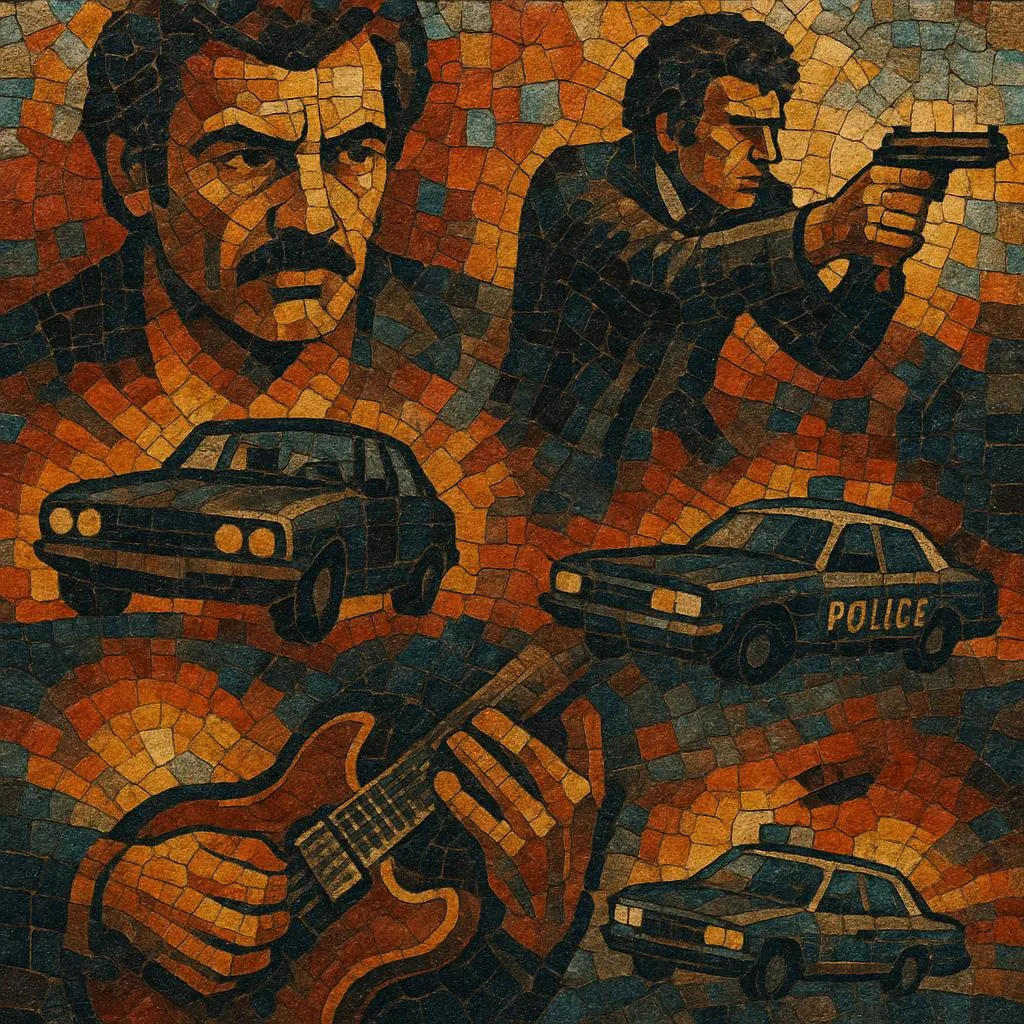
Poliziotteschi (often called poliziottesco in Italian) refers to Italy’s gritty cycle of police and crime films made chiefly in the 1970s. Musically, these films were scored with a hard‑hitting blend of jazz‑funk, electric rock, and cinematic orchestration that mirrored the genre’s urban violence, high‑speed chases, and moral ambiguity.

Typical scores feature wah‑wah guitars, driving breakbeats, muscular electric bass ostinati, biting brass sections, Rhodes/Clavinet keyboards, analog synth colors, and tense string figures. While firmly Italian in melody and arrangement, the sound was heavily influenced by contemporaneous French and American crime cinema and the funk/blaxploitation idiom, yielding a stylish, propulsive, and menacing musical language that has become a crate‑digging staple and a touchstone for modern “cinematic soul.”


Sources: Spotify, Wikipedia, Discogs, RYM, MB, user feedback and other online sources

History

Origins

Poliziotteschi emerged in Italy in the early 1970s as a local response to international crime cinema. Italian filmmakers, inspired by French policiers and American neo‑noir and blaxploitation crime films, refocused the lens on Italy’s own social unrest, corruption, and urban criminality. Composers—many already seasoned in library music and giallo/thriller scoring—brought a muscular, modern sound that fused jazz rhythm sections with rock and orchestral color.

The 1970s Boom

As directors such as Umberto Lenzi, Fernando Di Leo, and Enzo G. Castellari popularized the genre, a signature musical palette coalesced: breakbeat‑driven drums, syncopated electric bass lines, wah‑wah guitar riffs, brass stabs, Rhodes/Clavinet keyboards, and analog synth textures. Composers including Franco Micalizzi, Stelvio Cipriani, Piero Piccioni, Riz Ortolani, Ennio Morricone, Luis Bacalov, Guido & Maurizio De Angelis, Piero Umiliani, and Bruno Nicolai shaped a sound both cosmopolitan and distinctly Italian—sleek themes for anti‑heroes, tense ostinati for stakeouts, and explosive funk cueing for pursuits.

Musical Language

The idiom married Italian melodic sensibility with the groove logic of American funk and jazz‑rock: modal vamping (often Dorian/minor), terse motifs, and tightly arranged horn/string punctuation. Library‑music practices—modular cues, flexible stems, and rhythm‑forward writing—made the scores re‑usable across films and sequences.

Decline and Legacy

By the early 1980s, the cycle waned, but the music’s afterlife flourished. Hip‑hop producers and rare‑groove DJs mined poliziotteschi LPs for breaks and themes; reissue labels canonized the sound; and contemporary acts (e.g., Calibro 35) revived and reimagined the style. Today, the poliziotteschi score is recognized as a cornerstone of European crime‑funk and a key influence on trip‑hop, acid jazz, and modern “cinematic soul.”

How to make a track in this genre

Core instrumentation
•   Rhythm section: tight 70s drum kit (dry snare, open hats), electric bass (pick or fingerstyle) laying repetitive ostinati. •   Guitars: wah‑wah rhythm and clipped funk riffs; occasional overdriven leads for chase cues. •   Keys: Fender Rhodes, Hohner Clavinet, occasional Hammond; short vamp figures, percussive comping. •   Brass/woodwinds: trumpet/trombone/tenor sax for stabs, riffs, and urgent counter‑lines; occasional flute for cool, noirish color. •   Strings & synths: small string section for suspense pads and ostinati; analog synth (Minimoog/ARP) for drones, siren‑like bends, and punctuation.
Rhythm, harmony, and melody
•   Tempo: 100–115 BPM for pursuit/action; 70–90 BPM for stalking/suspense. •   Grooves: straight 4/4 with syncopated snare/ghost notes; breakbeat feel is common. Consider congas, tambourine, or shaker for propulsion. •   Harmony: vamp on i–bVII (e.g., Em–D) or two‑chord Dorian cycles; minor 7th chords, sus4, and quartal voicings keep it open and tense. •   Melody: terse, motif‑driven themes—often pentatonic or Dorian—stated by trumpet/sax or guitar; develop through sequence modulation and layering.
Cue architecture
•   Main title: a memorable funk theme with full band and brass hits. •   Stakeout/suspense cue: low‑register bass ostinato, soft drums, Rhodes tremolo, strings/synth pads, sparse melodic fragments. •   Chase cue: faster tempo, wah guitar chatter, punchy horn riffs, rising string lines, drum fills and sectional hits. •   Denouement/sting: short cadential hits, flanged guitar swell, or synth fall for scene transitions.
Production touches
•   Keep drums relatively dry and forward; close‑miked bass with slight tape saturation. •   Double horn lines for weight; use unison brass stabs to mark edits and cuts. •   Period FX: analog chorus/phaser on Rhodes/guitar; tape echo for lead lines; subtle spring reverb on snare.
Writing tips
•   Start from a bass ostinato that can loop under dialogue; design layers to add/remove intensity without breaking the groove. •   Use metric builds (8‑bar adds) and rhythmic hits that synchronize to on‑screen action. •   Reference modal centers (Dorian/Aeolian) and avoid dense functional harmony—momentum matters more than progression. •   For authenticity, study 1970s Italian soundtrack arranging: concise motifs, sectional contrast, and economy of materials.

Top tracks

Locked
Share your favorite track to unlock other users’ top tracks

Upcoming concerts

in this genre
Influenced by
Has influenced

Download our mobile app

Get the Melodigging app and start digging for new genres on the go
© 2026 Melodigging
Melodding was created as a tribute to Every Noise at Once, which inspired us to help curious minds keep digging into music's ever-evolving genres.
Buy me a coffee for Melodigging