Your digging level

For this genre
0/8
🏆
Sign in, then listen to this genre to level up

Description

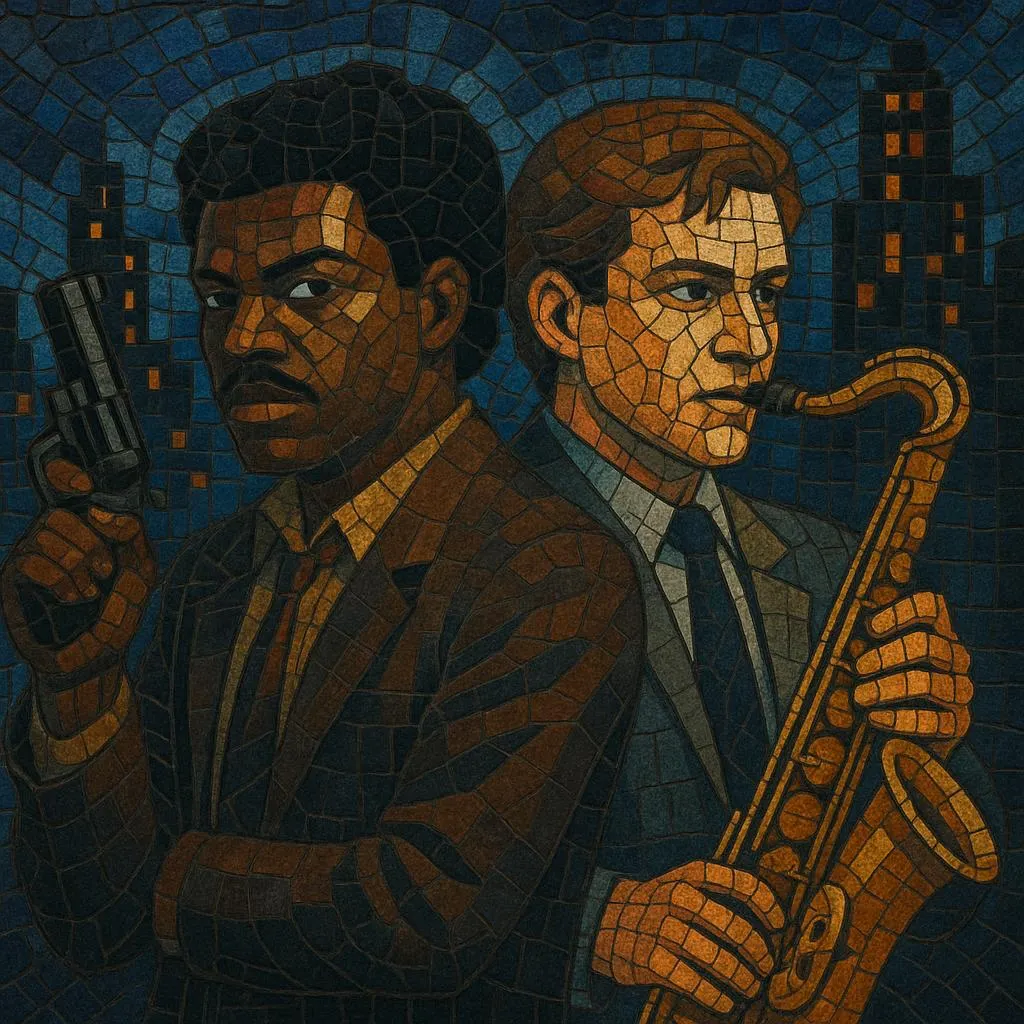
Buddy cop (as a soundtrack/style) refers to the sleek, urban action-music language that grew around 1980s and 1990s buddy-cop films: glossy analog and early-digital synths, punchy drum machines, bluesy electric guitar licks, and expressive saxophone leads.

It typically balances propulsive action cues (for chases and shootouts) with cool, nocturnal grooves (for stakeouts and street-lit cityscapes), reflecting the contrast between the two protagonists: one volatile, one restrained. Harmonies often lean on minor-key progressions with modal color (Aeolian/Dorian), while hooks are delivered as memorable synth riffs or guitar/sax motifs.

Production is characteristically “big 80s”: gated-reverb snares, chorus-laden guitars, and bright, FM/analog synth timbres—occasionally folding in funk-rock, jazz fusion, and, by the mid‑90s, touches of hip‑hop and new jack swing for swagger.


Sources: Spotify, Wikipedia, Discogs, Rate Your Music, MusicBrainz, and other online sources

History

Origins (late 1970s–early 1980s)

The buddy‑cop sound coalesced as American action/comedy films paired mismatched policemen and demanded music that could be both hard‑charging and coolly urban. Composers drew on contemporary funk‑rock, jazz fusion, crime jazz, and the then‑cutting‑edge world of analog/early‑digital synthesizers and drum machines.

Golden era (mid–late 1980s)

By the mid‑80s, the style crystallized: synth bass ostinatos, LinnDrum/TR‑808 snares with gated ambiance, neon‑lit FM leads, and soaring sax solos. Scores set a template of hooky themes for the duo, motorik action ostinatos for pursuits, and sultry cueing for night scenes. Pop tie‑ins and instrumental themes crossed into the charts, reinforcing the idiom’s signature gloss.

Diversification (1990s)

As hip‑hop and new jack swing reshaped urban sonics, buddy‑cop scores adopted heavier drum programming, turntable accents, and grittier guitar textures while retaining singable motifs. Orchestral layers grew in scale, but synths and electric rhythm sections remained central for streetwise energy.

Legacy and revival

In the 2010s, synthwave and other retro styles revived the sound’s neon palette and rhythmic feel, citing 80s buddy‑cop and action scores as key inspirations. The idiom remains a shorthand for kinetic camaraderie, cool danger, and glossy cinematic cityscapes.


How to make a track in this genre

Palette and instrumentation
•   Rhythm: Programmed drums (LinnDrum/TR‑808/TR‑707 aesthetics), tight 100–120 BPM grooves for chases; slower 80–100 BPM for moody stakeouts. Use gated‑reverb snares, syncopated hi‑hats, tom fills, and handclaps for lift. •   Bass: Synth bass ostinatos (Juno, Jupiter, DX7), occasionally doubled by picked electric bass for funk bite. •   Harmony: Minor keys with modal color (Aeolian/Dorian), ii–bVII–I and iv–bVII–I loops, chromatic planing for tension, and blues inflection over V. •   Leads: FM/analog synth hooks, singing tenor sax (for night cues), and expressive electric guitar (palm‑muted riffs for stealth, sustained leads for drama). •   Keys/texture: Bright polysynth pads with chorus, arpeggiators for motion, electric piano for warmth, and occasional orchestra (brass hits/strings) to heighten set‑pieces.
Thematic design
•   Give each cop a motif (e.g., edgy guitar riff for the “wild” partner, lyrical sax for the “measured” one). Interweave motifs in set‑pieces to dramatize partnership. •   Action cues: Ostinato + backbeat, rising sequences, and rhythmic modulations; punctuate with synth brass stabs and tom runs. •   Night cues: Half‑time feel, suspended chords (sus2/sus4), delayed guitar, and breathy sax or lead synth for atmosphere.
Production aesthetics
•   80s gloss: Chorus on guitars, wide stereo pads, plate/room reverbs, tasteful slapback delays on leads. •   90s update: Layer hip‑hop grooves (boom‑bap or new‑jack swing patterns), turntable textures, and beefier low‑end while keeping a memorable theme.
Common pitfalls
•   Avoid wall‑to‑wall bombast—leave space under dialogue; use rhythmic beds that drive yet don’t overcrowd the midrange. •   Keep hooks concise and repeatable so themes read instantly in short scenes.

Top tracks

Locked
Share your favorite track to unlock other users’ top tracks
Influenced by
Has influenced
Challenges
Digger Battle
Let's see who can find the best track in this genre

Download our mobile app

Get the Melodigging app and start digging for new genres on the go
© 2026 Melodigging
Melodding was created as a tribute to Every Noise at Once, which inspired us to help curious minds keep digging into music's ever-evolving genres.
Buy me a coffee for Melodigging