

Your digging level
For this genre
0/8
🏆
Sign in, then listen to this genre to level up
Description
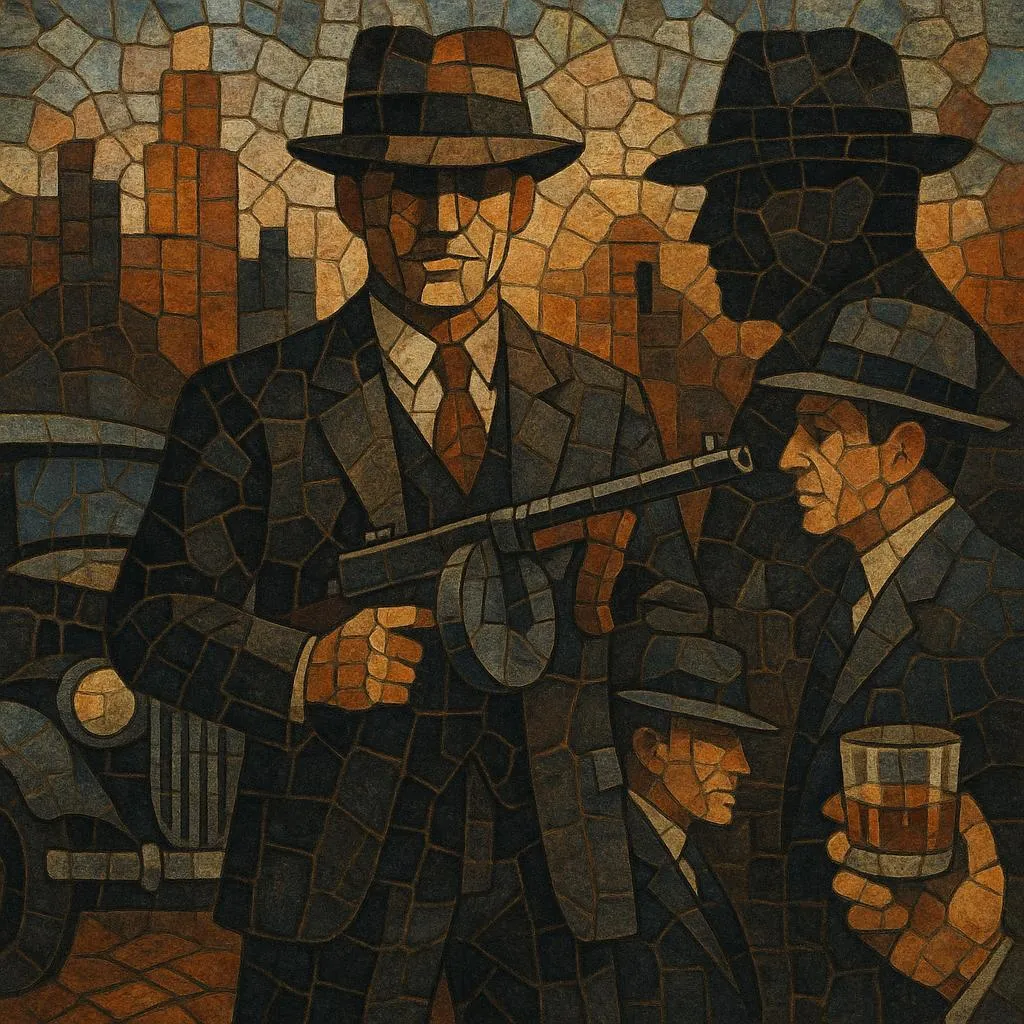
A gangster film is a crime‑cinema genre centered on gangs and organized crime syndicates—most iconically the Italian‑American Mafia, but also Japanese Yakuza and Chinese Triads—charting the rise and fall of criminals, their codes of loyalty, and the social worlds that enable them.
In American usage, the American Film Institute defines the genre as stories about organized crime or maverick criminals in a twentieth‑century setting; the template coalesced in early‑sound Hollywood and later diversified globally. Typical narratives explore power, family, migration, and moral ambiguity, often balancing critique with a stylized allure.
History
Early roots (1910s)
• Proto‑gangster storytelling appears in silent cinema—D. W. Griffith’s The Musketeers of Pig Alley (1912) is frequently cited as an early example depicting urban street gangs.
Sound‑era boom (1931–1932)
• The genre crystallized with pre‑Code Hollywood hits Little Caesar (1931), The Public Enemy (1931), and Scarface (1932). These films established key tropes: meteoric ascent through bootlegging and rackets, internecine violence, and an inevitable downfall.
Censorship and recalibration (mid‑1930s–1960s)
• The Motion Picture Production (Hays) Code curtailed glamorization of crime, demanding criminals be punished and authority respected; the classic gangster cycle contracted and hybridized into crime dramas and, later, noir‑inflected works.
New Hollywood renaissance (1970s–1990s)
• Francis Ford Coppola’s The Godfather (1972) and Part II (1974) reframed the gangster saga as an operatic family chronicle; Martin Scorsese’s Goodfellas (1990) injected journalistic velocity and pop‑music montage. AFI recognizes these alongside earlier touchstones as canonical within the genre.
Global extensions
• Japan’s yakuza cinema evolved from chivalric ninkyo eiga to documentary‑gritty jitsuroku eiga, notably Kinji Fukasaku’s Battles Without Honor and Humanity (1973). Hong Kong’s triad films surged with John Woo’s A Better Tomorrow (1986) and its heroic‑bloodshed idiom; elsewhere, films like City of God (2002) mapped organized crime onto favelas and youth.
Lasting influence
• Elements of the gangster template fed into film noir’s criminal milieus and international crime cycles (e.g., Italy’s poliziotteschi), while periodic revivals (e.g., Scarface, 1983) refreshed the genre’s style for new eras.
Choose a palette that speaks to power and fate
• For Italian‑American mafia stories, a minor‑key waltz with solo trumpet and Sicilian colors (mandolin/accordion) evokes tradition and gravitas—Nino Rota’s The Godfather is the model. Build leitmotifs for the don, the family, and betrayal; vary orchestration as loyalties shift.
Period‑true source music vs. score
• Pre‑Code and classic‑era settings often benefit from jazz, foxtrots, or dance‑band cues diegetically (clubs, radios) to contrast public glamour with private brutality. Even The Public Enemy leans on contemporaneous popular songs, which you can emulate as needle‑drops or pastiche.
Pop curation for modern grit
• Following Scorsese, curate era‑accurate hits that comment obliquely on character and time—doo‑wop for nostalgic rise; harder rock as paranoia and violence escalate. Time edits, lyrical irony, and rhythmic montage can function as score.
Electronic menace when ambition peaks
• For 1980s cocaine‑capitalism arcs, synth‑driven textures (arpeggiated bass, gated drums, glassy pads) in the Giorgio Moroder mold create neon fatalism; anchor scenes with a recurring motif (e.g., a four‑bar minor ostinato) that returns at moral pivots.
Texture, rhythm, and space
• Use steady, heartbeat‑like pulses for plotting sequences; suspended chords and low strings for conspiracies; stark silence before gunfire to widen dynamic range. Reserve high brass and percussion for decisive betrayals.
World variants
• Yakuza or Triad stories can hybridize noir harmony with local idioms (shakuhachi/biwa colors for ninkyo nostalgia; sharper, percussive timbres for jitsuroku grit; Cantonese pop textures for 1980s Hong Kong) while keeping the genre’s moral‑fall arc intact.

Top albums
Best playlists
Top tracks
Locked
Share your favorite track to unlock other users’ top tracks
Upcoming concerts
in this genre
