Your digging level
Description
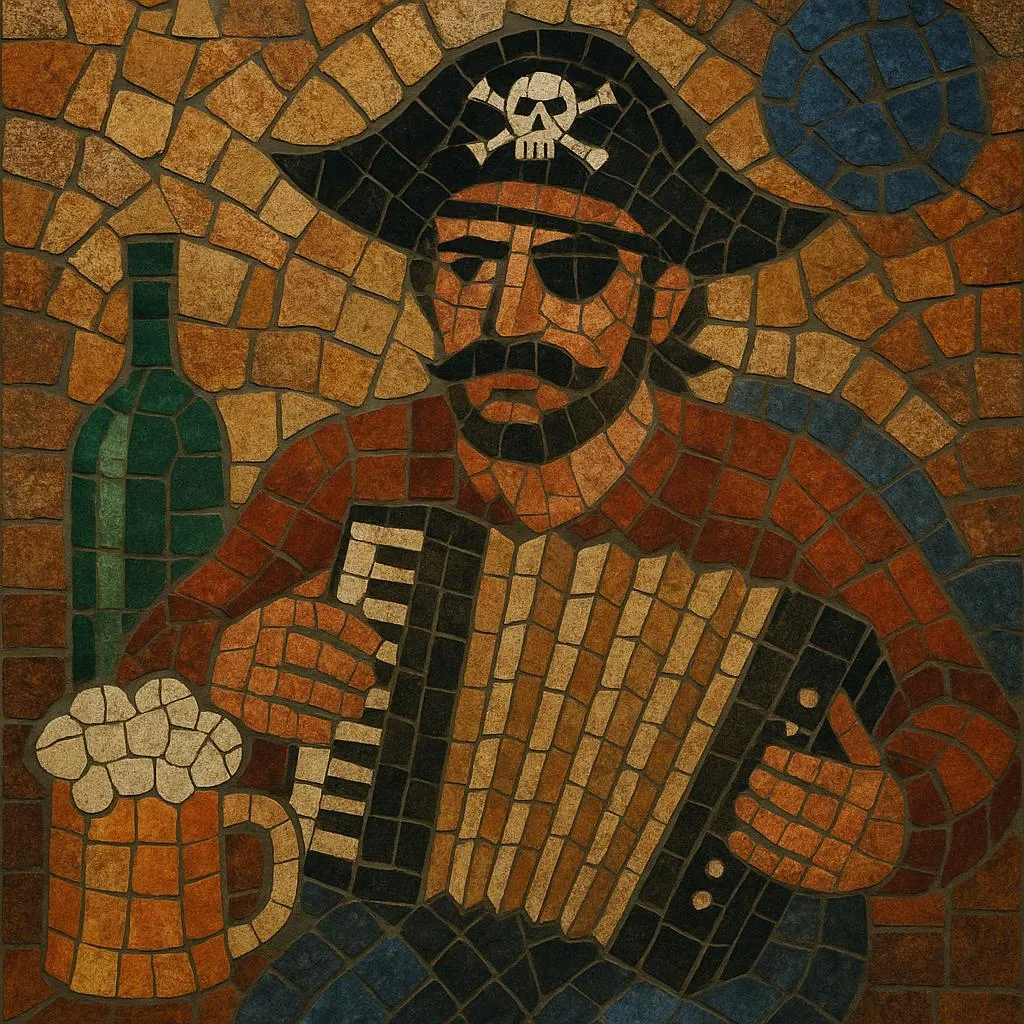
Piratenmuziek (Dutch: “pirate music”) is the repertoire associated with the rural Dutch etherpiraten (illegal FM radio stations) that flourished especially in the east and north of the Netherlands. It is not sea‑shanties, but a sing‑along, accordion‑and‑brass‑driven blend of Dutch levenslied/tear‑jerker, German/Alpine volkstümliche music, schlager, country-tinged ballads, and upbeat polka and waltz rhythms.
Typical songs are simple, melodic, and highly hooky, designed for kitchen-table broadcasts, barn parties, and tent festivals. Lyrics are in Dutch (often regional dialects) and revolve around love, heartbreak, camaraderie, work (e.g., trucking, seafaring), nostalgia, and drinking. The sound favors bright accordion or organ, steady two-step or 3/4 beats, and big, communal choruses that invite collective singing.
History
Piratenmuziek emerges from the Netherlands’ unique pirate‑radio culture. After offshore stations like Radio Veronica popularized non‑licensed broadcasting in the 1960s, inland “etherpiraten” began to appear across rural provinces (Drenthe, Overijssel, Gelderland, Friesland). They favored sentimental Dutch levenslied and German/Austrian volkstümliche songs, schlager’s catchy polish, and accessible country ballads—music that resonated with working‑class and agrarian listeners.
By the 1980s and 1990s, thousands of makeshift FM transmitters created a dense parallel ecosystem of illegal broadcasts and weekender festivals. A distinctive set of “pirate hits” (piratenhits) formed: Dutch‑language covers of schlager, accordion‑led polkas and waltzes, Volendam‑style palingsound crooners, and trucker songs. Record shops, mail‑order cassette/CD sellers, and local halls reinforced the repertoire. Police raids were common, but the scene remained resilient and locally popular.
As enforcement tightened and legal local radio expanded, many etherpiraten moved to the internet. Online streams and social media communities kept the repertoire alive, while tent festivals and village fairs continued the sing‑along tradition. New artists blended modern production with classic formulas (big choruses, modulation “lift” near the end, accordion/organ riffs). The style now overlaps with Dutch party/carnival hits and German partyschlager while maintaining its rural identity.
Piratenmuziek functions as community glue: it soundtracks fairs, harvest celebrations, and private gatherings, and it preserves a vernacular Dutch popular‑song tradition. Though rarely aimed at national charts, it remains a robust local culture and a living archive of shared repertoire passed through informal broadcasting networks.