

Your digging level
Description
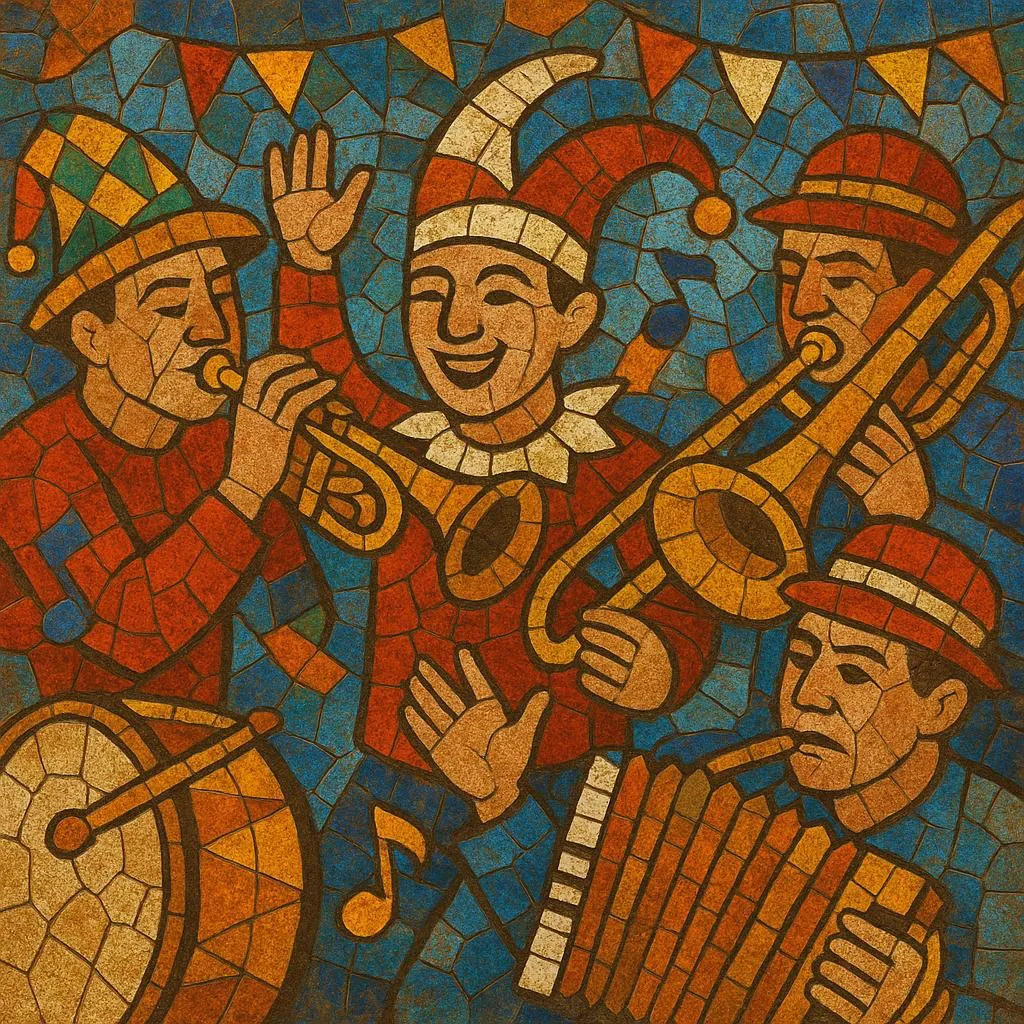
Karneval (also called Kölsche Karneval music in the Rhineland) is a festive German popular style built for sing‑along participation during the pre‑Lenten carnival season. It blends Schlager catchiness, brass‑band punch, and marching‑band grooves with simple, memorable choruses designed for large halls, street parades, and beer tents.
Songs are often performed in regional dialects (especially Kölsch in Cologne) and revolve around camaraderie, local pride, humor, satire, and the joy of communal celebration. Typical meters are lively 2/4 or 4/4 “Marsch” and polka feels, with occasional 3/4 waltzes for swaying moments. Arrangements spotlight trumpets, trombones, saxophones, clarinet, tuba, snare and bass drum, accordion/keys, guitar, and big choral refrains.
While rooted in 19th‑ and early 20th‑century carnival traditions, modern Karneval matured post‑WWII into a radio‑ and TV‑ready form: concise, upbeat anthems meant to be shouted back by audiences and carnival societies throughout the “Fünfte Jahreszeit.”
History
Carnival songs in the Rhineland date to the 19th century, when satirical and local‑color couplets were sung in guilds, carnival societies, and informal gatherings. Brass and fife‑and‑drum traditions supplied the marching feel, while the popularity of Schlager and waltz/polka dance music provided melodic and harmonic templates.
After WWII, organized sessions (Sitzungen) and televised events helped standardize a concise, audience‑focused format: short verses, repeated hooks, and hearty call‑and‑response. Cologne, Düsseldorf, and Mainz fostered professional songwriters and house bands who tailored repertoire for the season from Weiberfastnacht to Rosenmontag.
In the 1970s, rock instrumentation and contemporary pop production entered the mix, creating a “stadium‑chorus” energy while keeping dialect lyrics and communal refrains. This period defined the modern Karneval single as an easily programmable radio hit and a guaranteed sing‑along in large halls.
Kölsch (Cologne dialect) became a signature sound, but neighboring cities (Mainz, Düsseldorf, Aachen) maintained their own repertoires and performance customs. Lyrics celebrated local landmarks, humorous archetypes, and collective resilience, strengthening regional identity.
Since the 1990s, brass‑pop showbands, rock ensembles, and cross‑over acts have refreshed the style with fuller horn sections, tighter rhythm sections, and festival‑grade production. Social media and streaming spread carnival anthems nationally, while the core function—music designed for togetherness, dancing, and call‑and‑response—remains unchanged.



