Your digging level for this genre

0/8
🏆
Sign in, then listen to this genre to level up

Description

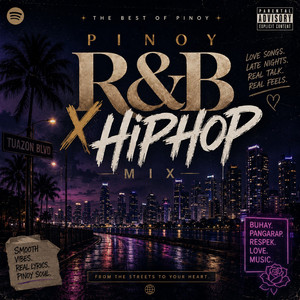
Pinoy R&B is the Filipino interpretation of contemporary rhythm and blues that blends the vocal aesthetics of US R&B and soul with the melodic sensibilities of Original Pilipino Music (OPM).

Characterized by melismatic lead vocals, stacked harmonies, lush keys, electric piano and guitar textures, and hip‑hop–informed drum programming, it often uses Tagalog, English, or Taglish lyrics. Themes revolve around love, heartbreak, resilience, and "hugot" (deep emotional catharsis). Production ranges from smooth, radio‑friendly ballads to minimalist trap‑soul, but remains distinctly vocal‑centric.

The genre took shape in the late 1990s and flourished in the 2000s through major-label releases and TV/radio exposure, later evolving online with indie and bedroom R&B acts. Diasporic ties (Filipino communities in North America and beyond) further shaped its sound and audience.

History

Origins (late 1990s)

Pinoy R&B emerged as local artists absorbed US R&B, new jack swing, and soul while grounding their songwriting in OPM’s ballad tradition. Early adopters from bands and solo acts experimented with smoother vocal runs, richer harmonies, and groove‑oriented arrangements, while maintaining Tagalog/English lyricism and OPM hooks.

2000s Mainstream Breakthrough

The 2000s marked a commercial peak as R&B singers released platinum records and ballads dominated radio and variety shows. Artists popularized melismatic phrasing and hip‑hop‑leaning beats in Taglish, bringing R&B aesthetics firmly into the OPM mainstream. Collaborative singles with rappers and pop acts became common, and live bands adapted R&B rhythm sections for TV and concert circuits.

2010s Digital Era and Fusion

With the growth of streaming and social media, a new wave of Pinoy R&B artists embraced DIY production, trap‑soul textures, and cross‑genre collaborations. Bedroom producers used 808s, filtered chords, and intimate vocal production, while established names modernized their sound. Talent competitions and online platforms accelerated discovery and crossovers with pop, hip‑hop, and indie scenes.

2020s Global Connectivity

The 2020s saw wider international visibility via digital platforms, diasporic audiences, and collaborations. Sonic palettes broadened to include alt‑R&B, neo‑soul, and glossy K‑/P‑pop-adjacent production. While the music modernized, hallmark elements—expressive vocals, Taglish storytelling, and soulful hooks—remained central.

How to make a track in this genre

Core Palette
•   Vocals: Prioritize emotive, melismatic leads with tasteful ad‑libs and layered harmonies (double‑tracking, call‑and‑response, lush backing stacks). •   Harmony: Use extended chords (maj7, min9, 11ths) and soulful progressions (e.g., I–vi–IV–V; ii–V–I in borrowed tonalities; ivmaj7 add9 for color). Modal interchange and minor‑key ballads are common. •   Rhythm: Combine swung or lightly syncopated grooves with hip‑hop drums. Ballads often sit around 70–90 BPM (or halftime 65–75 for trap‑soul); mid‑tempo jams at 95–110 BPM; dance‑leaning tracks near 100–110 BPM. •   Instrumentation: Electric piano/keys, clean guitar with chorus/tremolo, warm bass (electric or 808), modern drum kits (rimshots, crisp hats, soft kicks), pads/strings, and occasional sax or muted brass.
Lyrics & Delivery
•   Language: Tagalog, English, or Taglish. Lean into conversational phrasing and natural code‑switching. •   Themes: Love, longing, heartbreak, reconciliation, and "hugot"—intense but sincere emotion. •   Hooks: Craft memorable, singable choruses. Use pre‑chorus lift and dynamic contrast to spotlight the hook.
Arrangement & Production
•   Structure: Verse–pre‑chorus–chorus–verse–bridge–final chorus. Add a post‑chorus riff or vocal run for identity. •   Sound design: Soft keys, side‑chained pads, subtle tape or vinyl texture, gentle saturation on bass, plate/room reverbs on vocals. Auto‑tune can be used subtly for polish. •   Mix priorities: Vocals up‑front, de‑essed and compressed in two stages (gentle leveling + slower optical/vari‑mu). Keep low‑end tight; allow midrange warmth for the keys and guitar.
Practical Tips
•   Start with a chord loop (e.g., Fmaj7–Gm7–Am7–Gm7) and build drums with a laid‑back swing. Write a topline that toggles between chest and head voice for emotional lift. •   Add ad‑libs and harmony stacks only after the main melody feels strong. Use a short pre‑chorus to build tension before a hook with a higher register or stronger rhythm. •   If leaning trap‑soul, thin the arrangement: sparse keys, filtered pads, 808 bass glides, tight reverbs, and intimate vocal proximity.

Top tracks

Locked
Share your favorite track to unlock other users’ top tracks
Influenced by
Has influenced
Challenges
Digger Battle
Let's see who can find the best track in this genre
© 2025 Melodigging
Melodding was created as a tribute to Every Noise at Once, which inspired us to help curious minds keep digging into music's ever-evolving genres.
Buy me a coffee for Melodigging