

Your digging level
Description
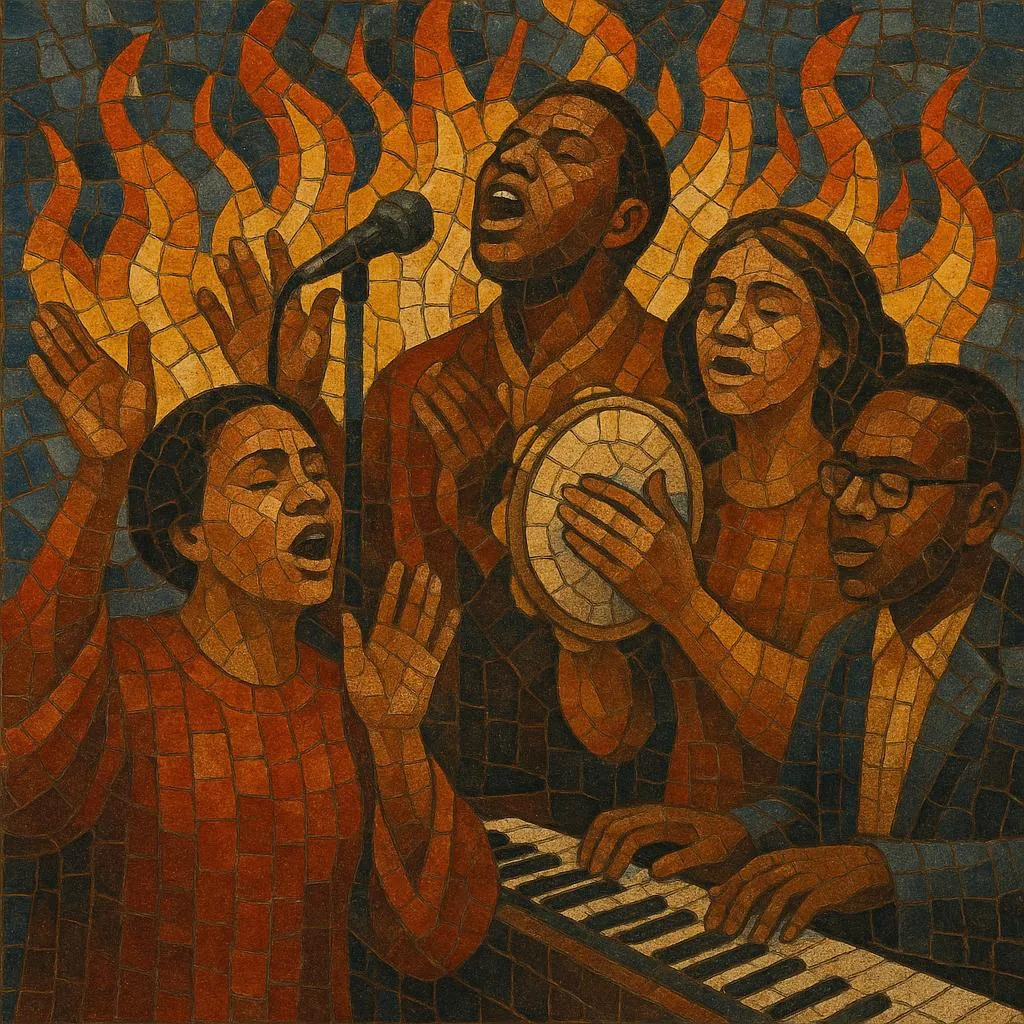
Pentecostal music is the worship and praise tradition that emerged out of early 20th‑century Pentecostal and Holiness revivals. It centers on congregational participation, spontaneous expression, and an experiential emphasis on the Holy Spirit, often featuring call‑and‑response singing, testimonies, handclaps, tambourines, and ecstatic praise.
Musically, it blends African American spirituals and blues with hymnody and early gospel, later absorbing contemporary pop/rock, R&B, and global local styles. Typical sounds include piano or Hammond B‑3 organ with Leslie speaker, full rhythm section, mass choir, and vamping grooves that build to "shouts" (fast praise breaks). Lyrics focus on salvation, deliverance, healing, holiness, and the empowering presence of the Spirit.
History
Pentecostal music coalesced during the Azusa Street Revival (1906–1909) in Los Angeles and related Holiness movements in the United States. Worship combined hymn singing with African American spirituals, ring shout practices, blues sensibilities, and lively congregational participation. Early services favored tambourines, handclaps, testifying, and spontaneous songs, forming the template for Pentecostal praise.
As Pentecostal denominations (e.g., Church of God in Christ, Assemblies of God, Pentecostal Holiness) grew, choirs, quartets, and church bands developed a recognizable sound centered around piano/organ, drums, bass, and call‑and‑response. The music influenced and overlapped with the rise of gospel, while retaining a heightened emphasis on improvisation, vamps, and ecstatic praise.
Artists such as Andraé Crouch and the Hawkins family modernized the sound with contemporary harmony, R&B grooves, and pop forms. The Charismatic Renewal spread Pentecostal worship practices across denominational lines, shaping the broader Praise & Worship repertoire and performance style (extended songs, modulations, and climactic builds).
Pentecostal churches worldwide contextualized the style with local rhythms and languages: coritos in Latin America, highlife/soukous‑inflected praise in parts of Africa, and arena‑style worship in Australia and beyond. Today the tradition ranges from traditional choir‑led services with “praise breaks” to stadium‑scale pop‑rock worship, but remains rooted in participatory, Spirit‑led expression.

