Your digging level
Description
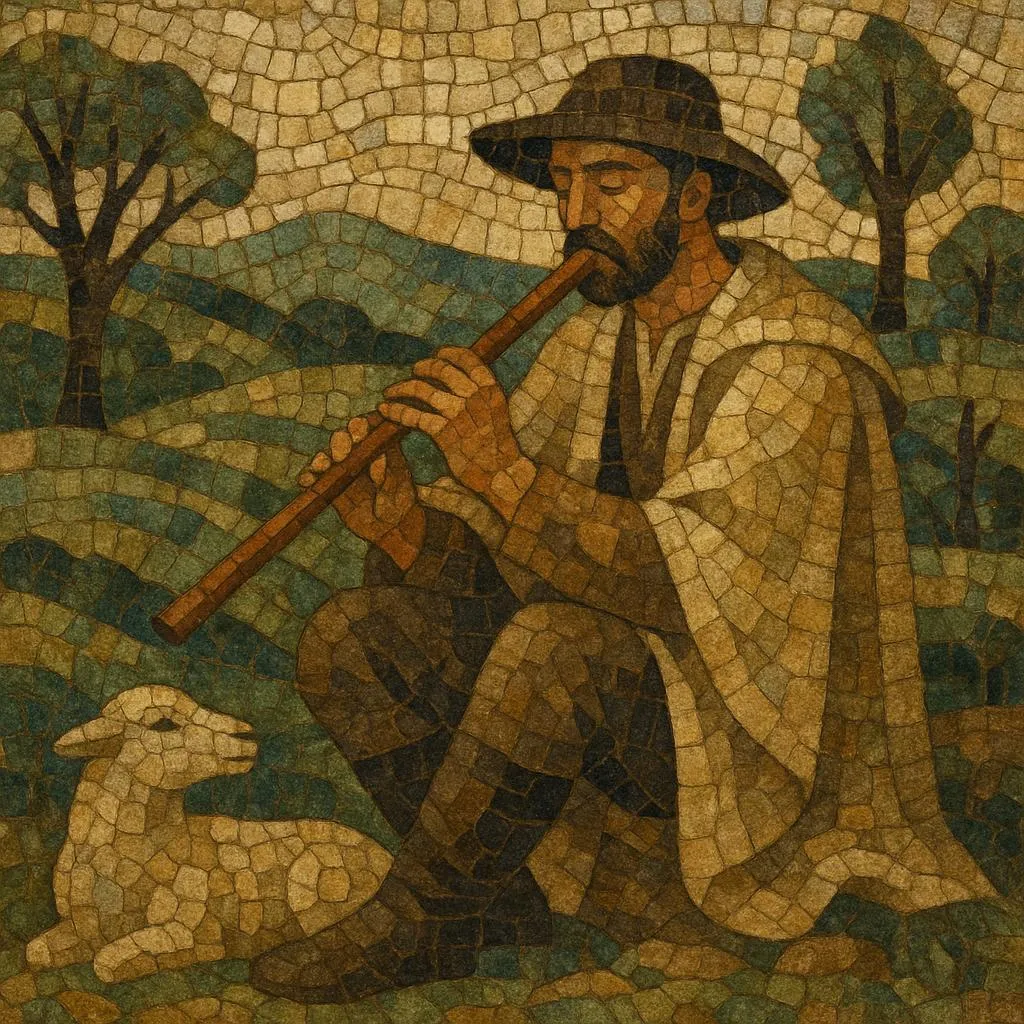
Pásztordal (literally “shepherd song”) is a strand of Hungarian traditional folk song associated with the seasonal, pastoral life of herders in the Carpathian Basin. It is typically performed solo or in small, intimate settings and is marked by free, speech‑like delivery, narrow ambitus melodies, and modal scales.
Singers and players favor rustic timbres and simple, memorable tunes that carry far across open fields. Characteristic instruments include the long shepherd’s flute (hosszú furulya/tilinkó), simple end‑blown flutes, bagpipe (duda), and later, fiddle and lute‑type instruments accompanying strophic songs about nature, solitude, courtship, and the rhythms of rural work.
Musically, pásztordalok often alternate between parlando‑rubato (free) and tempo giusto (measured) phrasing, use pentatonic and old modal (Dorian, Aeolian, Mixolydian) materials, and rely on ornamental tones, sustained calls, and echoic phrases to project over distance.
History
Pásztordal arose in the Hungarian pastoral economy, where shepherds and cowherds used song, calls, and simple flutes both for communication and for personal expression. While its roots are older, most documented examples point to living traditions that crystallized through the 18th and 19th centuries in the Great Hungarian Plain and upland regions of the Carpathian Basin.
In the early 20th century, ethnomusicologists and composer‑collectors such as Zoltán Kodály and Béla Bartók undertook extensive fieldwork, recording and transcribing shepherd songs alongside dance and narrative genres. Their analyses identified core features—parlando‑rubato delivery, modal pitch sets, strophic poetic structures—that became central to modern understandings of Hungarian folk style.
From the 1970s, the táncház (“dance‑house”) and folk revival movements brought pásztordal and related rural repertoire to urban audiences. Ensembles and singers adopted historically informed instruments (long flutes, bagpipes) and vocal techniques while also incorporating fiddle‑band accompaniments for stage and recording contexts.
Today, pásztordal serves as both a living rural practice and a heritage repertoire performed by folk ensembles, conservatory students, and leading singers. Its textures and modal language have influenced Hungarian art music, choral literature, film/TV scoring set in pastoral contexts, and world/folk crossover projects.