Your digging level
Description
Pakistani folk is an umbrella term for the country’s diverse regional traditions, uniting Punjabi, Sindhi, Balochi, Pashto, Saraiki, Kashmiri and other local musics under one national tapestry. It centers on storytelling, devotional poetry, and communal celebration, expressed in indigenous languages and dialects.
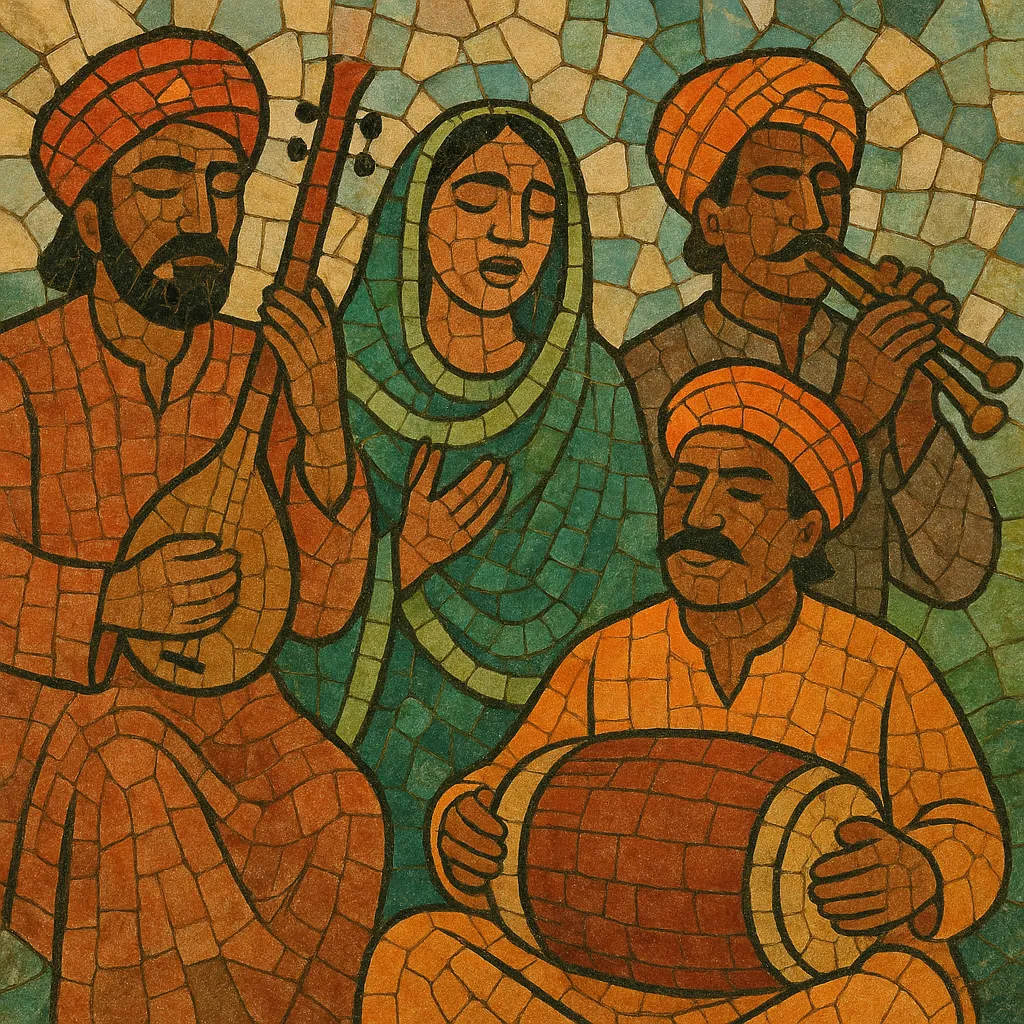
While melodies often trace back to Hindustani modal practice, the delivery is distinctly local: robust, highly ornamented vocals supported by portable and rustic instruments like dhol, dholak, chimta, tumbi/ektara, harmonium, algoza (double flute), rubab, sarangi, benju, dambura/yaktaro and shehnai. Rhythms favor infectious cyclic grooves (Keherwa, Dadra) for dance and procession, as well as more meditative meters for devotional songs.
Performed at Sufi shrines (dargahs), village melas, weddings, and seasonal festivals, Pakistani folk bridges the sacred and the secular—moving from mystical kafi and bhitayi poetry to harvest songs, heroic ballads, and love laments. In contemporary times, broadcast media and fusion projects have brought these village-born styles to national and global audiences.
History
Long before the formation of Pakistan in 1947, the regions that now constitute the country sustained vibrant folk traditions in Punjabi, Sindhi, Pashto, Balochi, Saraiki, Kashmiri and other cultures. Oral transmission, community rituals, and Sufi devotional practice shaped the music, with poets like Shah Abdul Latif Bhitai, Bulleh Shah, Waris Shah, and Khushal Khan Khattak providing enduring texts. Instruments such as the rubab (Khyber Pakhtunkhwa), benju and dambura (Balochistan), yaktaro and shehnai (Sindh), and the Punjabi dhol and algoza anchored local sound identities.
After independence, Radio Pakistan and later Pakistan Television (PTV) documented and amplified regional folk. Field recordings and broadcast sessions helped create national recognition for village performers. Early stars like Tufail Niazi and Alam Lohar carried regional idioms onto national stages, popularizing the chimta-driven Punjabi groove and narrative balladry. Folk remained central at festivals, Sufi shrines, and seasonal celebrations.
The 1970s–90s saw iconic voices—Reshma, Pathanay Khan, Allan Faqir, Mai Bhagi, and later Abida Parveen—bring kafi, bhitayi surs, and other forms to mass audiences. Their performances blended Hindustani modal sensibility with unmistakably local timbres and idioms. Cassette culture, TV specials, and international tours carried Pakistani folk across borders, while film and pop occasionally drew on folk melodies and rhythms.
From the 2000s onward, studio platforms and collaborations (e.g., televised live-studio formats) revitalized folk repertoires, pairing traditional singers and instruments with rock, pop, and electronic arrangements. Artists like Arif Lohar, Saieen Zahoor, and Sanam Marvi introduced new generations to regional poetry and grooves. Diaspora communities and world-music circuits further diversified audiences. Today, archiving efforts, academic programs, and independent labels coexist with festival circuits, ensuring that village-rooted traditions thrive in modern formats without losing their communal and devotional core.
Aim for emotive, story-forward singing in a regional language (Punjabi, Sindhi, Pashto, Balochi, Saraiki, Kashmiri, etc.). Lyrics draw from love and longing, pastoral life, heroic tales, and Sufi poetry. Deliver with dynamic projection, ornamentation (meend/glides, gamak, grace notes), and clear diction of poetic lines.
Combine a lead vocal with harmonium or drone (tanpura/keys) to establish the tonal center. Add rhythm with dhol or dholak; color with chimta jingles. For melodic obbligato, use algoza (double flute) or sarangi; in Pashto settings, feature rubab; in Sindhi/Baloch contexts, consider yaktaro/dambura, benju, or tamburag. Shehnai can add ceremonial brightness.
Build around common thekas: Keherwa (8-beat) for upbeat dance, Dadra (6-beat) for lilting romance and laments. Keep grooves cyclic, with strong downbeats and responsive fills. For processional or high-energy settings, push the dhol accents; for devotional pieces, relax into a steadier dholak pulse and let the vocal lead the phrasing.
Use pentatonic and heptatonic scales aligned to Hindustani raga thinking, but keep phrases folk-direct. Establish a memorable refrain (mukhra) and alternate with improvised verse couplets (antara/stanzas). Start with a brief free-time alaap or spoken couplet to set the mood before locking into the tala.
Choose kafi, bait, or folk-ballad forms; set verses to repeating refrains for audience participation. Reference classical poets (Bhitai, Bulleh Shah, Waris Shah) or local lore. Keep imagery grounded—rivers, deserts, fields, caravans, shrines—and let repetition drive the trance-like communal feel.
Pan hand percussion wide for width; close-mic harmonium for warmth and gentle reed buzz. Layer call-and-response between lead and group chorus to echo village performance. Preserve room ambience (short plates/rooms) rather than heavy studio sheen. For fusion, add electric bass doubling the dholak bols and sparse guitar drones, but keep folk instruments front and center.