Your digging level for this genre

0/8
🏆
Sign in, then listen to this genre to level up

Description

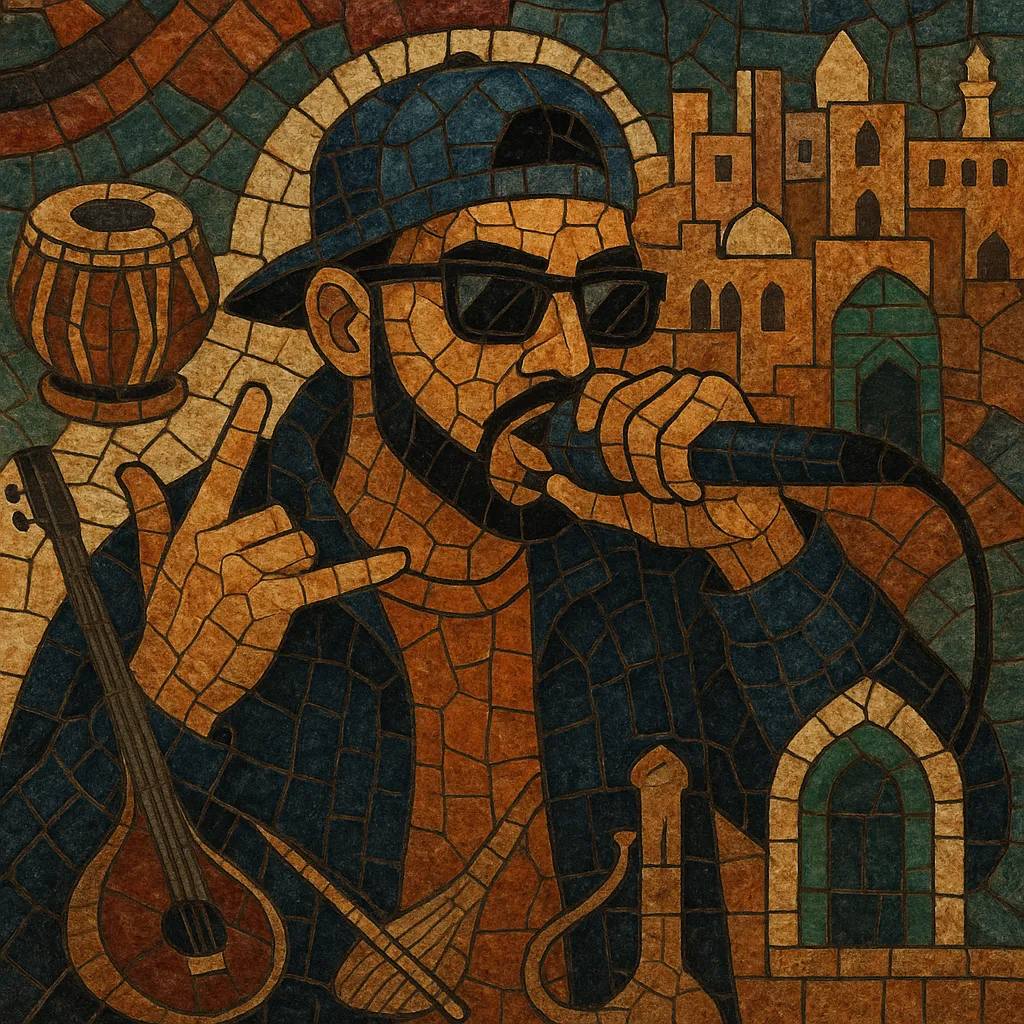
Urdu hip hop is a regional form of hip hop performed primarily in Urdu, rooted in Pakistan’s urban centers and its diaspora.

It blends global rap aesthetics (boom‑bap, trap, drill) with South Asian poetic traditions such as ghazal’s radeef–qafia (refrain and rhyme) and a taste for intricate wordplay, satire, and social commentary.

Production often combines 808s and modern drum programming with samples or timbral nods to qawwali, filmi, ghazal, and Pakistani pop/rock. Producers and MCs frequently color beats with harmonium, tabla, dholak, sitar/sarod phrases, and airy vocal chops, while flows range from laid‑back, internal‑rhyme heavy deliveries to aggressive drill cadences.

The scene is centered around Karachi, Lahore, and Islamabad, with strong contributions from the Pakistani diaspora in the UK, Middle East, and North America. Code‑switching (Urdu/English and sometimes Punjabi) is common, and lyrics navigate themes from street realism and class satire to identity, politics, and internet culture.

History

Origins (1990s–2000s)
•   The roots of Urdu hip hop reach back to early Pakistani pop‑rap experiments in the 1990s (e.g., Fakhar‑e‑Alam’s mainstream “bhangra rap”), but a distinct, self‑identified Urdu rap movement began coalescing in the 2000s as internet access, inexpensive production tools, and global hip hop’s influence spread. •   Early adopters drew from boom‑bap templates while absorbing Urdu literary devices and local topicality. Diaspora circles (especially in the UK and Gulf) helped incubate production standards and distribution via online platforms.
Rise and Viral Breakthroughs (2010s)
•   The 2010s saw a surge of Urdu‑first rappers and crews. Young Stunners (Talha Anjum & Talhah Yunus) popularized urbane, wordplay‑rich Urdu rap from Karachi; Faris Shafi pushed sharp sociopolitical commentary from Lahore; Ali Gul Pir’s satirical “Waderay Ka Beta” went viral and demonstrated rap’s mass‑culture reach in Urdu. •   Parallel growth came from Islamabad and Lahore circles (e.g., Xpolymer Dar, Osama Com Laude), while producers like Jokhay and Umair refined a distinctly Pakistani sound palette. YouTube, SoundCloud, and local streaming platforms enabled direct fan discovery, cyphers, and cross‑city collaborations.
Mainstreaming and Diversification (2020s)
•   In the 2020s, drill and trap textures permeated Urdu releases, and collaborations with pop/rock/R&B opened wider audiences. High‑visibility moments (e.g., Coke Studio 14’s “Yeh Dunya” featuring Karakoram, Talha Anjum, and Faris Shafi; major brand anthems and sports tie‑ins) moved Urdu rap into mainstream cultural spaces. •   The scene diversified stylistically and demographically: female voices such as Eva B gained prominence; bilingual and regional hybrids (Urdu‑Punjabi, Urdu‑Balochi) grew; and battle‑rap/cypher culture matured alongside polished studio singles.
Aesthetics and Themes
•   Hallmarks include multi‑syllabic rhyme schemes adapted to Urdu’s phonetics, ghazal‑inspired cadence, and deft code‑switching with English slang. Topical ranges span class and urban life, identity and morality, satire and memes, to reflective, confessional storytelling. •   Sonically, producers fuse 808s, crisp hats, and modern bass design with samples or emulations of qawwali choirs, harmonium drones, tabla grooves, and retro Pakistani film/pop textures, resulting in a palette both global and unmistakably local.

How to make a track in this genre

Beats and Tempo
•   Start with hip hop foundations: 80–100 BPM for boom‑bap storytelling, 130–150 BPM (performed in halftime) for trap/drill energy. Keep drums punchy with tight kicks, snappy snares/claps, and articulate hi‑hat patterns (triplets/rolls for trap; swung 8ths for boom‑bap).
Sound Palette and Sampling
•   Blend 808s, synth bass, and atmospheric pads with South Asian colors: harmonium drones, tabla/dholak grooves, tanpura beds, sitar/sarod licks, qawwali‑style vocal chops, or vintage Pakistani film/TV samples. Use gentle saturation and tape/wow to evoke nostalgia without muddying the low end.
Harmony and Melody
•   Minor keys and modal flavors work well. Borrow raga‑tinged motifs (short pentatonic or Phrygian/Dorian phrases), and layer call‑and‑response hooks (melodic singer or vocoder) against a rapped lead.
Flow, Language, and Writing
•   Write in Urdu (optionally code‑switching with English/Punjabi). Lean into ghazal‑inspired techniques: radeef–qafia (refrain and rhyme), internal rhymes, tazmeen (allusions/quotes), and layered metaphors. Aim for multisyllabic rhyme chains that suit Urdu phonetics (retroflex consonants, aspirates) and keep cadence clear. •   Themes can span satire, social critique, class and city life, personal reflection, and internet culture. Punchlines and wordplay land best when the cultural references are vivid and contemporary.
Vocal Delivery and Recording
•   For boom‑bap, deliver conversational but rhythm‑locked takes with clear diction; for drill/trap, use more percussive phrasing, ad‑libs, and dynamic doubles. De‑ess carefully (Urdu s/sh sounds) and compress in series for controlled aggression.
Structure and Arrangement
•   Common forms: intro – 16/24‑bar verse – hook – verse – hook – bridge/outro. Use drops, risers, and filtered intros built from sampled vocals or harmonium pads. Let tabla or dholak fills mark transitions.
Cultural Considerations
•   Reference Urdu literature and contemporary Pakistani life authentically. Be mindful of satire and sensitive topics; ground social commentary in lived details. If sampling qawwali/film music, clear rights or recreate motifs with session players.

Top tracks

Locked
Share your favorite track to unlock other users’ top tracks
Influenced by
Challenges
Digger Battle
Let's see who can find the best track in this genre
© 2025 Melodigging
Melodding was created as a tribute to Every Noise at Once, which inspired us to help curious minds keep digging into music's ever-evolving genres.
Buy me a coffee for Melodigging