Your digging level
Description
Orquesta cubana refers to the Cuban popular dance orchestra tradition—large ensembles that crystallized from charanga and big‑band formats to play danzón, son, mambo, cha‑cha‑chá, pachanga, and later songo/timba. These orchestras couple Afro‑Cuban rhythmic foundations (clave, tumbao, montuno) with sophisticated arranging for sections of strings, woodwinds or brass.
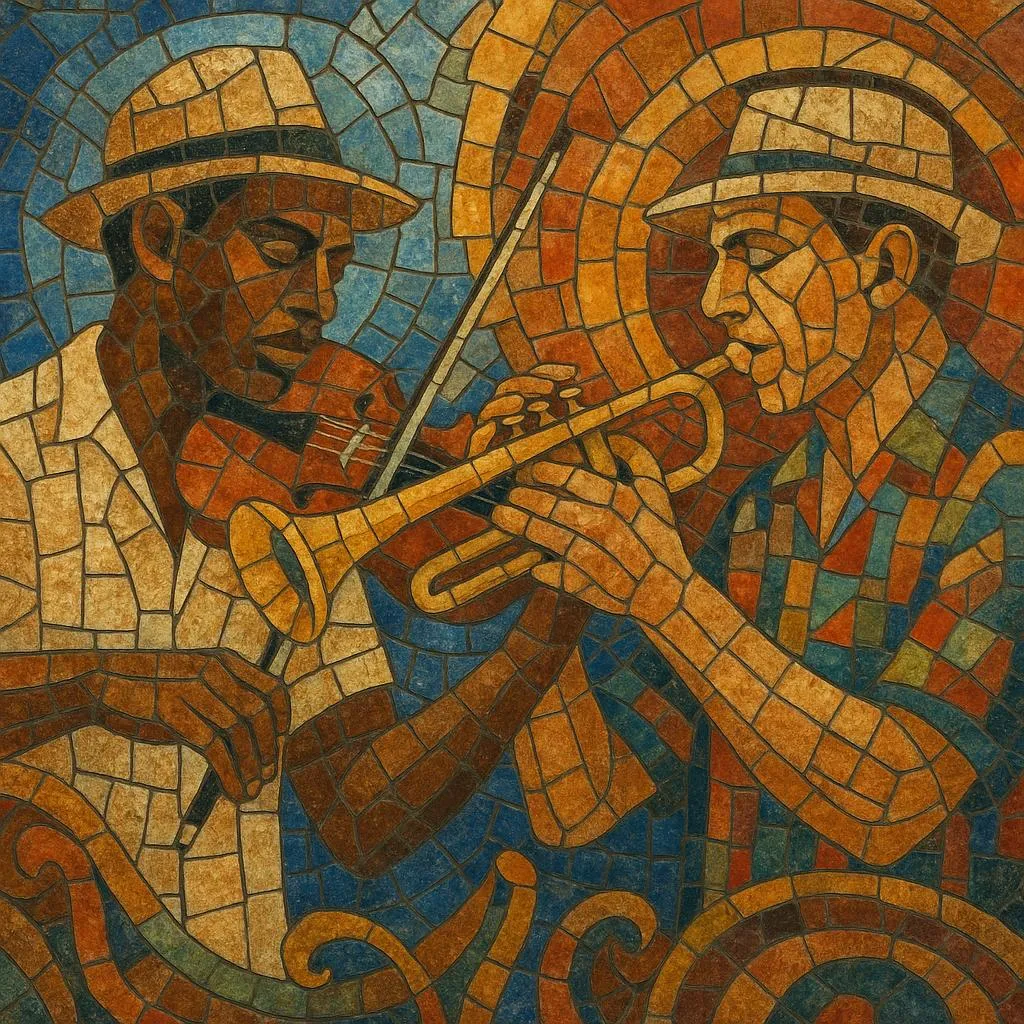
Two main instrumentations define the style. The charanga setup (flute, violins, piano, bass, güiro, timbales) powered danzón and cha‑cha‑chá. The big‑band or “conjunto/orquesta” format (trumpets, trombones, saxophones, piano, bass, congas, bongos, timbales) drove mambo and modern salsa/timba aesthetics. Across both, coro‑pregón call‑and‑response, horn mambos (punchy riffs), moñas (interlocking horn lines), and cyclical montuno vamps generate irresistible dance energy.
History
Cuba’s orquesta lineage grows from Havana/Matanzas social dance music. The danzón (codified in 1879 by Miguel Failde) evolved from the contradanza and took shape with charanga francesa instrumentation—wooden‑flute, violins, piano, bass, güiro, and timbales—brought and adapted via Caribbean and European salon traditions. Early 20th‑century charangas professionalized the ensemble format that would become the orquesta cubana.
By the 1930s–40s, groups like Arcaño y sus Maravillas modernized danzón, adding extended montuno sections and Afro‑Cuban percussion drive. In parallel, the son cubano (conjunto format with brass and congas) and U.S. big‑band arranging converged, paving the way for mambo’s syncopated horn riffs and sectional interplay.
Orquesta Casino de la Playa, Orquesta Riverside, and Beny Moré’s Banda Gigante showcased elegant crooning, tight horn voicings, and cosmopolitan swing. Enrique Jorrín with Orquesta América popularized the cha‑cha‑chá; Pérez Prado’s orquesta mambo became an international sensation (mostly from Mexico City) while retaining a Cuban core. Charanga pearls like Orquesta Aragón defined the classic dance‑hall sound.
Post‑revolution cultural institutions sustained large ensembles. Juan Formell’s Los Van Van pioneered songo, introducing electric bass, drumset, and funkier harmonies while keeping the clave logic. Orquesta Revé’s “charangón,” Ritmo Oriental, and Original de Manzanillo refreshed charanga language with modern grooves and moñas.
The 1990s timba wave (NG La Banda, Charanga Habanera, Revé) intensified polyrhythms, reharmonizations, and athletic horn writing. Internationally, the orquesta cubana template undergirds salsa scenes across the Americas and Europe—its arranging approaches, percussion chairs, and call‑and‑response ethos remain the backbone of contemporary Latin dance orchestras.