

Your digging level
Description
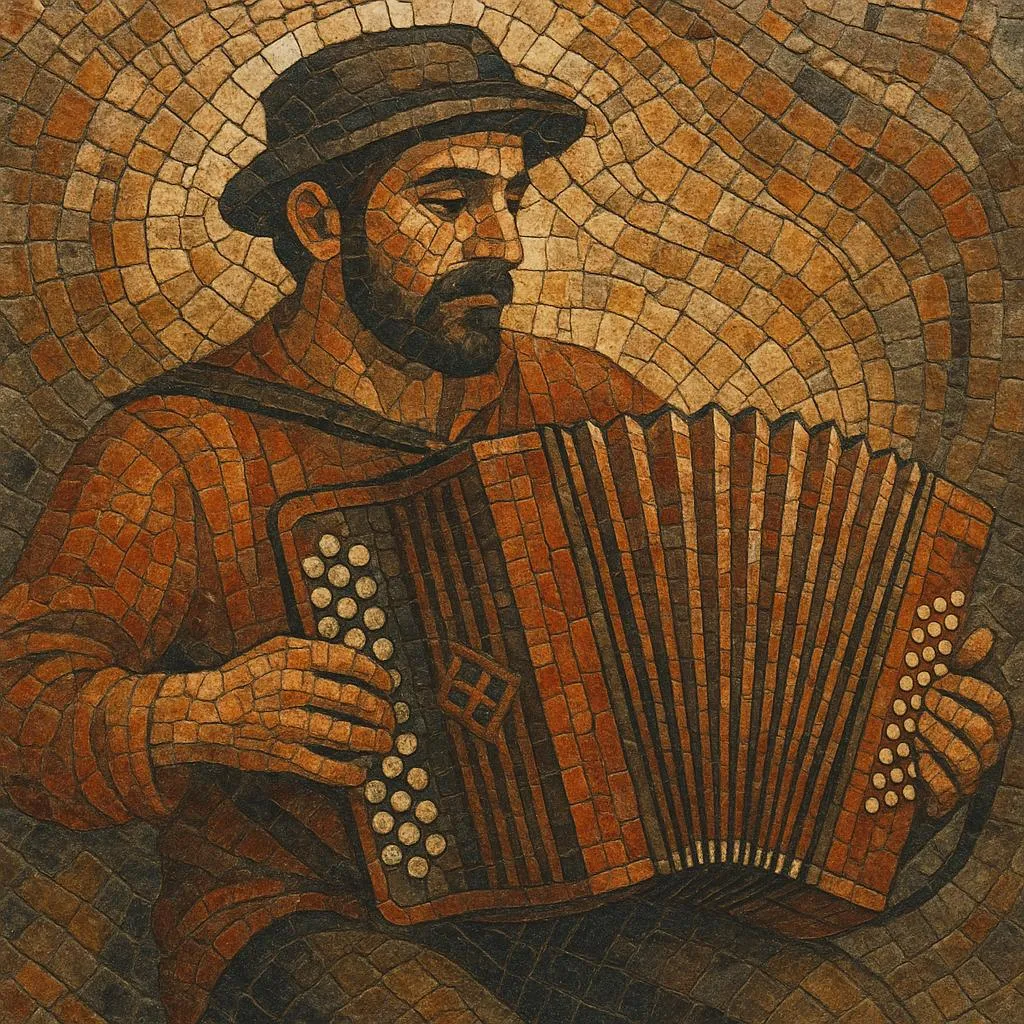
Organetto refers to the Italian tradition centered on the diatonic button accordion (commonly called organetto in Italy), a bisonoric, button-based instrument whose reeds sound different on push and pull.
As a genre, Organetto music is tightly bound to community dance and festival life across central and southern Italy and Sardinia. The repertoire blends 19th‑century European couple dances (polka, mazurka, waltz) with regional forms such as tarantella/pizzica, saltarello, and Sardinian balli (e.g., passu torrau). The instrument’s punchy bellows, rhythmic left‑hand "oom‑pah" bass–chord patterns, and bright, reedy right‑hand lines create an unmistakably lively, percussive groove that invites collective dancing.
In the late 20th century the organetto moved from village dance floors to stages and recordings, spawning virtuosi, competitions, and collaborations with folk revival ensembles and world‑fusion projects—while still remaining the heartbeat of many local festivities.
History
The diatonic button accordion was patented in Vienna in 1829 and reached Italy by the mid‑19th century. A turning point came in the 1860s with the rise of instrument making in Castelfidardo (Marche), which rapidly supplied affordable organetti to rural communities. The instrument’s portability, volume, and rhythmic drive made it ideal for open‑air festivals, weddings, and weekly dances.
By the late 19th and early 20th centuries, distinct regional idioms blossomed:
• Central/Southern mainland: fast 6/8 saltarelli and tarantelle/pizziche accompanied by tamburello (frame drum), ciaramella (shawm), and guitar. • Sardinia: organetto became central to ballu traditions (e.g., passu torrau), often dialoguing with launeddas and voice.These local repertoires absorbed pan‑European couple dances (polka, mazurka, waltz), which organettisti adapted to the diatonic keyboard and bisonoric bellows patterns.
Urban migration and amplified popular music challenged village dance traditions after WWII, but the 1970s–80s folk revival re‑energized the organetto. New virtuosi expanded technique (cross‑row fingering, bellows shakes, modal color) and formed touring groups. Festivals, competitions, and recordings documented regional repertoires while encouraging composition of new pieces in traditional dance meters.
Today, organetto thrives both as community dance music and as a concert instrument. Players collaborate with jazz, world‑fusion, and singer‑songwriter projects; conservatories and folk schools teach modern technique; and luthiers continue to innovate layouts (e.g., two‑row G/C, D/G, three‑row variants, 8–12 bass). The genre remains a living tradition—rooted in local dance yet open to new aesthetics.
Choose a dance meter and tempo:
•Tarantella/pizzica or saltarello: brisk 6/8 or 12/8 with accented 1 & 4 (or a lilting 2‑group feel).
•Polka: 2/4, bright and springy;
•Mazurka: 3/4 with a characteristic dotted swing and stress on beat 2 or 3;
•Waltz: flowing 3/4.
•Left hand: alternate bass + chord ("oom‑pah"/"oom‑pah‑pah") patterns matched to the dance; add anticipations and pushes to exploit bisonoric bellows energy.



