Your digging level
Description
New beat is a Belgian electronic dance music style that emerged in the mid-to-late 1980s.
It is defined by dark, rubbery basslines, hard-hitting but minimal grooves, and a deliberately slow tempo (typically around 100–115 BPM), in contrast to the faster house and hi-NRG of the time.
Stylistically it fuses the cold textures of new wave and EBM with Italo/euro-disco sequencing, acid squelches, hip‑hop sampling aesthetics, and early house production, often featuring monotone chants or spoken hooks, eerie pads, and sharp orchestral hits.
Originally a club-born phenomenon in Belgium, it rapidly spread across Western Europe, leaving a strong imprint on the continent’s late-1980s dance culture.

History
New beat took shape on Belgian dance floors when DJs began slowing down records—especially EBM, Italo/euro‑disco, and early house/acid sides—to roughly 100–115 BPM. This tempo shift emphasized heavy four-on-the-floor kicks, sinister bass ostinatos, and stark, mechanical percussion. The practice quickly coalesced into a recognizable sound and club culture, centered in Belgium and then radiating across neighboring countries.
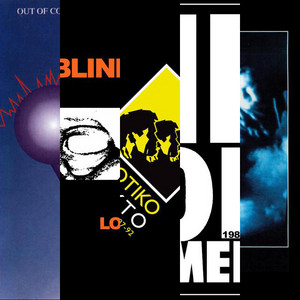
By 1987–1989, new beat flourished in Western Europe. Belgian producers and studio collectives translated the club experiment into charting singles that paired moody, minor‑key harmonies with catchy, minimalist hooks. The music’s signature elements—dark basslines, gated snares, ominous stabs, and chant-like vocals—made it both distinctive and highly DJ‑friendly. Its visual identity (industrial/futurist styling and stark graphics) reinforced the music’s cold, post‑new‑wave aura.
As the scene matured, tempos crept upward and the sound bled into harder European rave, early techno, hard trance, and eventually gabber. Belgium’s studio infrastructure and producer networks that grew around new beat played an outsized role in shaping continental dance music in the early 1990s—bridging EBM/industrial clubs with emerging rave culture and seeding the foundations for eurodance and harder techno styles.
New beat’s footprint remains audible in the hoovering stabs, orchestral hits, and stern bass programming of early 1990s European techno/rave, and in the minimalist, loop‑driven songwriting of subsequent club styles. Periodic revivals and reissues underscore its historical role as a gateway between post‑punk/EBM aesthetics and the mainstream of European electronic dance music.