Your digging level
Description
Native American Spiritual is a broad umbrella for Indigenous North American sacred and prayer songs performed in ceremonial, healing, and devotional contexts. It includes traditional clan- and nation-specific prayer songs, medicine and blessing songs, and—most prominently in the recorded era—the harmonized peyote songs of the Native American Church (NAC).
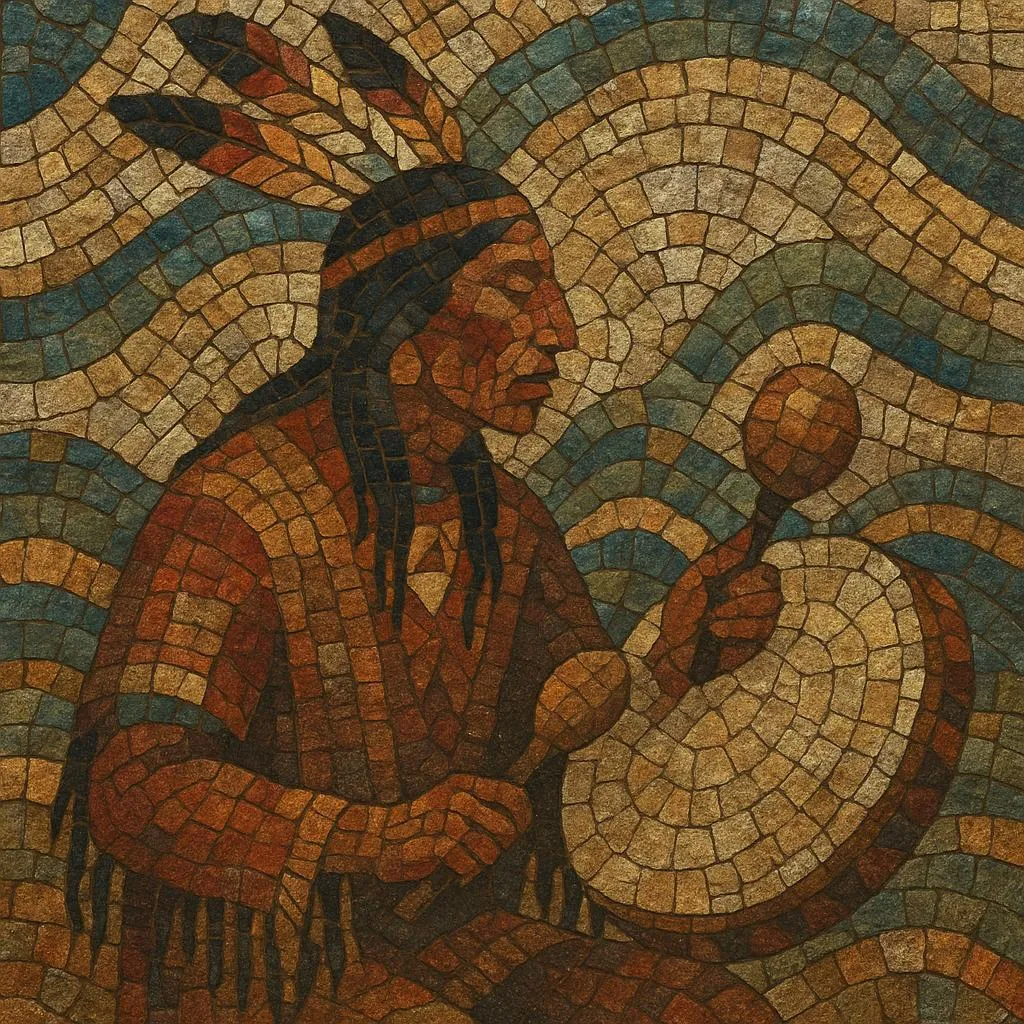
Musically, performances center the human voice supported by small, portable percussion such as the water drum and gourd rattle (especially in NAC practice) or by hand/frame drums in other traditions. Melodies often employ narrow ranges, descending contours, pentatonic or tetratonic pitch collections, and flexible intonation with glides and micro-ornaments. Texts may use Indigenous languages, English, or vocables, and are shaped by prayerful repetition, call-and-response, and four-part cyclical structures significant in many Native cosmologies.
While the underlying sacred repertoires are ancient, the category coalesced as a modern recording genre in the late 19th and early 20th centuries with the spread and codification of the Native American Church and later through archival and commercial releases of ceremonial and healing songs.
History
Indigenous nations across Turtle Island (North America) have maintained prayer, healing, and ceremonial song traditions for countless generations. These repertoires are embedded in lifeways—seasonal rites, vision quests, doctoring, and social/spiritual gatherings—and typically rely on solo or small-ensemble singing with drum or rattle. Songs were transmitted orally within families, clans, and societies, guarded by protocol and context.
In the 1880s–1890s, peyote ceremony practices traveled and consolidated into what became known as the Native American Church (NAC), especially in Indian Territory (present-day Oklahoma). NAC introduced a pan-tribal ceremonial frame where water drum and gourd rattle accompany prayer songs sung throughout an overnight meeting. By the early 20th century, distinctive melodic patterns, four-song sequences, and later two- and four-part harmonized singing took root, creating a recognizable spiritual song style that could cross tribal boundaries while respecting local inflections.
Field recordings by museums and universities (and later Smithsonian Folkways) captured prayer and ceremonial music—Navajo healing-complex songs, Pueblo and Plains prayer songs, and peyote songs—bringing sacred sound into the archive. From mid-century onward, Native artists increasingly led documentation, producing albums for community use, education, and cultural affirmation. Harmonized NAC recordings became a flagship substyle of “Native American spiritual” in record catalogs.
Since the 1970s, sovereignty movements, cultural revitalization, and Indigenous-run labels supported new releases of spiritual repertoires. Some artists weave English prayer texts; others emphasize language revitalization. Ecumenical and intercultural currents—contact with Christian hymnody, broader “world devotional,” and wellness/meditation markets—expanded audiences. Today, Native American Spiritual remains first a living, community-grounded practice: songs continue to be sung in ceremony, with selected pieces recorded for teaching, remembrance, and careful public sharing under cultural protocols.