Your digging level
Description
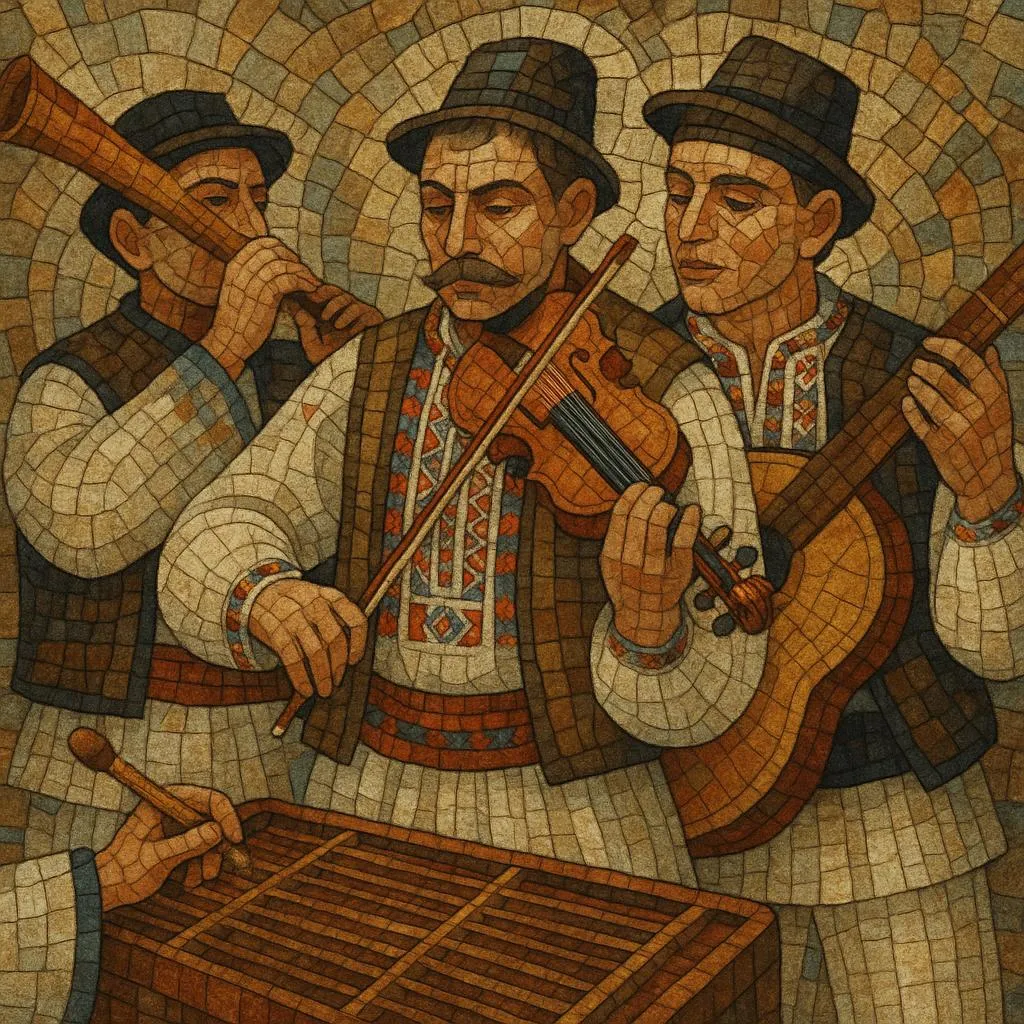
Muzica maramureșeană is the traditional folk music of the historical Maramureș region in northern Romania, shaped by mountain pastoral life, village ritual, and a strong dance culture. It is immediately recognizable by the ceteră (fiddle) leading the melody in a highly ornamented, vocal‑like style, anchored by the rhythmic strumming of the zongoră (a local chordophone/guitar) and, at times, by small cimbalom (țambal mic), wooden flutes (fluier), and the long alpine horn (trâmbița).
The style spans free‑rhythm song forms (doina/horea) and energetic, square or triple‑meter dance tunes (horă, învârtită, brâu, joc bătrânesc). Singing often uses heterophony (multiple voices ornamenting the same line differently) and calls/shouts (strigături) that punctuate dances. Seasonal male caroling (colinde) with archaic modal melodies and drone‑like supports is a hallmark of winter ceremonial life.
Modal language is predominantly Dorian/Mixolydian (with occasional pentatonic inflections), melodies are narrow to moderate in range but richly inflected, and rhythm emphasizes lively 2/4 or 4/4 with syncopations as well as lilting 3/4 for certain dances. The repertoire functions socially—marking weddings, winter holidays, and communal gatherings—while preserving a distinctive Carpathian sound.
History
Maramureș’s musical identity coalesced in village life across the 18th–19th centuries, where pastoralism, crafts, and tightly knit clan structures sustained an intensely local culture. Fiddlers (ceterași) provided music for communal dances (șură/barn dances, village greens), while shepherds’ instruments (fluier, trâmbiță) served both signaling and musical roles. Local doine/hore (free‑meter songs) crystallized a vocal aesthetic of flexible rhythm, melisma, and modal nuance.
As folklore collection spread through Transylvania, Maramureș musicians and caroling groups were documented by ethnographers and recorded on shellac and later tape. Dance suites (horă, brâu, învârtită) and seasonal rituals (colinde) entered regional folk festivals and radio repertories, fixing a recognizable “Maramureșean” sound while remaining village‑driven.
State ensembles and cultural homes promoted staged versions of local music and dance. While stylization occurred (larger ensembles, arranged forms), village tarafs (small bands) and male caroling cete kept intimate performance practices alive. Iconic voices and fiddlers traveled within Romania and abroad, carrying Maramureș repertoire to broader audiences without severing ties to village ceremonies.
After 1990, field recordings, independent labels, and festivals renewed interest in vernacular performance—small fiddler bands, household colinde, and wedding music—often featuring veteran village musicians alongside younger generations. Ethnographically informed artists and ensembles helped foreground archaic heterophony, modal subtlety, and the hallmark ceteră–zongoră texture. In parallel, elements of the style filtered into world/folk‑fusion projects, while winter caroling traditions gained heritage recognition and visibility.