Your digging level

For this genre
0/8
🏆
Sign in, then listen to this genre to level up

Description

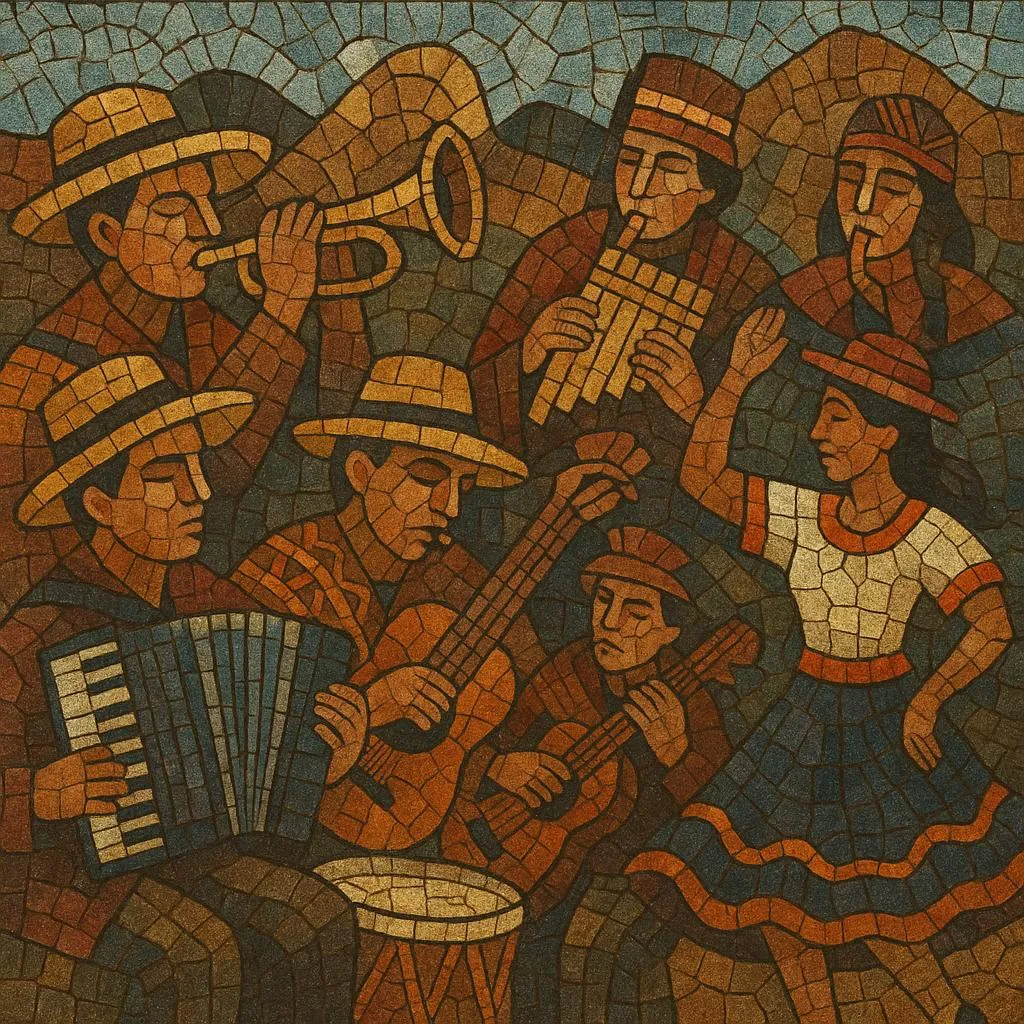
Música norteña chilena refers to the folk and festive traditions of Chile’s far north (Norte Grande and, to a degree, Norte Chico), where Andean and coastal cultures meet.

It is distinguished by a lively, processional sound built around brass bands (bandas de bronce), Andean panpipes (sikus/zampoñas), quenas, bombo and caja, charango, and participatory choruses. Rhythms such as trote nortino (a brisk duple "trot" related to huayno), saya, morenada, tinku, and carnavalito are common, especially in religious and civic festivities such as the Fiesta de La Tirana.

The style blends Aymara–Quechua melodic language, responsorial singing, and hocketing panpipe textures with powerful, outdoor-ready brass-band arrangements. Lyrics move between devotional themes (processions for the Virgen del Carmen), community pride, social life in mining towns and pampas, and the seasonal cycles of carnival.


Sources: Spotify, Wikipedia, Discogs, RYM, MB, user feedback and other online sources

History

Origins (late 19th–mid 20th century)

Northern Chile’s musical identity formed where Aymara and Quechua traditions overlapped with coastal and mining-frontier life. Processional religious practices (notably those honoring the Virgen del Carmen at La Tirana) drew on Andean rhythmic cycles and panpipe ensembles, then increasingly adopted brass-band instrumentation, creating the powerful “banda de bronce” sound for outdoor ritual and dance.

Consolidation and public visibility (1960s–1980s)

From the 1960s, touring ensembles and community bandas brought the trote nortino, saya, morenada, tinku, and carnavalito repertoires to urban stages and recordings. Parallel to the Nueva Canción movement, Andean instrumentation and northern rhythms entered national consciousness, and regional festivals professionalized accompanying bands and dance fraternities.

Modern fusion and festival ecosystem (1990s–today)

Contemporary música norteña chilena thrives in religious festivals (La Tirana, Iquique, Pozo Almonte, Pica) and municipal fiestas, with dozens of bandas de bronce and dance fraternities. Younger musicians fold in rock backlines, electronic textures, and studio production while maintaining characteristic brass–panpipe timbres and trote/saya grooves. The genre now circulates in concert halls, street parades, and hybrid projects linking folk roots to folktronica and world-fusion scenes.

How to make a track in this genre

Core instrumentation and texture
•   Combine a brass band (trumpets, trombones, tuba/sousaphone, alto/tenor horns) with Andean winds (sikus/zampoñas, quena/quenacho) and percussion (bombo and caja; snare for parade accents). Add charango or guitar for rhythmic continuity in smaller ensembles. •   Use antiphonal textures: hocketing panpipe lines over sustained brass chords, or call-and-response between a lead voice and a chorus.
Rhythm and form
•   Base grooves on trote nortino (quick duple; a buoyant "trot" feel), huayno-derived patterns (accented off-beats), and processional ostinati suitable for marching. •   For saya, emphasize a steady, danceable pulse with layered hand percussion; for morenada and tinku, use driving bass drum patterns with syncopated brass riffs. •   Structure pieces as short, repeated strains that can extend for parades: intro fanfare → main strain → vocal or panpipe call-and-response → modulating reprise.
Harmony and melody
•   Favor modal or pentatonic Andean melodies; quena lines often outline minor/aeolian or dorian colors. •   Brass voicings should be open and resonant (octaves, fifths, and triads voiced wide) to project outdoors; punctuate phrases with unison fanfares.
Lyrics and delivery
•   Themes: devotion (processions to the Virgen del Carmen), communal identity, seasonal festivities, and life in desert/mining towns. •   Use Spanish with occasional Aymara/Quechua words; encourage participatory choruses.
Arrangement and production tips
•   Prioritize live, room-rich recording or convolution reverb to evoke plazas and streets. •   Double melodies: sikus with muted trumpets or quena with clarion trumpet for brilliance. •   Keep the bombo deep and centered; let snare/caja articulate marching subdivisions. Master for high SPL and outdoor playback without harshness.

Top tracks

Locked
Share your favorite track to unlock other users’ top tracks

Upcoming concerts

in this genre
Influenced by
Has influenced

Download our mobile app

Get the Melodigging app and start digging for new genres on the go
© 2026 Melodigging
Melodding was created as a tribute to Every Noise at Once, which inspired us to help curious minds keep digging into music's ever-evolving genres.
Buy me a coffee for Melodigging