Your digging level
Description
Música costeña refers to the popular dance and folkloric styles from Colombia’s Caribbean coast, especially the departments of Bolívar, Atlántico, Sucre, Córdoba, Magdalena, and La Guajira.
It is an umbrella for interrelated rhythms and song forms such as cumbia, porro, fandango de banda, bullerengue, chandé, and (in a broader usage) vallenato, which circulate across coastal carnivals, town festivals, and urban ballrooms. In the mid‑20th century these traditions were orchestrated for big bands and studio ensembles, creating a bright, brassy sound that traveled on radio and 78 rpm records.
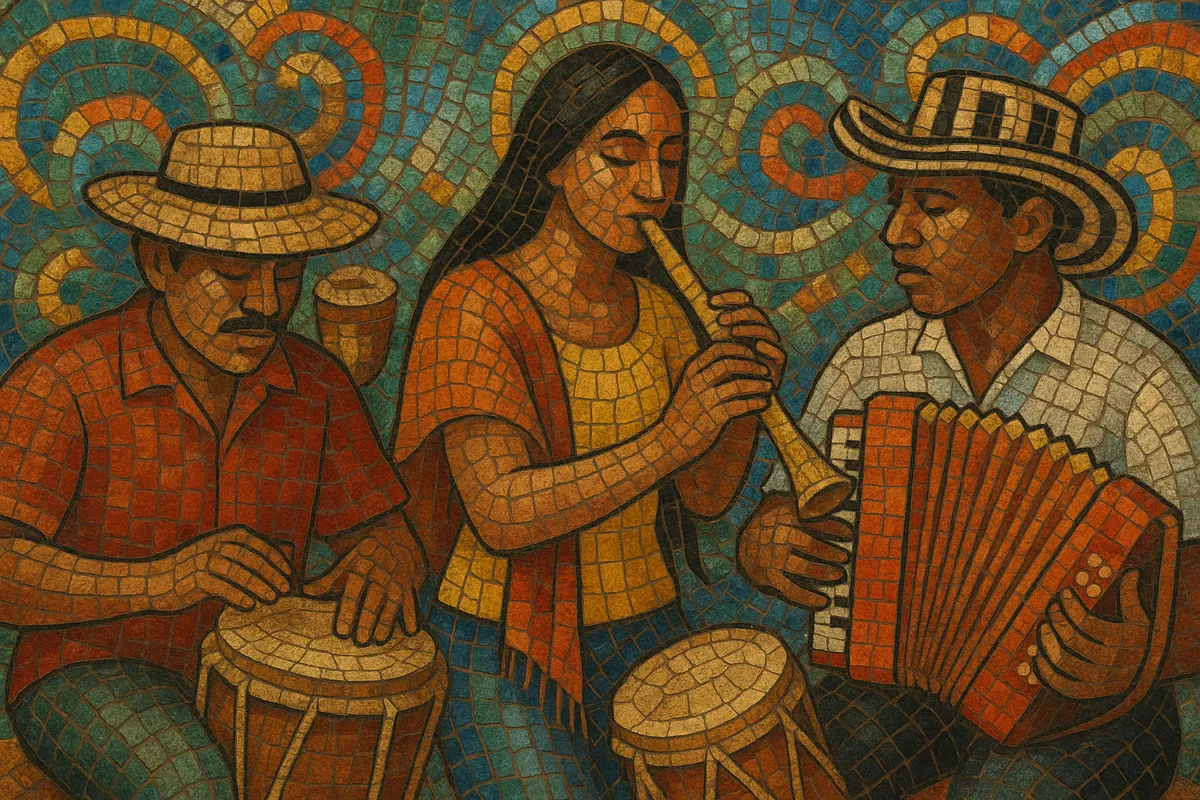
Typical hallmarks include driving hand‑drum grooves (tambora, alegre, llamador), guacharaca or maracas for timekeeping, melodic gaitas (indigenous cane flutes) or accordion riffs, and buoyant horn lines. The music is celebratory and social—built for dancing—yet it preserves the call‑and‑response chant and storytelling character of Afro‑Indigenous rural forms.
History
Música costeña grows from Afro‑Indigenous and mestizo rural traditions on Colombia’s Caribbean littoral. Cumbia, bullerengue, and chandé developed around communal dance circles and drum ensembles, while Indigenous gaitas (flutes) provided the melodic spine. Brass‑band porros and fandangos emerged as town‑festival music, connecting military band instrumentation with local rhythms.
With coastal radio stations and labels in Barranquilla and Cartagena, coastal styles entered the national market. Arrangers such as Lucho Bermúdez and Pacho Galán orchestrated cumbia and porro for clarinets, trumpets, trombones, and saxophones, codifying a modern, urbane “costeño” sound. Touring dance orchestras and carnival circuits spread these rhythms across Colombia and into neighboring countries.
Accordion‑led traditions (vallenato) and rustic cumbia sabanera coexisted with urban big‑band formats. Studio bands like Los Corraleros de Majagual and virtuosos such as Aníbal Velásquez and Lisandro Meza popularized accordion‑driven costeño grooves. Parallel scenes in salsa and tropical orchestras (e.g., Joe Arroyo’s fusions) imported costeño rhythmic cells, while picó (sound‑system) culture along the coast shaped audience taste and repertoire.
Carlos Vives reframed costeño timbres (gaitas, caja, guacharaca, accordion) for pop‑rock formats, seeding the tropipop wave and renewing international interest in coastal music. Heritage ensembles like Los Gaiteros de San Jacinto and Totó La Momposina sustained traditional practice, while contemporary producers fold costeño rhythms into electronic and urban Latin contexts.