Your digging level
Description
Música chiapaneca is the regional popular and folkloric music of Chiapas, Mexico, centered on the chromatic marimba "doble" and its distinctive ensemble practice. It blends local sones chiapanecos and salon/ballroom idioms with arrangements tailored for marimba-led groups.
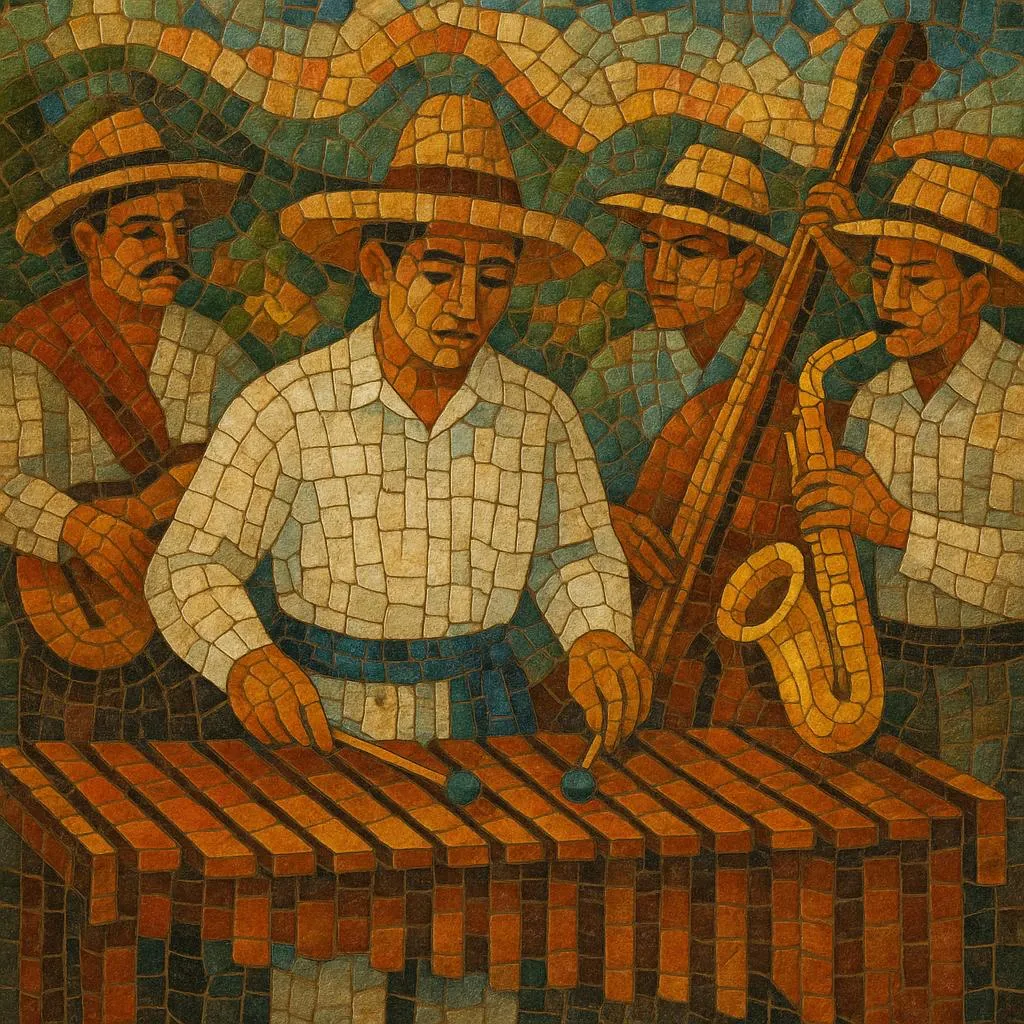
Typical settings range from the intimate marimba de concierto (two to four players on a single marimba) to the marimba orquesta, where the marimba is joined by trap set (tarola and bombo), bass, guitar, and frequently saxophones, trumpets, or clarinet. Repertoire spans son, danzón, bolero, waltz, cumbia, and lively regional pieces designed for social dancing.
Hallmark sounds include rolling tremolos, antiphonal parts between the marimba’s upper "requinto" voices and lower harmony/bass registers, parallel octaves, sparkling arpeggios, and buoyant dance rhythms. The result is festive and lyrical music that is at once local and cosmopolitan.
History
Marimba traditions in Chiapas grew alongside neighboring Guatemala, with the adoption of the chromatic marimba "doble" at the turn of the 20th century enabling fully harmonized, urban dance repertoires. In Chiapas, marimba became a symbol of regional identity as local sones and salon genres were adapted for public dances, civic celebrations, and theaters.
By the 1920s–30s, dedicated marimba ensembles professionalized in cities like Tuxtla Gutiérrez and Chiapa de Corzo. Arrangers wrote parts that split the instrument into clear roles—upper requinto melodies, inner harmonies, and walking or tumbao-like bass figures—while percussionists and, later, winds reinforced dance grooves. The repertoire incorporated danzón, bolero, waltz, and other cosmopolitan idioms, localized with Chiapanecan phrasing and rhythmic feel.
Growing radio, record, and festival circuits helped codify "música chiapaneca" as a recognizable brand. Marimba orquesta formats added drum set, bass, and often saxophones or trumpets, projecting a fuller sound for ballrooms and large fiestas. Parallel to popular entertainment, the marimba also entered conservatories and civic ensembles, further standardizing technique and arrangement practices.
Today, música chiapaneca thrives in community and state ensembles, festivals, and tourist circuits, while contemporary groups update the repertoire with cumbia-inflected pieces, pop standards, and new compositions. Municipal landmarks—such as marimba plazas—anchor the music in everyday public life, and professional marimbistas continue to refine technique, pedagogy, and ensemble sound.
The idiom is defined by the timbre and technique of the marimba: sustained tremolo rolls to simulate legato melody, contrapuntal interplay between registers, bright parallel octaves, and idiomatic arpeggiations. Rhythms favor graceful yet propulsive dance feels—danzón’s elegant lilt, bolero’s romantic sway, and upbeat regional sones—delivered with a polished, socially oriented performance aesthetic.