Your digging level
Description
Musica bautista refers to Spanish-language Baptist church music, centered on congregational hymnody, choir anthems, and devotional songs that proclaim evangelical doctrines such as salvation by grace, personal conversion, and mission. It brings the core of Baptist hymn traditions into Spanish, often through faithful translations of Anglo-American hymns as well as original compositions by Hispanic Baptists.
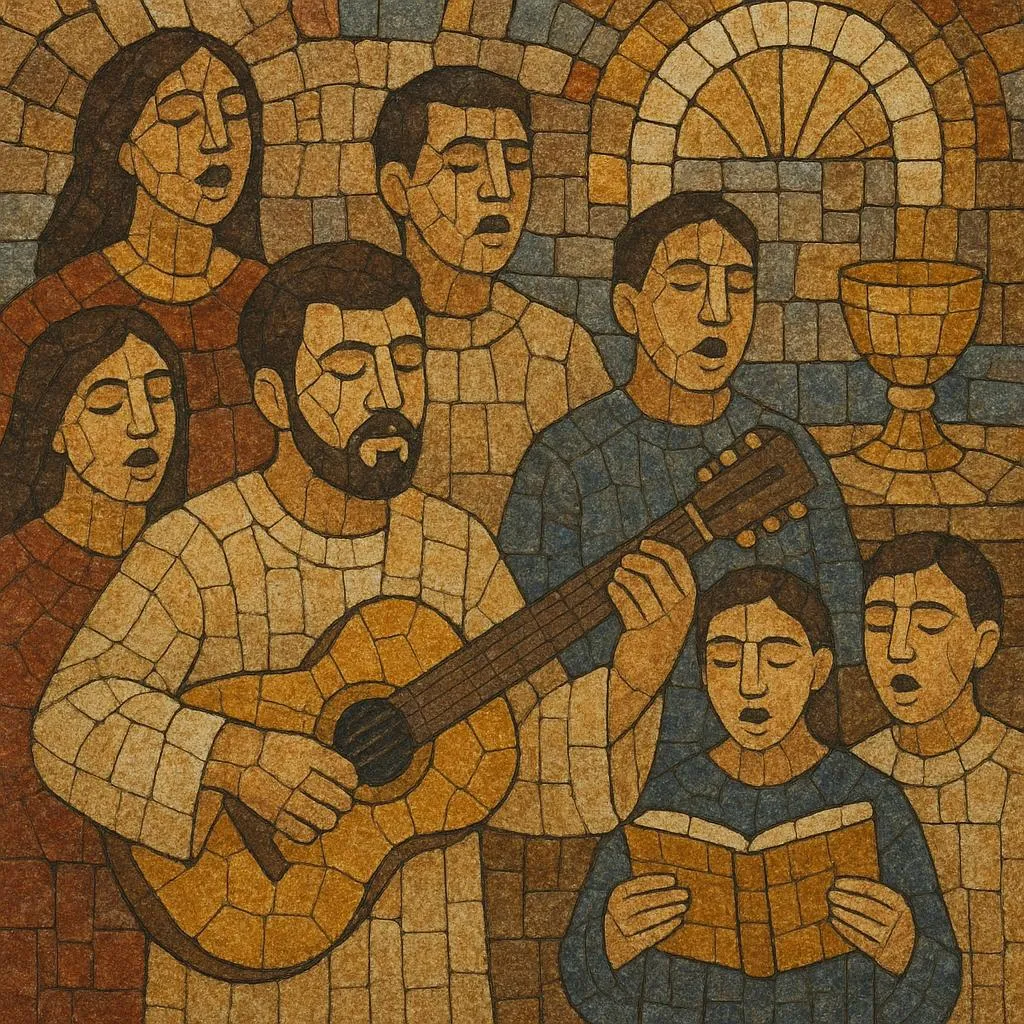
In Mexico and across Latin America, the style frequently adopts local ensemble practices (for example, rondalla-style guitar groups, small choirs, and simple acoustic bands). Texts prioritize clear proclamation, biblical imagery, and singable refrains. Musically it emphasizes diatonic harmony, strophic forms, comfortable vocal ranges for congregations, and moderate tempos suited to communal worship.
History
Baptist missionary work expanded in Mexico and Latin America in the late 19th and early 20th centuries. Alongside preaching and education, missionaries brought the Anglo-American Baptist hymn repertory. Translators and local editors compiled Spanish hymnals (notably early “Himnario Bautista” editions in the first half of the 20th century), establishing a core canon of translated hymns by writers such as Fanny J. Crosby, Philip P. Bliss, and Charles H. Gabriel.
As Baptist churches grew, music ministry diversified. In Mexico—where the style especially flourished—rondalla-style guitar ensembles, small mixed choirs, and youth groups adapted hymn tunes and simple gospel songs to local acoustic textures. Across Central America and the Caribbean, churches incorporated regional timbres (e.g., nylon-string guitars, light percussion, and sometimes marimba or bass) while keeping the congregational, text-forward ethos.
From the 1980s onward, global praise-and-worship currents influenced musica bautista. Choruses with repetitive refrains, keyboard-supported harmonies, and call-and-response patterns entered services—yet hymnody remained central at Sunday gatherings, evangelistic campaigns, and baptisms. Digital distribution and church media in the 2000s–2020s accelerated original Spanish Baptist songwriting and local recordings, strengthening a pan–Latin American repertoire while preserving traditional strophic hymns.
Musica bautista remains a living congregational tradition: choirs, children’s and youth ensembles, and rondallas co-exist with more contemporary bands. The unifying traits are doctrinal clarity, singability, and a pastoral aim to support prayer, proclamation, and mission.