

Your digging level
Description
Música adventista (Seventh-day Adventist music) is the body of congregational, choral, and devotional music cultivated within the Seventh-day Adventist Church.
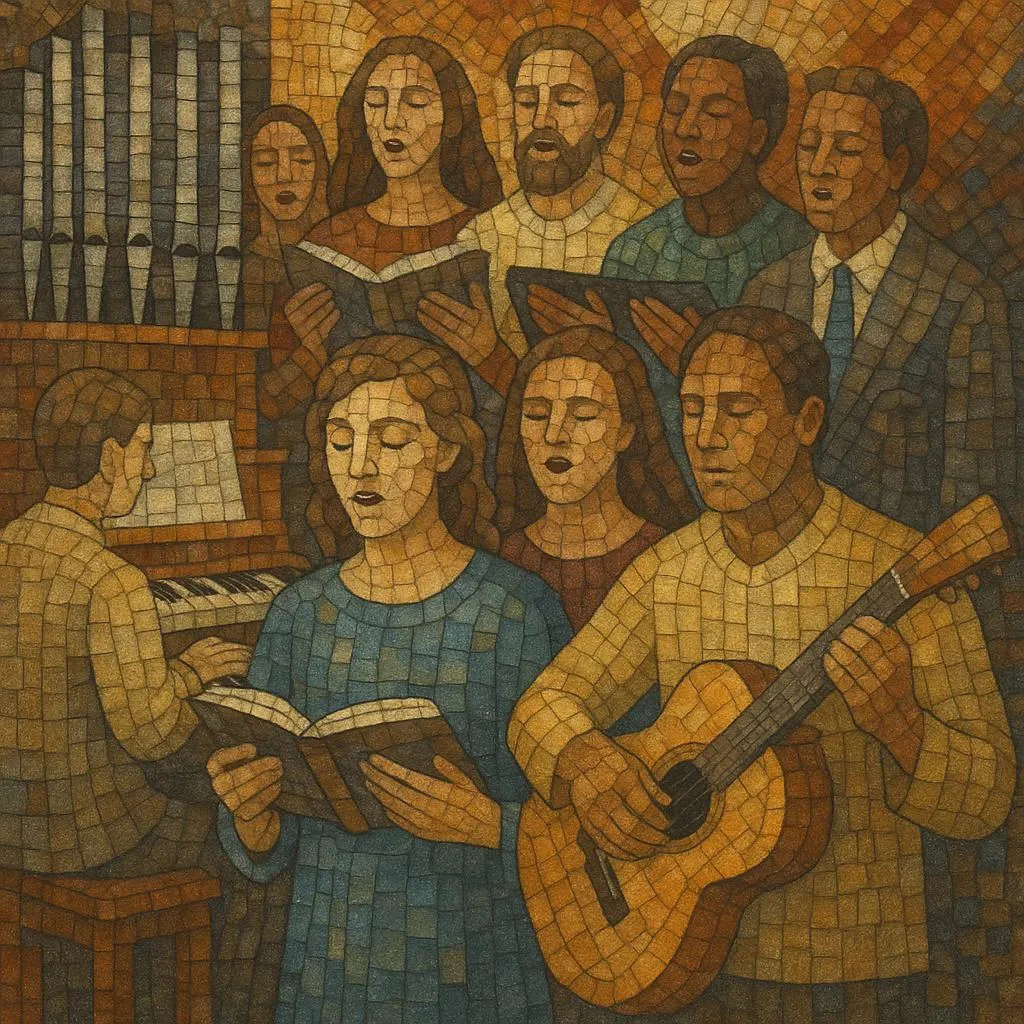
It emphasizes Christ-centered, Scripture-saturated lyrics; clear congregational singability; and a historically moderate aesthetic drawn from Protestant hymnody and choral traditions. Typical sounds include four-part SATB hymn singing, a cappella male quartets, mixed choirs, organ or piano accompaniment, and, in many regions today, gentle contemporary Christian idioms (acoustic guitars, light percussion) adapted to local cultures.
The repertory spans classic hymns and gospel pieces, evangelistic songs linked to radio/TV ministries, multilingual worship music from the church’s global mission, and high-level a cappella performance rooted in historically Black Adventist music education.
History
Seventh-day Adventists organized in the United States in 1863, inheriting the Anglo-American Protestant hymn tradition. Early worship prioritized congregational singing with piano/organ and four-part harmony, publishing denominational hymnals to unify doctrine and musical practice.
With the rise of radio evangelism, Adventists developed a distinctive quartet and choral sound. The Voice of Prophecy (launched in the early 1930s) popularized the King’s Heralds male quartet and contralto soloist Del Delker, shaping an instantly recognizable Adventist timbre—warm a cappella close-harmony, clear diction, and evangelistic texts. Camp meetings, tent revivals, and evangelistic series further spread these styles across North America.
Rapid worldwide growth fostered regional ensembles and translations (e.g., Arautos do Rei in Brazil; Los Heraldos del Rey in the Spanish-speaking world). Adventist colleges—especially historically Black institutions such as Oakwood—nurtured advanced choral/a cappella traditions, ultimately giving rise to internationally acclaimed groups (e.g., Take 6). During this period, some ministries adopted contemporary Christian music aesthetics (e.g., Heritage Singers) while maintaining Adventist lyrical emphases on the Second Coming, Sabbath, healthful living, and discipleship.
Today, música adventista is multilingual and stylistically broad: from hymnody and classical choral repertoire to culturally contextualized gospel, CCM, acoustic praise, and global styles. Choirs and quartets remain central—augmented by youth worship bands and media ministries. Though aesthetic standards (e.g., volume, rhythm, and instrumentation) vary regionally, core values persist: Scripture-rooted texts, congregational participation, reverent tone, and missional focus.

