Your digging level
Description
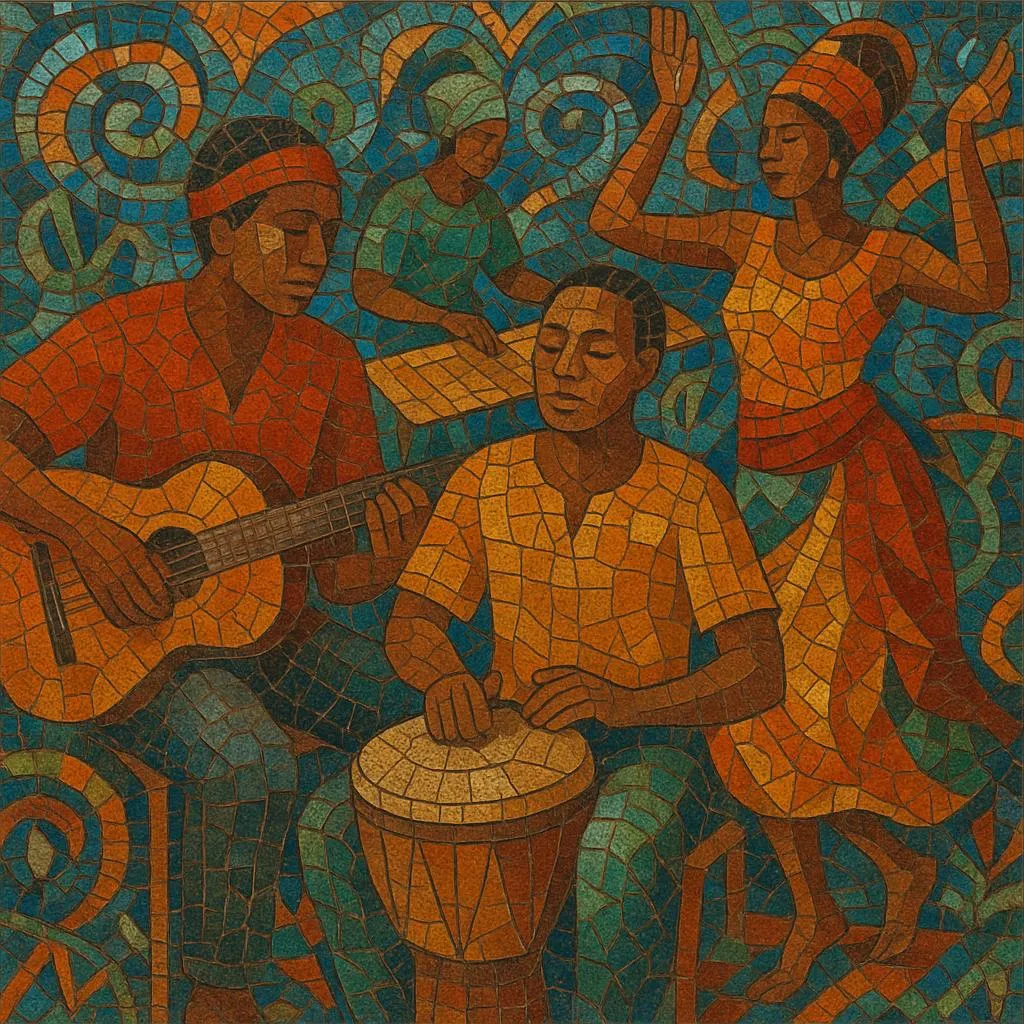
The music of Mozambique encompasses a mosaic of regional traditions, languages, instruments, and dance-derived rhythms shaped by centuries of local culture and Portuguese colonisation. Pre‑colonial styles such as the Chopi timbila xylophone orchestra, Makonde mapiko (mask) dance music, Muslim coastal tufo, and war‑dance songs like xigubo coexist with urban guitar music, church-based choral traditions, and contemporary pop.
In the 20th century, urbanisation in Lourenço Marques (now Maputo) fostered a synthesis of local dance rhythms and European popular forms. Marrabenta emerged as the signature modern dance style—fast, guitar-driven, and irresistibly rhythmic—while post-independence ensembles and bands popularised socially conscious lyrics in Changana, Ronga, Makhuwa, Sena, Portuguese, and other languages. Mozambican grooves and timbral sensibilities also travelled abroad, shaping Brazilian maxixe and resonating in Cuban/New York "Mozambique"-style salsa experiments.
History
Mozambique’s musical heritage is anchored in diverse ethnic traditions: the Chopi’s timbila xylophone orchestras (with interlocking, hocketed melodies and intricate polyrhythms), Makonde mapiko masked-dance music, Muslim coastal tufo songs and frame-drum rhythms, and southern war-dance forms such as xigubo. These practices foreground call-and-response singing, cyclical ostinati, and layered percussion.
Under Portuguese colonisation, military and civic bands, church hymnody, polkas and European partner dances entered local soundscapes. In urban centres—especially Lourenço Marques (Maputo)—local musicians adapted European harmonic and song forms to African rhythmic sensibilities. By the 1930s–1950s, this hybridisation yielded marrabenta: a brisk, guitar-led dance style with strong backbeat accents, singable melodies, and socially observant lyrics.
Following independence in 1975, state ensembles and radio reinforced national identity through multilingual repertoires. Bands like Orchestra Marrabenta Star de Moçambique, Ghorwane, and vocal groups such as Eyuphuro brought Mozambican music to international stages. Despite the civil war (1977–1992), the scene persisted in urban clubs and diaspora communities, keeping marrabenta, timbila, and coastal traditions in circulation.
Mozambican grooves travelled widely: the kinetic feel of Mozambican dance music influenced Brazilian maxixe in the late 19th/early 20th centuries, and the name and feel of "Mozambique"-style rhythms surfaced in Cuba and New York salsa scenes in the 1960s. At home since the 1990s, artists have blended marrabenta with reggae, hip hop, kwaito, and dancehall, while choral and traditional styles remain vital at ceremonies and festivals. Today, Mozambique’s music balances heritage (timbila, mapiko, tufo) and modernity (marrabenta, hip hop, pop) in a continually evolving sound.