Your digging level
Description
Music of Guinea encompasses the diverse traditional and modern styles of a multiethnic West African nation, notably the Mandé (Malinké/Maninka), Fulani/Peul, Susu, Kissi, and forest peoples. Its core features include griot (jeli) praise-singing, intricate polyrhythmic drumming, and melodic harp-lute traditions.
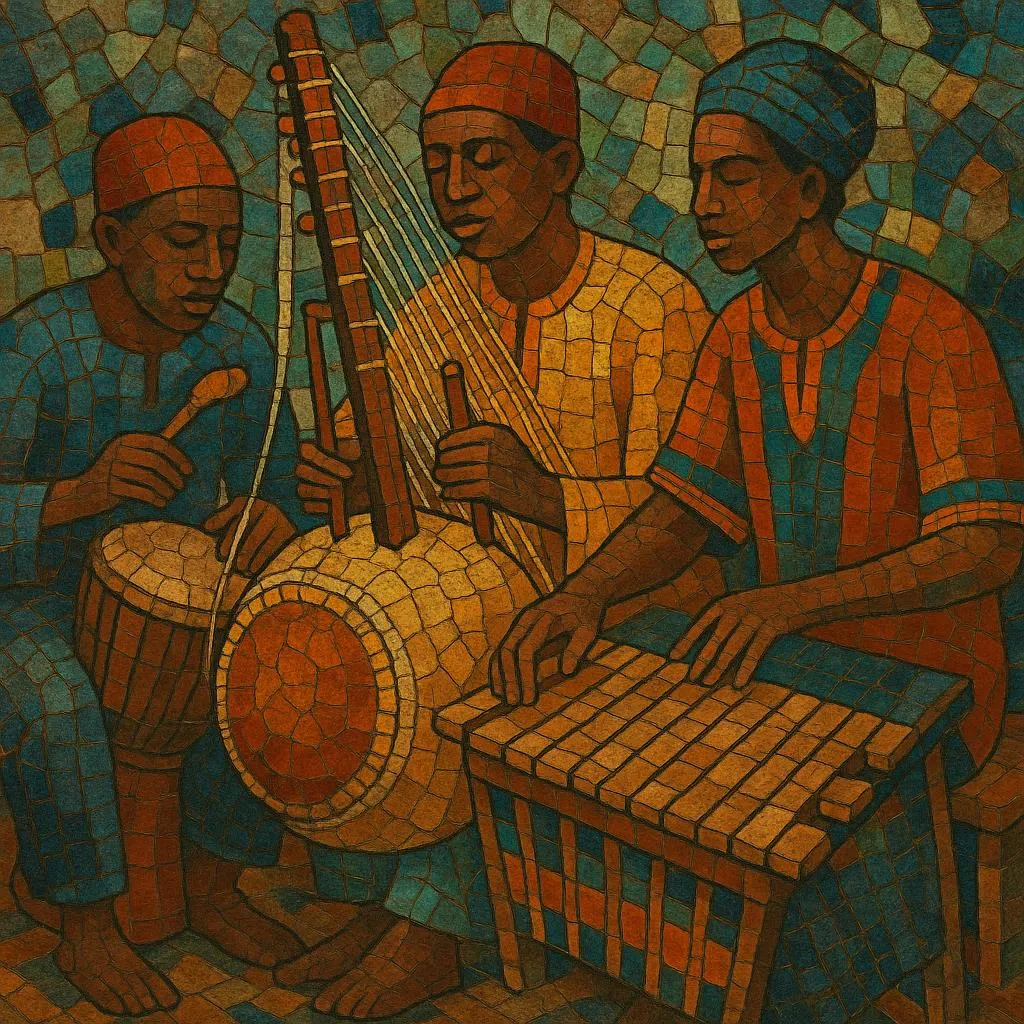
Iconic instruments include the 21‑string kora, wooden balafon (xylophone)—with the historic Sosso Bala in the north—ngoni (lute), bolon (harp-bass), the djembe hand drum with its dunun bass drum family (kenkeni, sangban, dununba), krin slit drum, and the Fulani (Fula) flute. In the urban dance-band era after independence, horns, electric guitars, and Afro‑Cuban rhythm sections fused with Manding melodies, creating a golden age of state orchestras.
Internationally, Guinea is known both for its virtuosic percussion lineages and its post-independence orchestras. Among its most widely known artists is Mory Kanté, whose song "Yé ké yé ké" (from the album Akwaba Beach) became a pan‑European hit in 1988, showcasing how Guinean melodic cells and call‑and‑response vocals could translate into global pop contexts.
History
Guinea’s musical roots are entwined with Mandé court traditions and village ritual life. Griot (jeli) families maintained genealogies, praise poetry, and musical knowledge on kora, ngoni, and balafon; drumming ensembles underpinned ceremonies, initiations, and dances with 12/8 and 4/4 interlocking polyrhythms. In the late 19th and early 20th centuries, port cities and radio introduced Afro‑Cuban and jazz sounds, seeding future fusions.
Following independence in 1958, President Ahmed Sékou Touré instituted an ambitious cultural policy: regional arts troupes, national ballets (notably Les Ballets Africains), and state‑sponsored orchestras recorded for the Syliphone label. Ensembles such as Bembeya Jazz National, Keletigui et ses Tambourinis, Balla et ses Balladins, Orchestre du Jardin de Guinée, and the all‑women Les Amazones de Guinée reworked Manding and Susu repertory with horns, guitars, and Afro‑Cuban rhythm sections, forging the signature “Afro‑Manding” dance‑band sound.
The death of Sékou Touré (1984) ended the state‑orchestra era, but Guinean music globalized in two parallel streams. First, virtuoso percussion—championed by masters like Mamady Keïta and Famoudou Konaté—catalyzed the worldwide djembe movement. Second, popular crossovers flourished: Mory Kanté’s "Yé ké yé ké" (1988) became one of Africa’s most successful singles in Europe, while saxophonist Momo Wandel Soumah, guitarist Sékou “Bembeya” Diabaté, and later kora innovators like Ba Cissoko extended Guinean idioms into jazz, rock, and worldbeat.
Since the 2000s, Conakry’s scene spans hip hop, reggae, Afropop, and acoustic roots revivals. Modern bands blend trap and Afrobeats production with griot vocals and kora/balafon hooks, while heritage groups sustain village repertoires and ceremonial drumming. Reissue programs of Syliphone archives and festival circuits have renewed global interest in Guinea’s golden‑age orchestras and traditional lineages.

Best playlists