Your digging level
Description
Malagasy folk music is the traditional music of Madagascar, shaped by the island’s Austronesian roots and centuries of contact with mainland Africa and the Indian Ocean world.
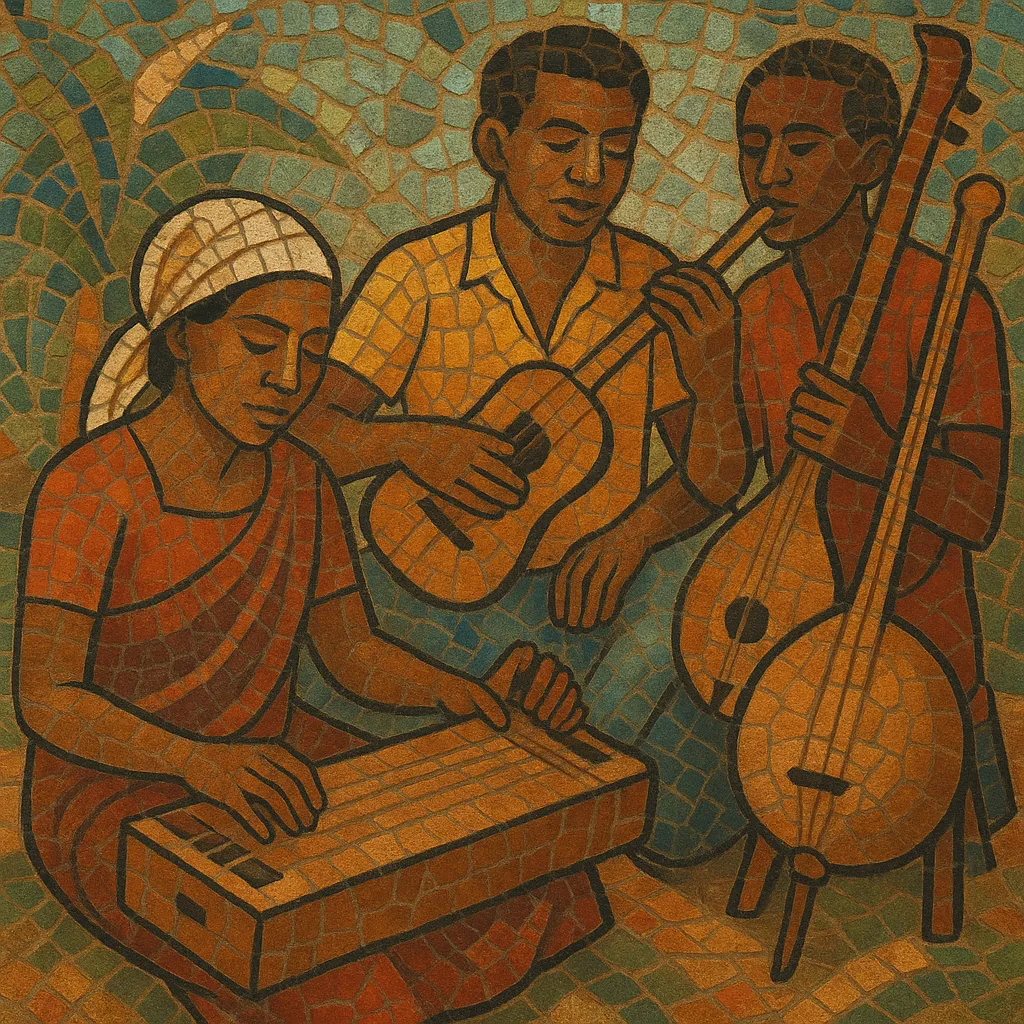
It is characterized by distinctive plucked zithers (valiha and marovany), small box-lutes (kabosy), end-blown flutes (sodina), three-string fiddles (lokanga), frame and barrel drums, handclaps, and rich vocal traditions ranging from communal dance songs to funerary laments.
Regional styles are highly diverse: the Highland vakodrazana/hira gasy ensembles emphasize interlocking zither ostinatos and choral call-and-response; coastal Sakalava and Betsimisaraka areas favor propulsive dance grooves that later fed into salegy; the southwest’s tsapiky and the south’s beko feature contrasting fast dance music and deep, modal vocal laments.
Melodically, Highland repertoires often use anhemitonic pentatonic and modal scales reminiscent of Southeast Asia, while coastal repertoires reflect African rhythmic drive and, in some areas, Swahili/Arab melodic coloration. The result is a uniquely Malagasy sound—nimble, shimmering, and highly rhythmic, yet capable of great emotional depth.
History
The foundations of Malagasy folk music were laid by Austronesian settlers (from today’s Indonesia/Malaysia area) who arrived between the 5th and 10th centuries CE. They brought tube and box zithers (precursors to the valiha and marovany), small lutes, and pentatonic/modal song traditions. Subsequent contacts with Bantu-speaking peoples of East Africa added new drums, dance practices, and responsorial singing.
As distinct ethnic groups formed across Madagascar’s varied landscapes, local styles diversified. In the Highlands, vakodrazana and hira gasy emerged as public performance arts blending music, dance, oratory, and social commentary. Along the coasts, Sakalava, Betsimisaraka, Vezo, and Antandroy communities developed highly rhythmic dance musics and expressive vocal genres such as beko. Trade and intermarriage with Swahili and Arab communities introduced new melodic turns and instruments, especially in port towns.
Under Merina hegemony and later French colonial rule, court and mission settings spurred instrument building (e.g., metal-string valiha) and choral forms. Early recordings and ethnographies captured Highland zither traditions, coastal dances, and ceremonial repertoires, helping canonize certain regional sounds as representative of Malagasy identity.
Urbanization and radio connected regional scenes. Highland zither styles and coastal dance grooves entered popular music, setting the stage for modern genres. Artists preserved folk cores while adding guitars, accordion, and later electric instruments. This period cemented the prestige of the valiha as a national symbol.
Virtuoso players and ensembles revitalized traditional repertoires, while festivals and international collaborations brought Malagasy folk aesthetics to global audiences. Folk roots continue to animate contemporary Malagasy genres (e.g., tsapiky), and the island’s Indian Ocean neighbors acknowledge deep historical links to Malagasy rhythms and song.