Your digging level

For this genre
0/8
🏆
Sign in, then listen to this genre to level up

Description

Lagu Melayu literally means "Malay songs" and refers to the Malay-language song tradition that fuses indigenous Malay melodic idioms with Arab-Persian, Indian, and Western pop influences. In practice it spans from the older "lagu Melayu asli" (traditional forms such as Asli, Inang, Joget, Zapin, Dondang Sayang) to modern Malay pop ballads and radio hits.

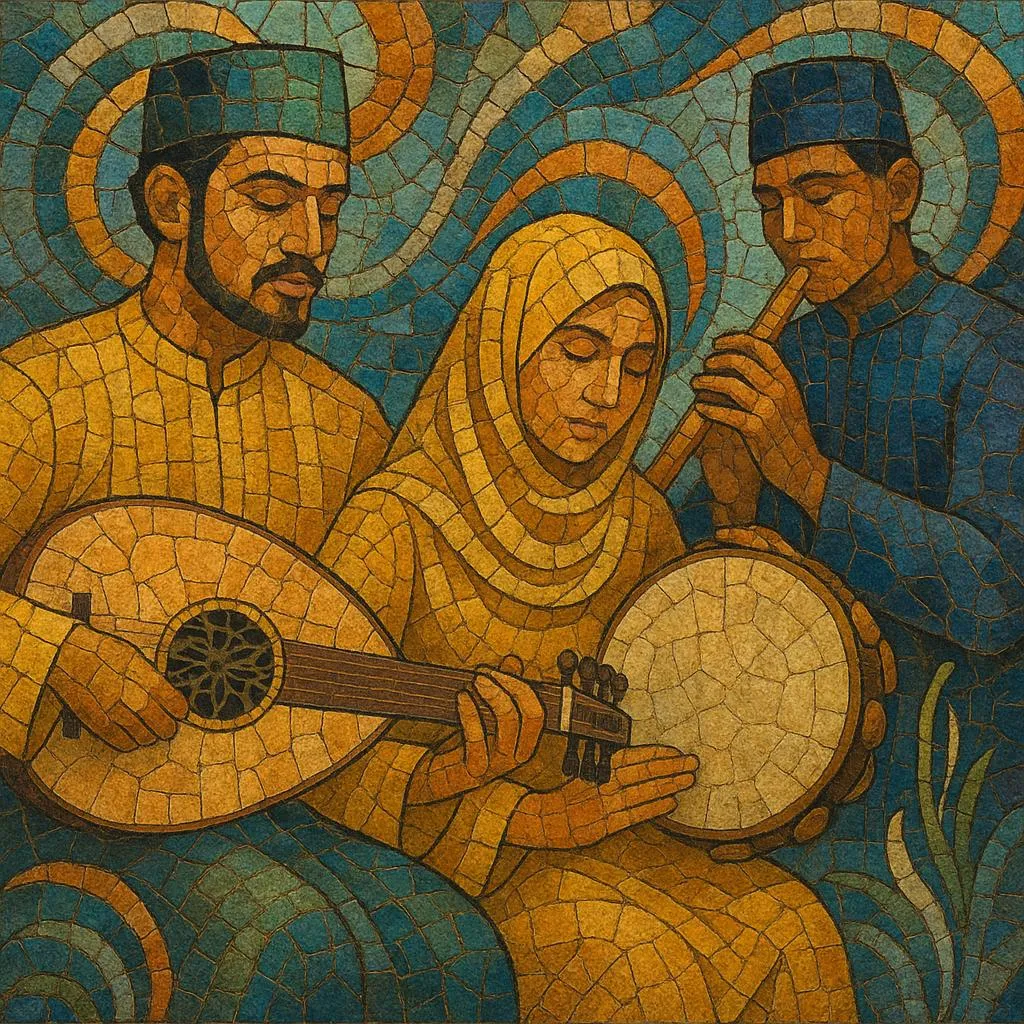
Musically, it favors lyrical, ornamented melodies (often melismatic), gently pulsing dance rhythms inherited from court and folk repertoires, and simple, song-centered harmony. Typical textures mix traditional timbres (gambus/oud, rebana frame drums, seruling flute, violin) with guitars, keyboards, and light drum-set grooves. Lyrically, Lagu Melayu leans toward pantun-style poetry, romance, nostalgia, morality, and spiritual themes.

Because it is a broad, living tradition, Lagu Melayu acts both as a repository of classic Malay styles and as a fountainhead for contemporary Malay-language pop across Malaysia, Singapore, Brunei, and parts of Indonesia.


Sources: Spotify, Wikipedia, Discogs, RYM, MB, user feedback and other online sources

History

Origins (early recordings to 1940s)

The roots of Lagu Melayu lie in the Malay Peninsula's courtly and village repertoires (Asli, Inang, Joget, Zapin, Dondang Sayang). Gramophone companies began recording Malay-language songs in Singapore and Penang in the 1930s, fixing these styles on shellac and circulating them widely across British Malaya.

Film era and Orkes Melayu (1940s–1960s)

With the rise of Malay cinema and radio, large dance-orchestras—often called Orkes Melayu—standardized arrangements that blended violin sections, gambus, accordion, and Western rhythm sections. Crooners and film stars popularized refined Asli ballads and lively Joget numbers, while the poetry of pantun remained central. This period laid the blueprint for a modern Malay song aesthetic.

Hybridization and pop modernity (1960s–1980s)

Western beat, twist, and pop idioms entered Malay songs (e.g., the beat-driven Pop Yeh Yeh). Simultaneously, Arab-Persian devotional currents and Indian film music enriched melodic language and percussion. In neighboring Indonesia, Orkes Melayu would inform the development of dangdut and, later, qasidah modern, showing how the Malay song template seeded new mass-pop styles.

Contemporary era (1990s–today)

Modern Lagu Melayu retains core melodic and poetic traits while adopting contemporary production: clean pop ballads, light R&B, soft rock, and acoustic arrangements sit alongside revived traditional numbers. It remains a shared cultural touchstone across the Malay world and a foundation for nasyid vocal groups, Malay pop-rock, and television soundtrack ballads.


How to make a track in this genre

Core melody and scales
•   Write a singable, ornamented melody that allows for melisma and grace notes. Think stepwise motion with expressive turns rather than large leaps. •   Use primarily diatonic scales; occasional modal color comes from Arab-Persian influence (e.g., raised second or micro-ornaments), but keep intonation song-friendly.
Rhythmic idioms (pick one feel and build around it)
•   Asli: very slow, dignified 4/4 with rubato phrases—ideal for poetic ballads. •   Inang: moderate duple (2/4) with a gentle lilt—good for graceful love songs. •   Joget: brisk compound feel (often 6/8) for festive, danceable numbers. •   Zapin: propulsive 4/4 with Arab-Malay syncopations (maqsūm-like accents), often featuring frame drums.
Instrumentation and texture
•   Traditional colors: gambus/oud, rebana (frame drums), seruling (bamboo flute), biola (violin), accordion. •   Modern band: acoustic guitar (arpeggios or soft strums), clean electric guitar fills, keyboard pads/strings, light drum kit (brushes or soft kick-snare), bass doubling the root-fifth. •   Keep the mix vocal-forward; instrumental lines should double or answer the vocal melody.
Harmony and form
•   Use simple I–IV–V progressions with occasional ii–V or secondary dominants. Avoid dense chromaticism; the melody carries expression. •   Common song forms: verse–chorus with a short pre-chorus; include a brief instrumental interlude for violin/gambus or a key change (up a semitone) for the final chorus.
Lyrics and delivery
•   Draw on pantun-like imagery: nature metaphors, longing, fidelity, humility, spiritual reflection. •   Keep lines concise with end-rhymes; let the singer shape phrases rubato at cadences.
Production tips
•   Favor warm, natural reverbs (room/hall) to evoke intimacy and nostalgia. •   Layer subtle traditional percussion (rebana, handclaps) beneath a soft pop rhythm to bridge classic and modern aesthetics.

Top tracks

Locked
Share your favorite track to unlock other users’ top tracks

Upcoming concerts

in this genre
Influenced by
Has influenced

Download our mobile app

Get the Melodigging app and start digging for new genres on the go
© 2026 Melodigging
Melodding was created as a tribute to Every Noise at Once, which inspired us to help curious minds keep digging into music's ever-evolving genres.
Buy me a coffee for Melodigging