Your digging level

For this genre
0/8
🏆
Sign in, then listen to this genre to level up

Description

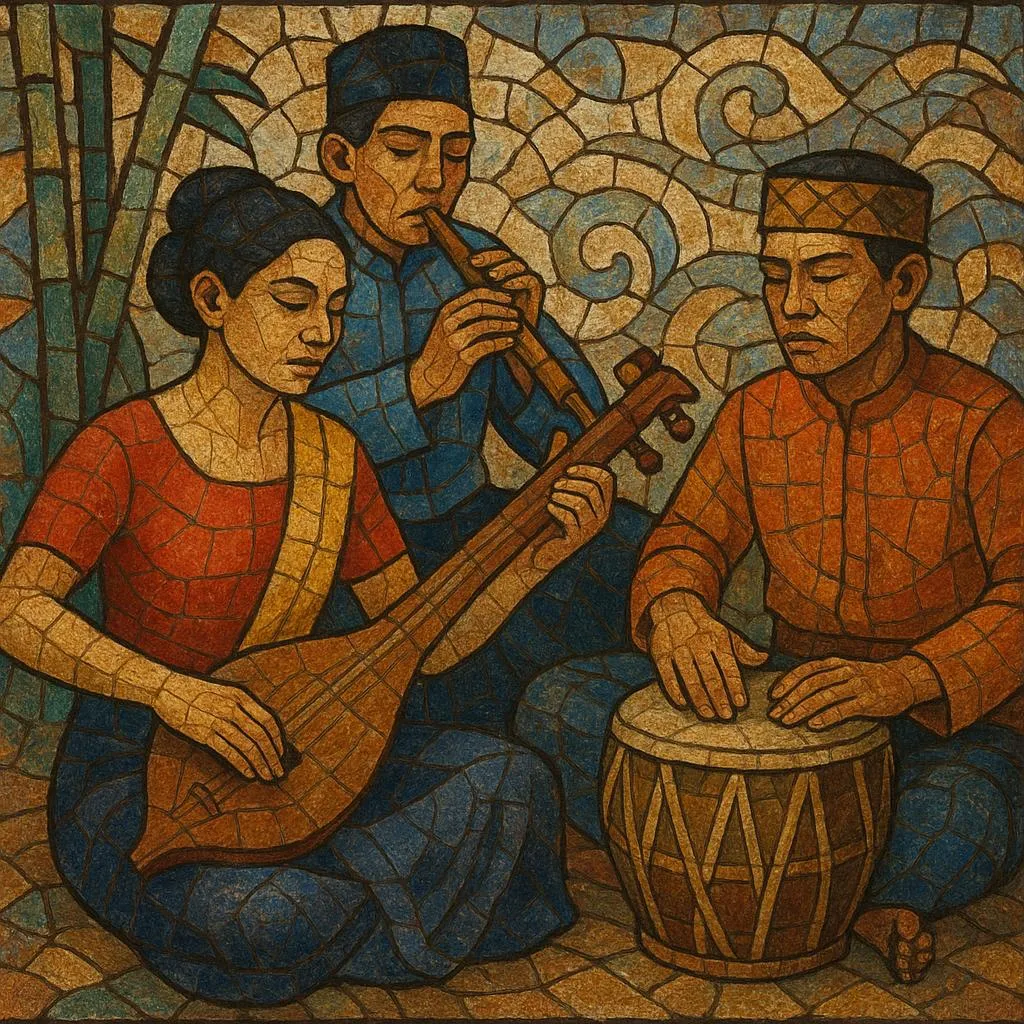
Lagu Bugis refers to popular songs performed in the Bugis (Buginese) language of South Sulawesi, Indonesia. It spans modern regional pop ballads, dangdut‑inflected dance songs, and contemporary arrangements that retain Bugis melodic turns and vocal ornamentation.

Musically, Lagu Bugis blends Western pop harmony (major/minor progressions) with Indonesian regional aesthetics: melismatic lines, pentatonic/diatonic tunes on bamboo flute (suling) or kecapi (kacaping) lute, and drum patterns adapted from local gandrang/kendang traditions or from nationwide dangdut rhythms. Lyrically, it foregrounds Bugis identity—siri’ na pacce (honor and empathy), love and longing, migration and seafaring life, and ceremonial themes (e.g., wedding rituals).


Sources: Spotify, Wikipedia, Discogs, RYM, MB, user feedback and other online sources

History

Roots and early popularization (pre‑1970s)

Bugis communities have a long vocal tradition (kelong—poetic songs) accompanied by kacaping (kecapi) lute, suling (bamboo flute), and frame/drums. Courtly and ritual repertoires, bissu chant, and narrative song tied to the I La Galigo epic shaped local melodic contours and performance etiquette.

Cassette era and “pop daerah” (1970s–1990s)

With the explosion of Indonesia’s cassette industry in the 1970s, regional “pop daerah” (local‑language pop) flourished. Bugis‑language recordings circulated through South Sulawesi’s markets and migrant networks, modernizing accompaniment (electric guitar/bass, keyboards, drum machines) while retaining Bugis vocal ornaments and themes. The influence of nationwide dangdut and keroncong introduced 4/4 dance grooves and crooning ballad textures.

Consolidation and stage culture (2000s)

Local labels, radio, and VCD/DVD karaoke culture helped standardize a repertoire for weddings and community events (e.g., mappacci ceremonies), where Bugis hits coexisted with Makassar and Mandar songs. Arrangers increasingly fused suling/kacaping timbres with contemporary pop band setups.

Digital era and revival of language pride (2010s–present)

Streaming platforms and social video accelerated the spread of Bugis songs beyond Sulawesi, while talent shows and influencer‑singers popularized Bugis lyrics on national stages. Producers fold EDM pads, trap‑lite percussion, and slick ballad production into Lagu Bugis, yet audiences still expect idiomatic melismas, poetic Bugis diction, and references to siri’ na pacce, seafaring, and sarong/silk (balo’ lipa’) symbolism.

How to make a track in this genre

1) Melody and scale language
•   Write singable, ornamented lines: slides, turns, and short melismas on stressed syllables. •   Use primarily diatonic melodies with pentatonic color; keep a narrow–moderate vocal range so community singers can join in.
2) Harmony and form
•   Verses and refrains over I–V–vi–IV or I–vi–IV–V ballad loops; for dangdut‑flavored songs, sit on I–IV–V and use secondary dominants for lift. •   2 or 3 verses with a recurring chorus; add a short instrumental interlude to feature suling or kacaping.
3) Rhythm and groove
•   For dance numbers: a 4/4 dangdut backbeat (kick on 1 & 3, snare/tabla‑like slap on 2 & 4, syncopated kendang fills). •   For ballads: slow 4/4 or 6/8 with gentle toms and shaker; let the vocal breathe between phrases.
4) Instrumentation and timbre
•   Core pop band: vocal, acoustic/electric guitar, bass, keys, drum kit (or sampled dangdut kit). •   Regional color: suling (bamboo flute) for intro/solos, kacaping (kecapi) for arpeggios, light gandrang/kendang for fills; add string pads for warmth.
5) Lyrics and delivery (Bugis language)
•   Themes: love and longing, migration/seafaring, kinship and honor (siri’ na pacce), wedding blessings, hometown nostalgia. •   Favor parallelism, aphorisms, and vivid local imagery (boats, silk sarong/balo’ lipa’, rice fields, coastal winds). •   Diction: clear vowels and ornamented phrase‑endings; call‑and‑response lines work well for communal singing.
6) Production tips
•   Keep vocals forward and intimate; add slight plate reverb. •   Blend traditional instruments with modern pads; side‑chain keys/bass lightly for contemporary polish. •   For stage versions, extend the intro/outro for audience participation and dance.

Top tracks

Locked
Share your favorite track to unlock other users’ top tracks

Upcoming concerts

in this genre
Influenced by
Has influenced
No genres found

Download our mobile app

Get the Melodigging app and start digging for new genres on the go
© 2026 Melodigging
Melodding was created as a tribute to Every Noise at Once, which inspired us to help curious minds keep digging into music's ever-evolving genres.
Buy me a coffee for Melodigging