Your digging level
Description
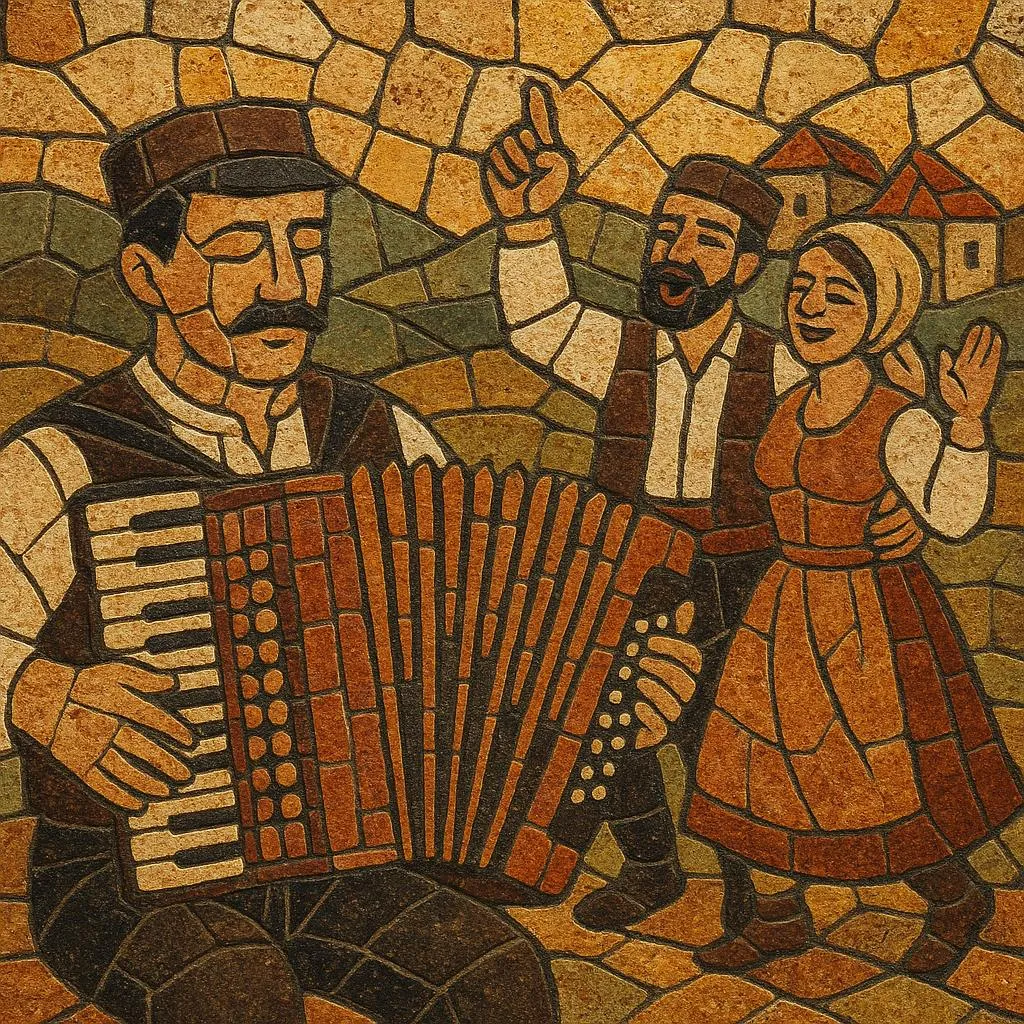
Krajiška muzika (Krajina music) is a regional strand of South Slavic popular folk centered on the Bosanska Krajina area of north‑western Bosnia and neighboring Krajina communities. It blends rural vocal styles, dance tempos for kolo, and the timbre of the diatonic button accordion (harmonika) with the streamlined song forms of the post‑1960s "newly composed" folk era.
The style is marked by lively 2/4 or polka‑like grooves for dancing, simple I–IV–V harmonies in major or minor, and ornamented, emphatic singing that often uses call‑and‑response and shouting interjections (e.g., "oj!"). Lyrics celebrate homeland (Krajina), rustic life, love, humor, and—especially since the 1990s—exile and longing, giving the repertoire a simultaneously festive and nostalgic character.
History
Krajiška muzika grows out of the rural singing and dance traditions of Bosanska Krajina and neighboring Krajina communities. Before the recording era, local kolo dance tunes, epic gusle recitation, and rustic duet/trio singing formed the musical fabric of weddings, fairs, and communal gatherings.
Beginning in the 1960s, the broader Yugoslav current of novokomponovana narodna muzika (newly composed folk) standardized shorter pop‑song forms, studio rhythm sections, and accordion leads. In the 1970s, performers from Krajina foregrounded regional themes, speech cadence, and dance tempi, circulating on radio and especially via cassettes sold at markets and roadside stalls. The diatonic button accordion (harmonika) and bright, driving 2/4 grooves became sonic signatures.
Conflict in the 1990s scattered Krajina populations across the Balkans and the diaspora. Krajiška repertories consolidated around songs of homeland, separation, and pride, while maintaining the party‑ready dance function at community events. Cassette culture and village‑hall circuits kept the style vibrant despite upheaval.
In the 2000s–2020s, Krajiška muzika coexists with mainstream Balkan pop‑folk aesthetics: punchier drums, fuller bass, and modern production, yet it retains the core hallmarks—accordion‑driven leads, sing‑along refrains, and kolo‑compatible rhythms. The style remains central at weddings, diaspora gatherings, and regional festivals, and it continues to feed a living repertoire of new songs that affirm Krajina identity.