

Your digging level
Description
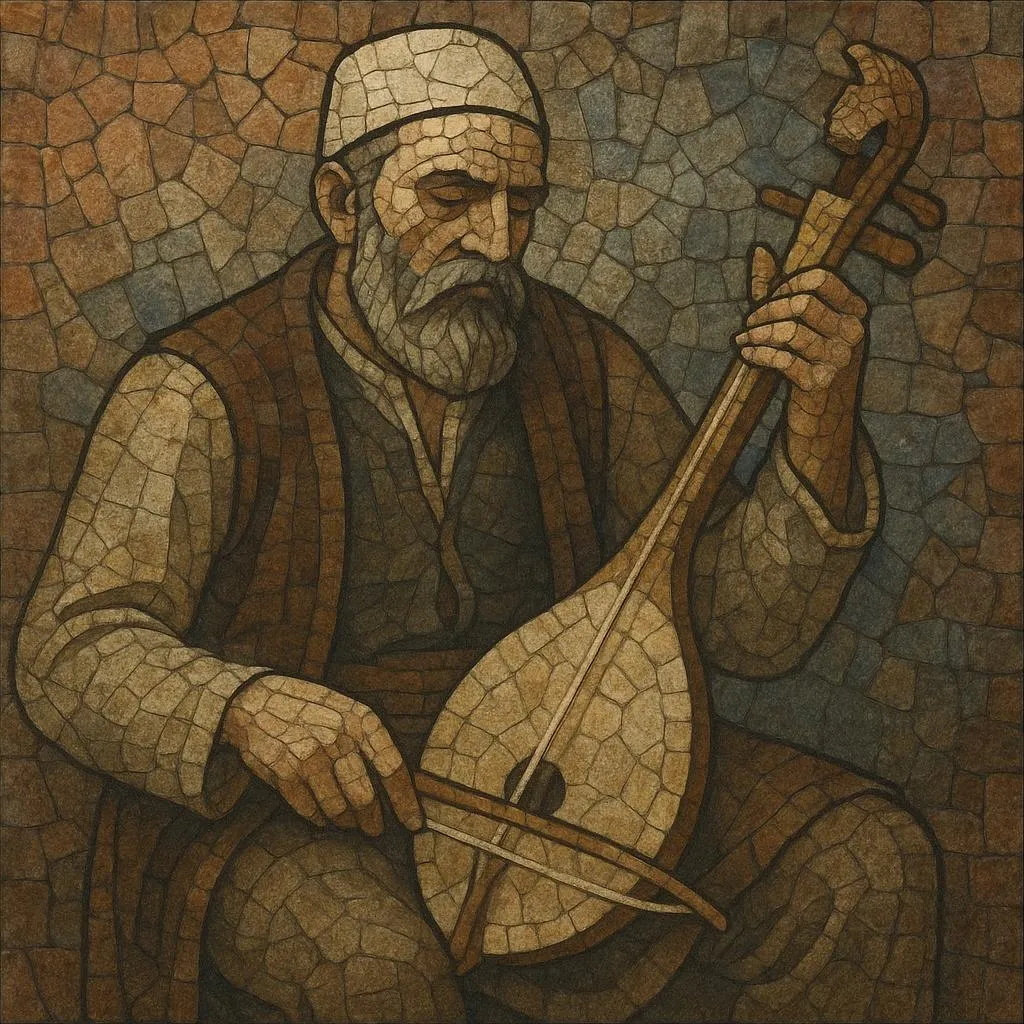
Gusle music is a South Slavic oral-epic singing tradition performed to the accompaniment of the gusle, a bowed, one‑string (occasionally two‑string) spike fiddle. A solo bard (guslar) declaims long heroic narratives or historical ballads while sustaining a continuous drone and rhythmic bowing on the instrument.
Melodically, the singing is narrow-ranged, modal, and strongly speech‑driven. Verses are typically composed in decasyllabic lines with fixed accents and formulaic epithets that aid memory and improvisation. Rhythm is flexible and follows the prosody of the text more than a strict meter, while the gusle provides a raw, penetrating timbre that reinforces the recitative delivery.
Culturally, gusle music is central to epic storytelling and collective memory in the Western Balkans (especially among Serbs and Montenegrins, but also Croats and Bosniaks), commemorating battles, heroes, clan lineages, and moral codes. It functions both as art and as a vessel of historical consciousness and identity.
History
The gusle (a one‑string bowed lute) most likely crystallized in the medieval Balkans, with written testimony of epic-gusle performance appearing by the early modern period. Its construction (a carved wooden body, animal‑skin soundboard, and horsehair bow) supports a loud, nasal, and droning tone suited to declamatory singing in public spaces.
Guslar singers cultivated an immense oral repertoire of heroic epics and historical songs in decasyllabic verse. Performers learned through apprenticeship and community transmission, relying on formulaic phrases, recurring melodic patterns, and stock scenes to improvise multi‑hour narratives. The tradition served as a repository of communal history, ethics, and identity—especially in frontier regions and highland societies where literacy was limited.
In the late 18th and 19th centuries, collectors like Vuk Stefanović Karadžić transcribed and published gusle epics, elevating them as national literary monuments. Renowned bards such as Filip Višnjić and Tešan Podrugović became emblematic of the genre’s artistry. Publication and salon performance brought the epic to new audiences while fixing variants that had previously circulated fluidly in oral form.
Scholars Milman Parry and Albert Lord documented guslars (notably Avdo Međedović) in the 1930s, demonstrating how oral‑formulaic composition works in performance. Later field recordings, national festivals, and radio archives preserved diverse regional styles (Serbia, Montenegro, Bosnia and Herzegovina, Croatia), even as urbanization and mass media changed performance contexts.
Today, gusle music continues in competitions, cultural societies, and commemorative ceremonies. Some modern singers interact with popular and folkloric genres, yet traditional solo recitative with gusle accompaniment remains the core aesthetic. Educational initiatives and instrument‑making crafts support a renewed interest among younger performers.

