Your digging level
Description
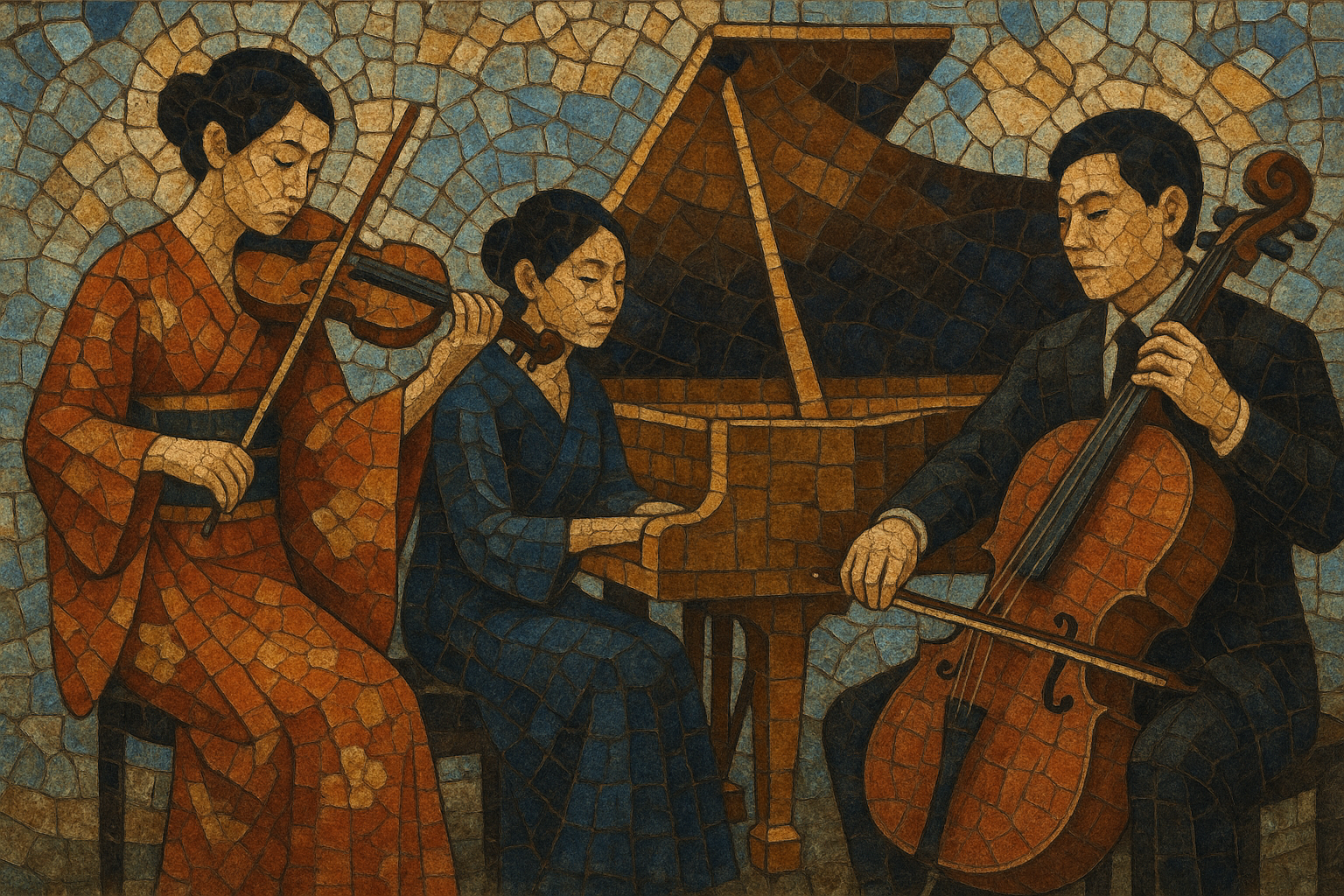
Japanese classical performance refers to the performance tradition of Western art music (Baroque, Classical, Romantic, Modern and Contemporary repertoires) by Japanese soloists, ensembles and orchestras.
It emphasizes immaculate ensemble precision, refined tone production, and a strong conservatory-based approach to score fidelity, while also supporting commissions and interpretations of works by Japanese composers in Western idioms. Recordings often highlight clarity of texture, balance, and acoustical detail, reflecting Japan’s advanced hall design and recording craft.
Sources: Spotify, Wikipedia, Discogs, Rate Your Music, MusicBrainz, and other online sources
History
Western music entered Japan during the Meiji Restoration, when military bands, missionaries, and educators introduced European notation, instruments, and pedagogy. By the 1870s–1890s, music curricula modeled on German and broader European conservatory systems were established, laying the basis for orchestral and chamber performance.
In the early 20th century, professional orchestras and conservatory-trained Japanese performers emerged. Engagements with visiting European artists and conductors accelerated stylistic assimilation, repertoire expansion, and audience development.
After World War II, Japan experienced a rapid growth in orchestras, concert halls, and recording infrastructure. Ensembles such as the NHK Symphony Orchestra raised international profiles through tours and recordings. Japanese soloists began winning major competitions, appearing with top global orchestras, and shaping interpretations of canonical repertoire.
From the 1970s onward, conductors and ensembles fostered distinctive projects (e.g., the Saito Kinen Orchestra), while major labels documented world-class performances from Japanese artists. Conservatories produced generations of internationally active pianists, string players, and conductors. Today, Japanese classical performance is both a guardian of European traditions and a vital contributor to contemporary classical life, including premieres by Japanese composers and high-fidelity concert and studio recordings.
How to make a track in this genre
Select works from Baroque to Contemporary repertoire, balancing canonical pieces (e.g., Bach, Mozart, Beethoven, Brahms, Debussy) with modern and living composers, including Japanese composers writing in Western idioms. Aim for score fidelity, architectural clarity, and long-line phrasing.
Use standard Western orchestral and chamber configurations (strings, winds, brass, percussion, keyboard). Prioritize immaculate ensemble blend, balanced seating, and precise intonation, supported by disciplined rehearsal methods and sectional work.
Maintain tight ensemble rhythm and clean attacks. Favor controlled vibrato, transparent textures, and carefully shaped dynamics. In Baroque/Classical styles, use buoyant articulation and modulated vibrato; in Romantic/Modern works, expand dynamic range and color while preserving clarity.
Base interpretations on historically informed knowledge (bowings, articulation, tempo relations) where appropriate, while sustaining a polished, modern symphonic sound. Allow lyrical cantabile in slow movements and structural momentum in fast movements.
Leverage acoustically excellent halls; place microphones to capture detail without sacrificing blend. Maintain quiet stagecraft and precise stage entries/exits. Document performances with careful editing that preserves natural timbre and spatial coherence.