Your digging level
Description
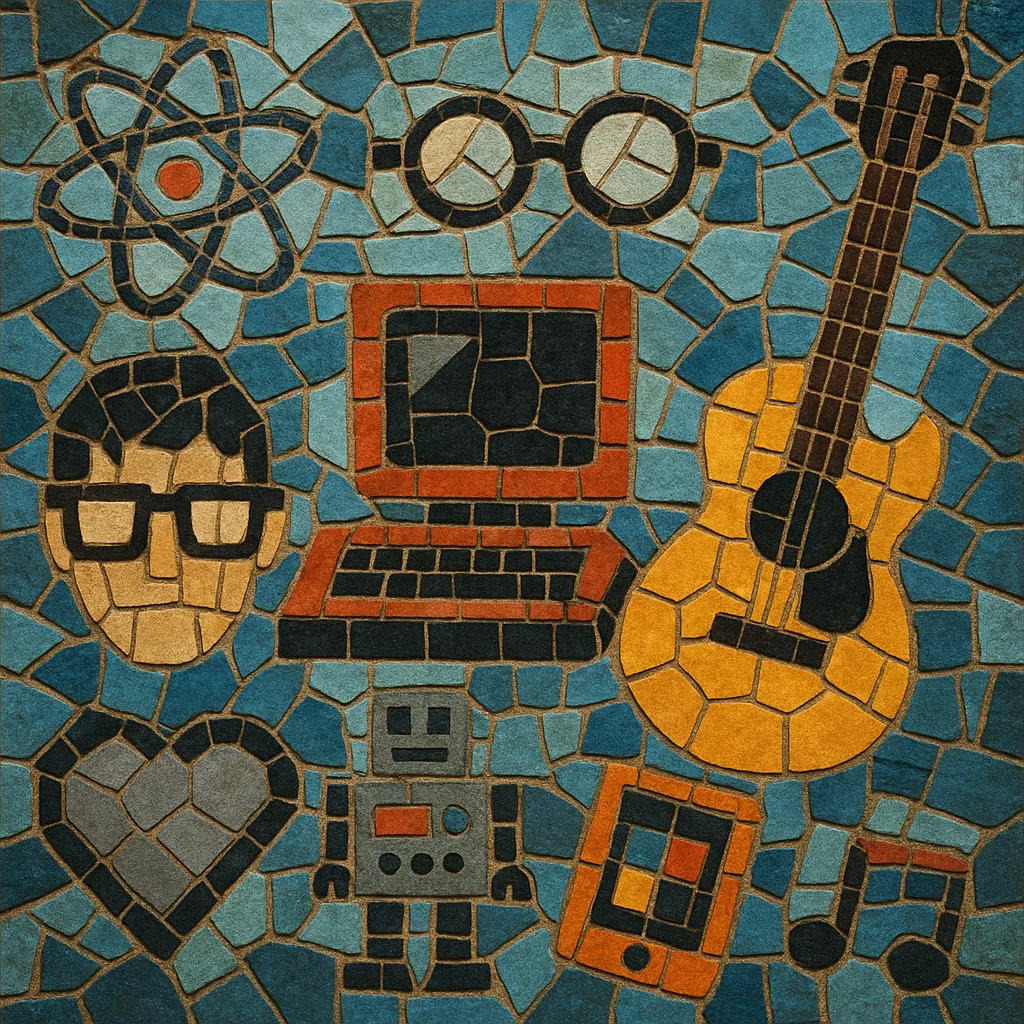
Geek rock is a branch of alternative and power-pop-oriented rock defined as much by its subject matter and persona as by its sound. Bands embrace brainy, self-deprecating humor and celebrate interests stereotypically labeled as “geeky,” including science, math, computing, gaming, sci‑fi, and pop culture lore.
Musically, it favors catchy hooks, concise song forms, and bright guitar tones, often augmented by keyboards, synths, or unusual instruments (accordion, toy piano). Vocals tend to be clean and articulate so that witty, reference‑laden lyrics land clearly. The mood ranges from upbeat and playful to tenderly introspective, with frequent wordplay, narrative storytelling, and a charmingly offbeat presentation.


History
New wave’s cerebral stance and quirky aesthetics (e.g., Devo, XTC) previewed the idea of proudly brainy rock. In the mid-to-late 1980s, They Might Be Giants helped crystallize what would be called geek rock: concise, hooky songs; unusual instrumentation; and lyrics packed with clever wordplay, science tidbits, and left‑field humor.
The 1990s brought mainstream visibility. Weezer’s 1994 “Blue Album” made bookish, bespectacled rock stars a pop phenomenon. Acts like Barenaked Ladies, Ben Folds Five, and Nerf Herder leaned into pop-craft and self-aware, pop‑culture‑savvy lyrics, while college-radio/indie circuits embraced the “geek” persona as a badge of authenticity.
With blogs, forums, and early social media, geek rock thrived alongside fandom communities. Jonathan Coulton’s song-a-week project proved how internet distribution could sustain hyper‑niche, reference‑rich songwriting. OK Go’s inventive videos, The Aquabats’ superhero shtick, and convention circuits (comic/game cons) reinforced a culture where music, humor, and fandom overlapped.
Geek rock endures as a sensibility as much as a genre label. Streaming platforms and creator culture foster crossovers with nerdcore hip hop, chiptune, synth-pop, and rock opera tributes to games and sci‑fi (e.g., The Protomen). The core recipe—hooky rock supporting witty, proudly nerdy storytelling—remains intact.