Your digging level

For this genre
0/8
🏆
Sign in, then listen to this genre to level up

Description

Funk RJ is the Rio de Janeiro–rooted branch of Brazilian funk, the sound heard in the "bailes" of the city’s favelas and suburbs. It is built on sub-heavy 808 kick drums, clipped snares, and the signature tamborzão pattern, with shouted hooks and call‑and‑response vocals in Portuguese.

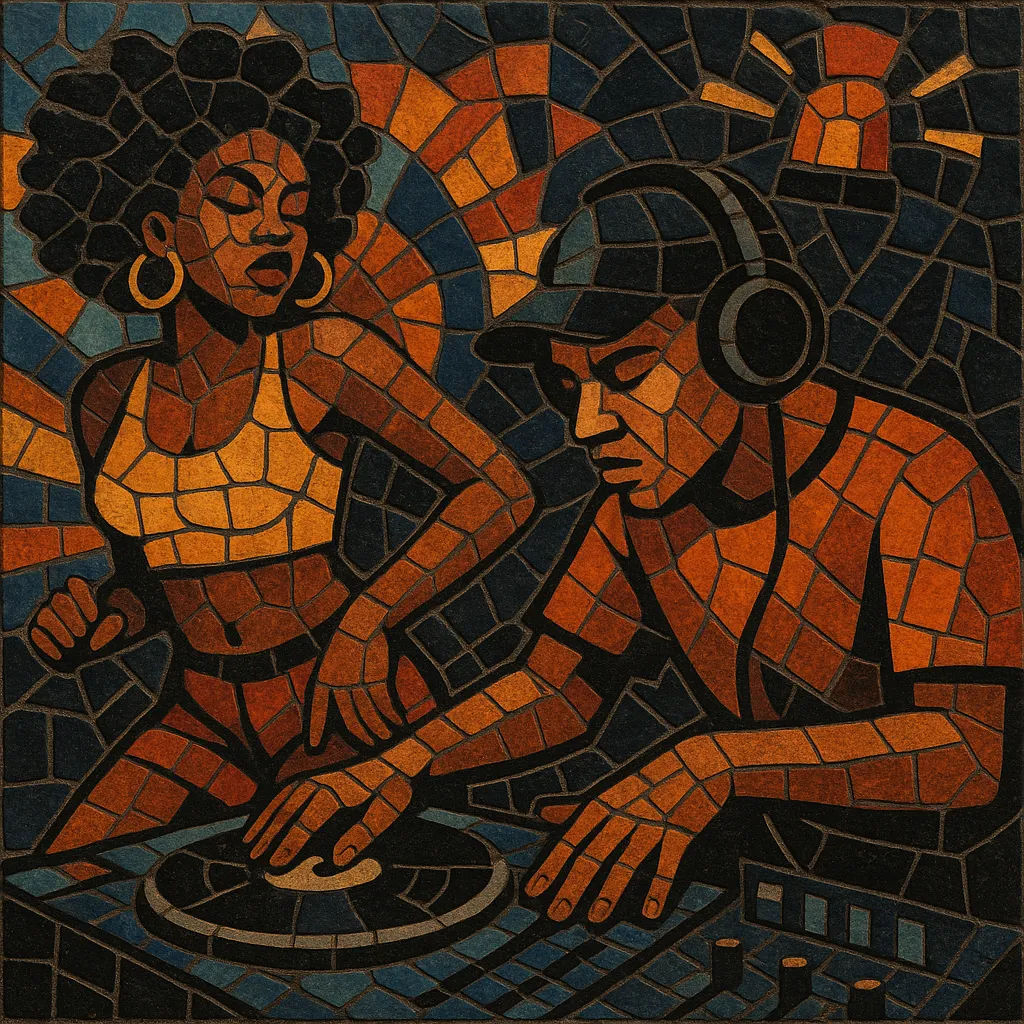
Compared to other regional variants, Funk RJ keeps arrangements raw and percussive, prioritizing groove and vocal energy over harmony. MC-led verses celebrate dance, sexuality, neighborhood identity, and social reality, while DJs craft "montagens" (instrumental edits) that loop rhythmic hits, sirens, and vocal chops to drive the dance floor.


Sources: Spotify, Wikipedia, Discogs, Rate Your Music, MusicBrainz, and other online sources

History

Origins (late 1980s)

Funk RJ grew from Rio de Janeiro’s sound‑system culture, where crews like Equipe Furacão 2000 popularized imported Miami bass and electro records. DJs such as DJ Marlboro localized the sound by speeding or looping drum machine patterns and releasing early compilations (e.g., Funk Brasil), while MCs began delivering verses in Portuguese.

1990s: Local voice and baile culture

Through the 1990s, the genre became the soundtrack of the baile funk parties across Rio’s favelas. Anthems like Rap da Felicidade and Rap das Armas showcased socially aware lyrics, call‑and‑response hooks, and the crowd‑hyping role of the MC. The scene faced periodic crackdowns but also gained radio support and regional fame.

2000s: Tamborzão and mainstream moments

The early 2000s solidified the tamborzão beat—dense, syncopated percussion layered over 808s—as a Rio signature. Groups and MCs such as Bonde do Tigrão and MC Leozinho crossed into national charts, while parallel currents like "proibidão" (street‑realist themes) kept the underground raw and controversial.

2010s–present: New tempos and global exposure

Digital production expanded the palette: DJs crafted montagem edits, clipped vox chops, and aggressive sound design. Baile da Gaiola and DJs like Rennan da Penha helped launch the 150 BPM wave, while pop crossovers (e.g., Anitta, Ludmilla, Kevin o Chris) carried Funk RJ aesthetics worldwide. Despite ongoing debates about policing and stigma, Rio’s funk has been increasingly recognized as vital Brazilian cultural heritage.


How to make a track in this genre

Tempo and groove
•   Aim for 120–135 BPM for classic Funk RJ bounce. The tamborzão pattern is foundational: a driving 808 kick, syncopated snares/claps, and off‑beat percussion creating relentless forward motion. For modern sets, you can also explore 150 BPM variations while keeping the Rio feel.
Sound palette and arrangement
•   Use 808/909 kits, short claps, rimshots, agogô/cowbell or clave‑like hits, air horns, sirens, and chopped vox. •   Build around loops and "montagens": tight 1–2 bar rhythmic ideas that repeat, drop out, and return with intensity. Keep intros functional (DJ tags and count‑offs), and prioritize drops where the vocal hook or percussion hits hardest.
Harmony and melody
•   Keep harmony minimal or nonexistent. Bass is the lead instrument: a subby 808 line that locks to kick accents. Any melodic element (simple synth stab, whistle, or vocal chop) should serve rhythm first.
Vocals and lyrics
•   Write in direct, chant‑friendly phrases suited to call‑and‑response. Themes include dance, street life, pride in the community, sensuality, and party energy. Delivery is rhythmic and percussive; ad‑libs, crowd cues, and taglines energize the baile.
Production tips
•   Embrace saturation and clipping on drums for grit, but keep kicks tight and mono for club systems. •   Sidechain bass to the kick; leave space for the MC. Automate mutes and fills to create tension/release every 4–8 bars. •   Use vocal chops as rhythmic instruments; layer short reverses, risers, and DJ stabs to mark transitions.
Performance
•   Live setups pair a DJ (looping/editing beats) with one or more MCs leading the crowd. Structure sets to escalate energy, alternating anthemic hooks with percussive montagem interludes.

Top tracks

Locked
Share your favorite track to unlock other users’ top tracks
Influenced by
Has influenced
Challenges
Digger Battle
Let's see who can find the best track in this genre
© 2026 Melodigging
Melodding was created as a tribute to Every Noise at Once, which inspired us to help curious minds keep digging into music's ever-evolving genres.
Buy me a coffee for Melodigging